
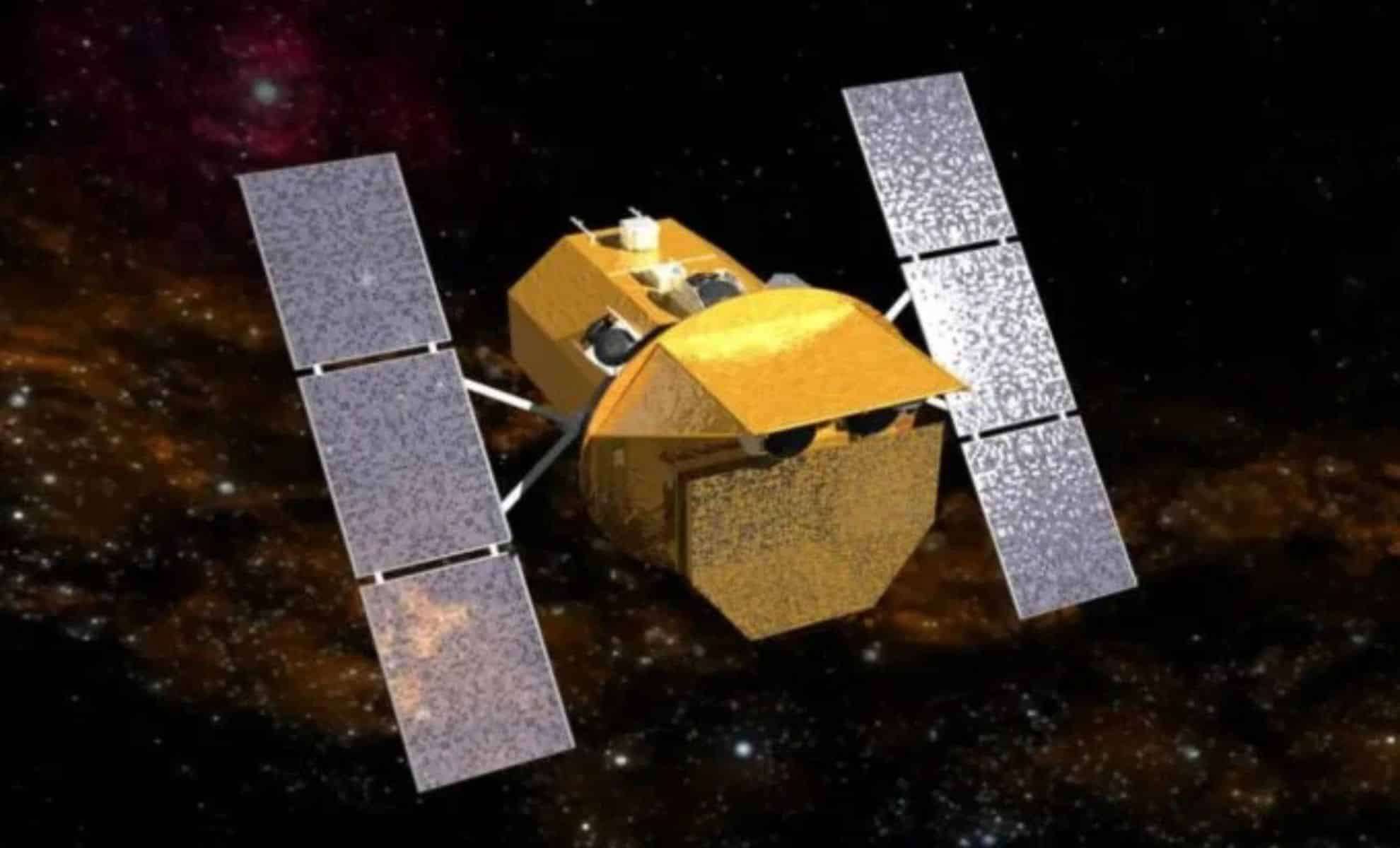
NASA has announced an innovative expansion of its iconic Explorers Program, introducing a fresh class of missions called Probe Explorers.
These missions are designed to bridge the gap between NASA’s large flagship projects and smaller, budget-friendly endeavors. Aimed at transforming our comprehension of the cosmos, the Probe Explorers offer unique, cutting-edge strategies to investigate some of the universe’s most challenging and essential astrophysical questions. This program represents a major advancement in NASA’s ongoing commitment to developing affordable missions that deliver substantial scientific impact.
Introducing the Probe Explorers: Enhancing NASA’s Scientific Reach
The Explorers Program, the longest-running mission series by NASA, began in 1958 with the goal of delivering rapid, cost-effective access to space for scientific discoveries. Over 90 missions have launched under this program, some of which have been recognized with Nobel Prizes. From uncovering Earth’s radiation belts to making pivotal advances in astrophysics, the Explorers Program has been essential to space science. The new Probe Explorers initiative builds on this foundation, emphasizing astrophysics and heliophysics with missions tailored to tackle critical scientific challenges.

This program reflects NASA’s growing focus on innovation balanced with budget-conscious strategies. Nicola Fox, Associate Administrator for NASA’s Science Mission Directorate, praised the potential of Probe Explorers. "The chosen concepts have the ability to deliver revolutionary science aligned with the top astrophysics priorities for the next decade," Fox remarked, adding that this program "advances key technologies needed for future flagship missions and creates opportunities for the scientific community to utilize the new observatory for widespread benefit."
Competing Missions: Pioneering X-ray and Far-Infrared Space Studies
NASA has selected two mission concepts for further development under the Probe Explorers banner, each receiving $5 million for a one-year detailed feasibility assessment. These proposals offer distinct yet complementary methods to explore complex astrophysical phenomena.
The first, the Advanced X-ray Imaging Satellite, aims to investigate some of the universe’s most extreme and enigmatic features—particularly supermassive black holes. Located at galaxy centers, these colossal entities are thought to power dynamic galactic core activities. Building on the legacy of previous X-ray observatories like Chandra and the Neil Gehrels Swift Observatory, the new satellite will provide a wide, flat field of view and exceptional spatial resolution, enabling detailed studies of the turbulent environments around these black holes and their influence on galaxy evolution.
Christopher Reynolds, principal investigator from the University of Maryland, underscored the mission’s transformative potential. He explained that the satellite could significantly enhance knowledge about "the energy sources behind some of the universe’s most violent events," including black hole accretion and galaxy formation processes. The project aspires to uncover critical insights into how supermassive black holes sculpt their cosmic neighborhoods.
The second mission, the Probe Far-Infrared Mission for Astrophysics, will explore far-infrared wavelengths, a spectrum region where substantial gaps persist despite the capabilities of NASA's James Webb Space Telescope (JWST) and radio astronomy. This mission, featuring a 1.8-meter telescope managed by NASA’s Jet Propulsion Laboratory (JPL), aims to reveal the origins of planets, stars, and supermassive black holes by probing far-infrared emissions. It will investigate cold, dusty cosmic regions crucial to star and planet formation and study cosmic dust, a key factor obscuring much of the universe’s visible light and shaping matter clustering.
Next Steps: Selection Process and Future Impact
In the coming year, these two mission proposals will undergo in-depth feasibility research to refine their designs and validate their scientific value. NASA plans to choose one project for full development, targeting a launch date in 2032. The selected mission will inaugurate the Probe Explorer series, marking a new era in NASA’s exploration goals.
Both contenders show great promise. The Advanced X-ray Imaging Satellite wants to unravel the mysteries of supermassive black holes, including their growth and galactic influence. The far-infrared mission seeks to deepen understanding of star and planet formation while assessing the impact of cosmic dust on the universe's evolution.
NASA’s Explorers Program boasts a legacy of groundbreaking missions, from the Van Allen radiation belt discovery to the Nobel Prize-winning achievements of the Cosmic Background Explorer (COBE). The Probe Explorers initiative continues this tradition, with the potential to deliver equally transformative discoveries.
Building Foundations for Future Flagship Endeavors
The Probe Explorers also aim to pioneer technologies and methods that will support forthcoming flagship missions. By choosing missions that combine modest budgets with strong scientific returns, NASA is nurturing innovations that can fuel larger, more complex projects. This strategy balances ambition with fiscal responsibility.
As Nicola Fox highlighted, the initiative aligns with the priorities set by the Decadal Survey on Astronomy and Astrophysics, ensuring the Probe Explorers contribute meaningfully to NASA’s long-term scientific roadmap.
Looking Forward: Advancing Our Cosmic Understanding
With a selection anticipated in 2026, the scientific community eagerly awaits which Probe Explorer mission will take flight. Both projects hold the capacity to revolutionize our understanding of cosmic evolution—from galaxy dynamics influenced by supermassive black holes to the detailed mechanisms of star and planet birth. Whether it is the advanced X-ray satellite unveiling galactic cores or the far-infrared mission studying star-forming regions, the Probe Explorers program marks a pivotal stride in unraveling the universe’s greatest mysteries.








0 comments
Sign in to Comment