
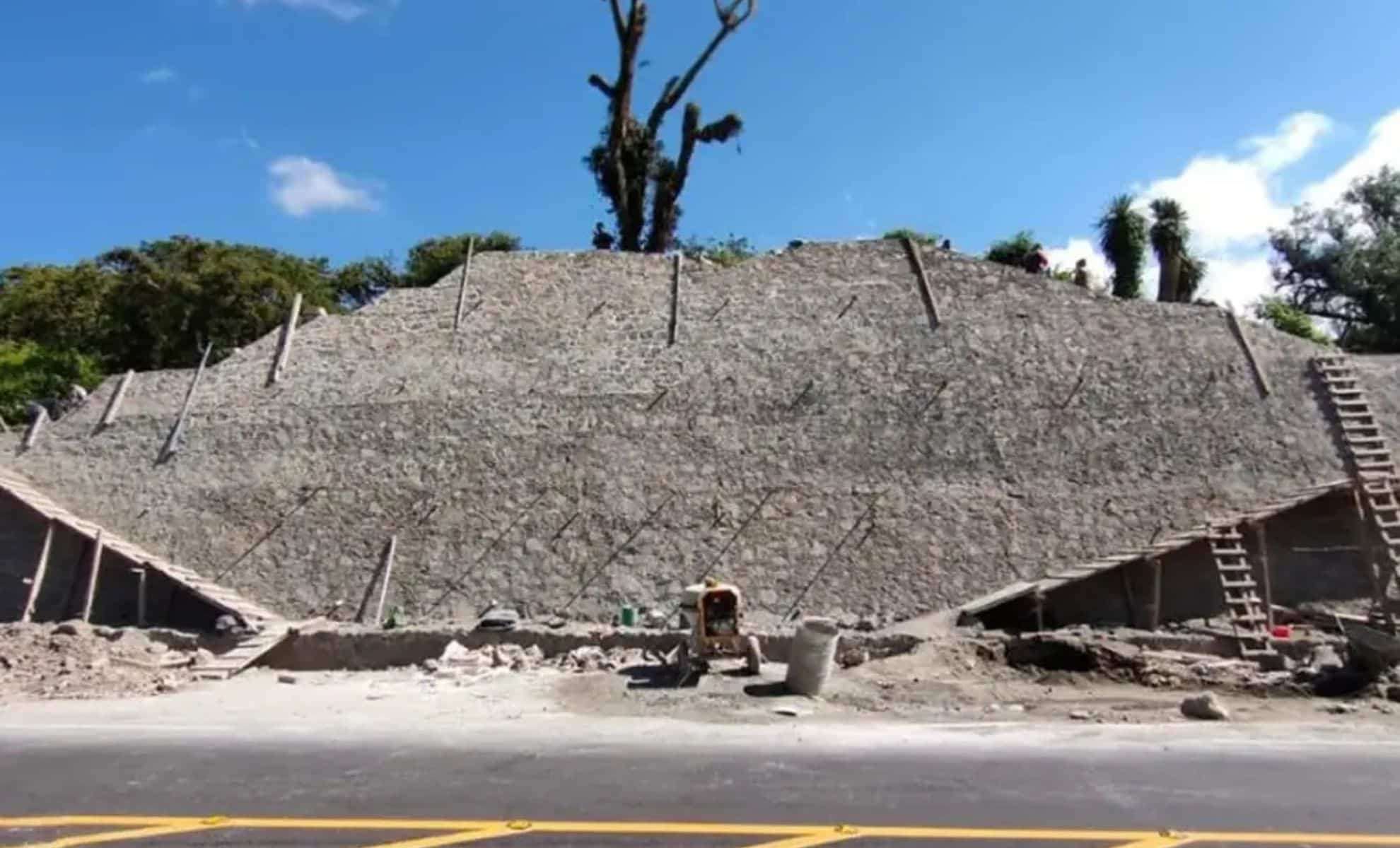
During routine road expansion on the Pachuca-Huejutla highway near San Miguel Metzquititlán in Mexico's Sierra Alta region, construction crews uncovered a remarkable 1,375-year-old pyramid. This significant finding, made in June 2024, has the potential to transform current perspectives on pre-Hispanic cultures of central Mexico. Designated Structure 1, the pyramid emerged as workers widened the highway and led to a pause in construction while archaeologists initiated careful excavation. Alongside the pyramid, a rich collection of artifacts surfaced, illuminating the ancient Metzca lordship, a diverse society that flourished between 650 and 950 CE.
This discovery is not just a historical curiosity but a crucial connection to the Metzca lordship, whose influence spread within the Sierra Alta and across central Mexico. Experts note that the Barranca de Metztitlán area, where the pyramid lies, has evidence of human settlement dating back more than 14,000 years.
Revealing the Monument: Pyramid and Cultural Artifacts
Excavations have shown that the pyramid was part of a much larger ceremonial complex. The site contains five main zones, including at least ten earthen mounds paired with a variety of artifacts scattered throughout. This pyramidal structure was built by the Metzca lordship during the Epiclassic period (650-950 CE), reflecting advanced urban planning and ceremonial design.

The items unearthed provide valuable clues about the everyday life, commerce, and traditions of the ancient inhabitants. Key discoveries include:
- Over 155 artifacts, such as pottery, stone implements, and shells.
- Traces of charcoal, burnt wood, and lime flooring, indicating ritual or domestic use.
- Ceramic figurines, likely connected to spiritual or cultural ceremonies.
- Stone tools employed in daily activities.
Detailed inventory of notable finds:
The Metzca Lordship: Unearthing an Ancient Culture
Unearthing this pyramid alongside its artifacts offers a rare glimpse into the Metzca lordship, a civilization piecewise understood through related finds in the Sierra Alta region. Flourishing in the Epiclassic period, this culture made notable advancements in architecture, commerce, and art within Mesoamerica.
Continuing research at the San Miguel site reveals the pyramid likely served as a ceremonial and elite center. The arrangement of surrounding artifacts supports the idea of complex social and political roles. Scholars are enthusiastic about what this site could disclose regarding the governance and rituals of the Metzca society.
The National Institute of Anthropology and History (INAH) emphasizes the importance of this find: “This archaeological record provides valuable insights into the human occupation of the Sierra Alta region, particularly in the Barranca de Metztitlán area, where historiography traces settlements back 14,000 years.” This highlights the dual role of the San Miguel location as both a Metzca legacy and a critical piece in understanding the long span of human settlement in the region.
Preserving an Archaeological Treasure
Following the initial dig, efforts to safeguard the site were promptly implemented. A robust rock masonry wall standing 141 feet long, 38 feet tall, and 2.6 feet thick was built to protect the exposed pyramid and prevent erosion and other environmental damage.
After stabilization, archaeologists covered the site again with geotextile materials to shield delicate materials for future studies. These conservation methods ensure the site endures for continued academic examination and possible public engagement.
However, funding constraints present challenges. The INAH announced a budget cut of 45% for 2025, potentially limiting excavation and research activities at San Miguel. Despite this, archaeologists remain hopeful about the significance of the recovered data and its contribution to the broader understanding of ancient societies.
Future Directions: Expanding Knowledge of San Miguel
Although much has been revealed, the San Miguel site holds enormous potential for further discoveries. Researchers are employing drone photogrammetry to create detailed maps, aiding in pinpointing areas for future excavations and generating accurate reconstructions of the complex.
The pyramid forms the starting point for deeper inquiries into the Metzca lordship’s social, ritual, and economic networks within Mesoamerica. As articulated by INAH, “The data generated by this archaeological record will contribute to the understanding of human occupation in the Sierra Alta region of Hidalgo, specifically in the Barranca de Metztitlán area, where, according to historiography, the first settlements date back at least 14,000 years.”
Ongoing research promises to shed new light on the enduring presence of human cultures in the Sierra Alta. Preservation and study of this extraordinary site are expected to deepen knowledge of the Metzca lordship and enrich perspectives on ancient Mesoamerican civilizations.
- Categories:
- News








0 comments
Sign in to Comment