
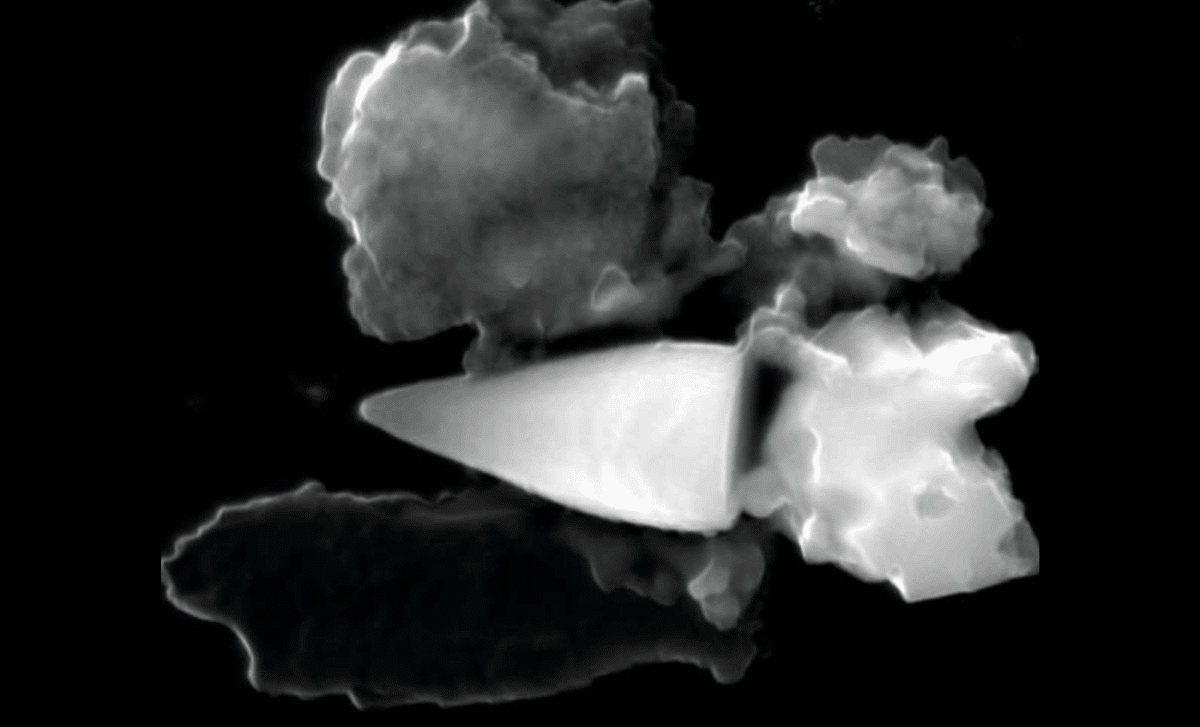
New research indicates that prehistoric oceanic organisms might have relied on enormous magnetofossils—large magnetic particles preserved in ocean sediments—to navigate. This suggests these creatures could sense slight changes in Earth's magnetic field, effectively using a natural GPS mechanism to traverse the seas. Published in Communications Earth & Environment, this work enhances our understanding of ancient marine life and offers potential insights for identifying life on Mars.
Decoding the Role of Giant Magnetofossils
The sizable magnetofossils found embedded in marine sediments over millions of years have long fascinated researchers. Unlike smaller magnetite crystals generated by bacteria, which align passively with Earth's magnetic field, these larger particles' function remained unclear. Their substantial size prompted questions about their possible purpose.
Initially, some scientists speculated these large, robust particles might have served as defensive armor against predators for ancient life forms. However, this innovative study introduces a more intriguing hypothesis: these giant magnetofossils may have enabled marine animals to orient themselves by detecting Earth's magnetic field for navigation.

Led by physicist Sergio Valencia, the research team proposed that these early inhabitants utilized the magnetic qualities of these particles to sense minute magnetic fluctuations, acting as a natural navigation system. Advanced analyses of these fossils uncovered their complex magnetic structure and potential functional role.
Innovative Imaging Techniques Illuminate Magnetic Traits
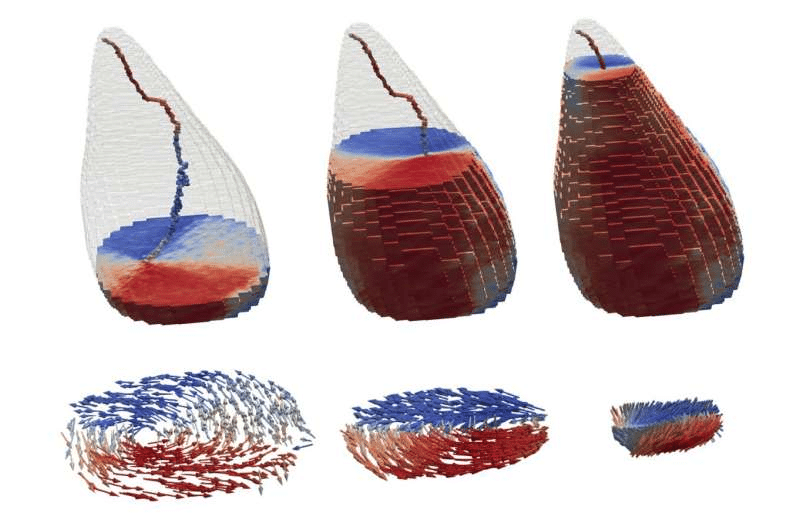
To explore whether giant magnetofossils aided ancient navigation, the team exploited state-of-the-art technology, building on techniques from a previous publication in Communications Earth & Environment. Using the Diamond synchrotron X-ray facility in Oxford, UK, they produced intricate 3D magnetic maps of a giant magnetofossil without damaging it, preserving critical data.
The researchers applied magnetic vector tomography, enabling them to analyze all magnetization components throughout the fossil's volume. Sergio Valencia, the lead investigator, described,
“With the help of magnetic vector tomography, all three components of the magnetization could be reconstructed and spatially resolved throughout the entire volume of the grain with a resolution of a few 10 nm.”
This technique revealed a magnetic vortex inside the fossil, highly sensitive to Earth's magnetic field fluctuations. The presence of this vortex supports the idea that these particles enabled marine creatures to detect and react to subtle magnetic changes, guiding them through oceanic expanse—a strong endorsement of magnetic navigation theory.
Tracing the Origins of Magnetic Guidance in Sea Creatures
Identifying giant magnetofossils as navigation aids sheds light on the early evolution of magnetoreception, the capacity to sense Earth's magnetic field. Modern species such as birds, sea turtles, and fish are known to employ this ability for long-distance travel. This research implies that magnetoreception may have emerged as far back as 97 million years ago.
Richard J. Harrison, a specialist in paleomagnetism involved in the study, emphasized the discovery's importance:
“Marine organisms, for example a fish, may have used this property for magnetic navigation.”
These findings strengthen the notion that ancient marine animals navigated vast waters using Earth’s magnetic field well before the rise of mammals. This revelation points to a far more intricate interaction with their surroundings than formerly recognized, potentially increasing survival and migratory success.
Implications for Life Detection on Mars
Beyond shedding light on Earth's past, this study presents promising methods for the quest to detect life on Mars. Magnetic iron-oxide particles similar to those created by Earth bacteria have been found in Martian meteorites, but their biological origins are disputed.
Thanks to the novel magnetic mapping approach developed for magnetofossils, researchers can now examine Martian particles for biological signatures. Richard Harrison explained,
“Iron-oxide particles resembling those made by some bacteria on Earth have been discovered on the Martian meteorite ALH84001, although their biological origin is strongly disputed. As we continue the search for evidence of life on Mars through sample return missions, we now have a method to investigate any new potential magnetofossils found and provide evidence to support or refute their biological origin.”
This method holds promise for analyzing Martian samples, contributing to determining whether iron-oxide structures there were produced biologically.
- Categories:
- Science





0 comments
Sign in to Comment