
In the Netherlands, an extraordinary medieval sword dating back more than a millennium was recently uncovered during a routine dredging project. This significant artifact provides a valuable window into the craftsmanship and historical backdrop of the Middle Ages. Now exhibited at the Rijksmuseum van Oudheden in Leiden, the sword stands as both a remarkable archaeological find and a testament to the tumultuous history of the region during that era.
An Exceptional Relic from the 11th Century
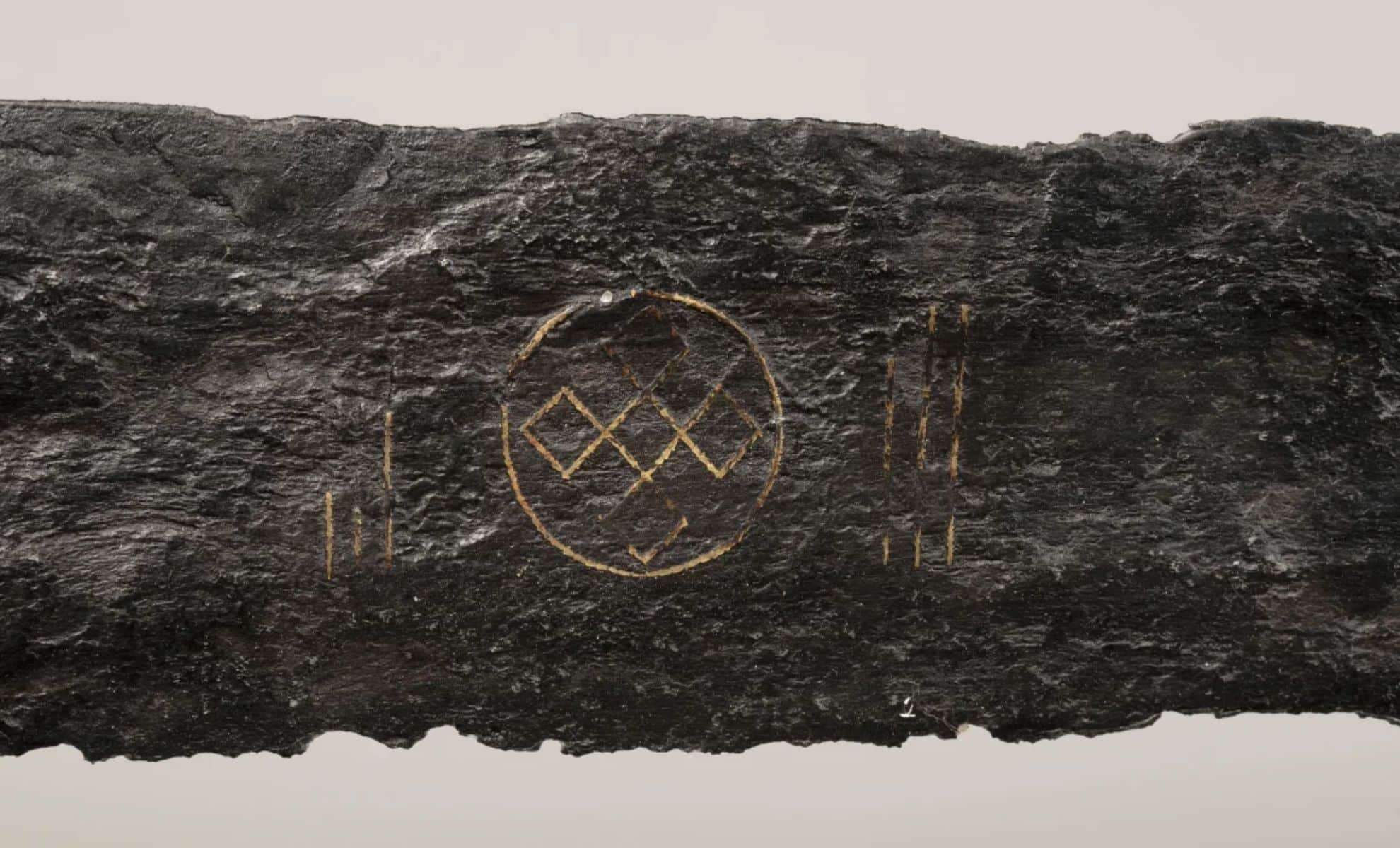
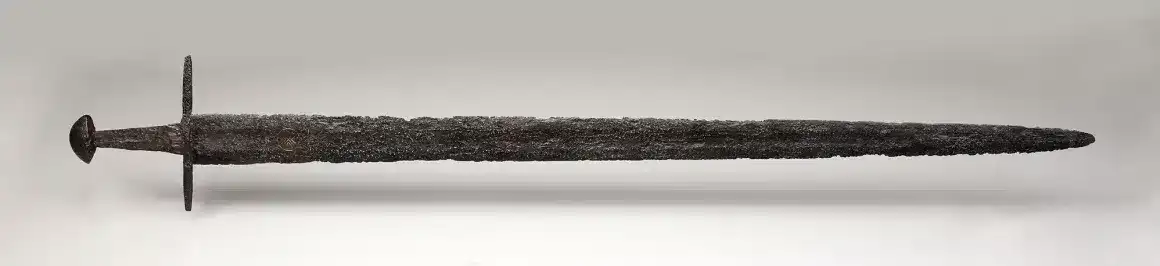
Measuring approximately 1 meter (3.3 feet) long, the sword is believed to have been crafted between 1050 and 1150. Its intricate design includes golden copper inlays shaped into a cross and an endless knot, a symbol often linked to eternity and continuous cycles. The sword’s preservation is astonishing, with the iron blade showing very little rust due to the oxygen-deprived conditions of the riverbed where it was found.
While organic portions like the wooden grip and leather bindings have decayed over time, the museum highlights that “the iron is barely corroded thanks to the oxygen-poor environment of the wet soil. Traces of the wooden hilt remain visible on the preserved weapon,” making this discovery invaluable for historians and archaeologists alike.

Was It a Sacred Offering or a Burial Token?
A fascinating aspect of this sword’s discovery is its apparent intentional placement in the river. The museum explains that medieval swords were often deeply cherished personal items. They were commonly buried with their owners or ceremonially submerged in bodies of water. The absence of a scabbard near the sword supports the idea that it was offered as a ritual gift rather than simply lost or discarded.
According to the museum, “objects deposited in this way are frequently exceptionally well-preserved.” The condition of this sword underscores the importance of ritual practices and the respect afforded to such weapons in medieval times.
Reflecting Changes in Medieval Warfare
During the period this sword was manufactured, the Bishop of Utrecht governed the area, often clashing with the growing influence of the Counts of Holland and Flanders. The museum notes that this time marked a transition in combat strategies and weapon design, shifting from vertical slashes mounted on horseback to horizontal thrusts aimed at armored opponents.
This sword exemplifies that shift. Designed for one-handed use, it was versatile enough for both cutting and thrusting maneuvers, fitting the evolving battlefield tactics.
The meticulous craftsmanship of the sword, combined with its ritual and historical significance, offers rich insight into both the lives of medieval warriors and the broader cultural transformations shaping the era.
- Categories:
- News










0 comments
Sign in to Comment