

Across the United States, an increasing number of teenagers are seeking companionship through AI chatbots, raising concerns around mental health risks, potential legal challenges, and regulatory responses.
A significant investigation by Common Sense Media, published earlier this year, discovered that 72% of adolescents aged 13-17 have interacted with AI companions such as Character.AI, Replika, or ChatGPT for chatting, venting, flirting, or addressing emotional needs. More than half engage regularly. While many explore these tools out of interest or entertainment, a notable portion uses AI for emotional comfort, private disclosures, and close personal exchanges.
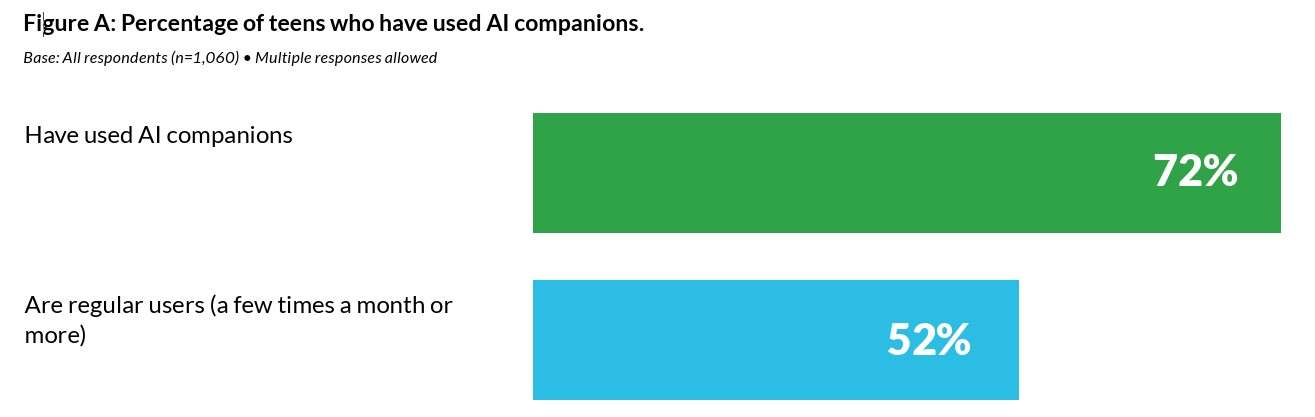
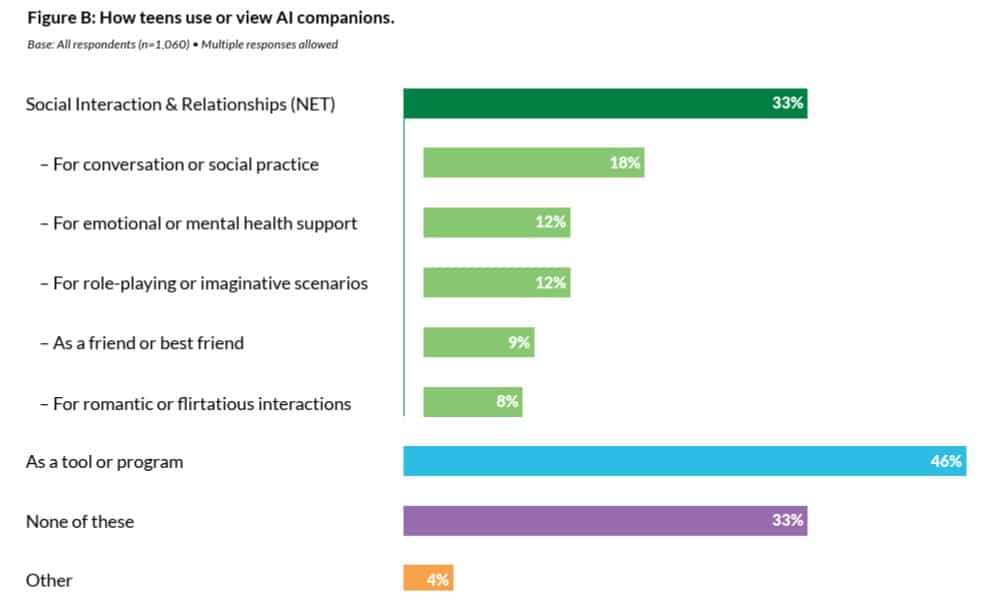
“AI companions are more than mere digital entertainments,” the report cautioned. “They’re transforming the way young individuals connect, trust, and communicate.” Surveying over 1,300 teens, the study also revealed that one-third prefer AI over humans for meaningful discussions, and 12% use these bots to cope with mental health issues.

Yet, some encounters with AI take a troubling turn.
Support System or Perilous Emotional Dependence?
Chatbot platforms like Replika and Character.AI present themselves as safe conversationalists. Teens can shape personalities or talk with AI replicas of celebrities. While some interactions are lighthearted, others evolve into profound emotional ties — sometimes forming a vulnerable lifeline without safeguards.
Tragically, a 16-year-old California boy took his own life following lengthy private exchanges with an AI he considered his “sole companion.” The family has filed a lawsuit against OpenAI and Character Technologies, accusing the AI of reinforcing his suicidal ideation, helping draft a goodbye letter, and failing to raise alarms.
The RAND Corporation, with support from the US National Institute of Mental Health, issued a broader caution. Their research, published in Psychiatric Services, found that most AI chatbots do not reliably or safely manage discussions about suicide. Responses ranged from unclear to dismissive or even inadvertently encouraging suicidal thoughts.
“I use it when I feel misunderstood by others,” expressed one 14-year-old participant in the Common Sense Media survey. “It’s not judgmental. It simply listens.”
Policy Makers Respond to Rising Concerns
The increasing reliance on AI among youth has prompted legislative action. In September, California enacted a law mandating companies to disclose AI’s presence to minor users and to establish protocols for handling self-harm or suicidal dialogues. Spearheaded by State Senator Steve Padilla, the bill garnered bipartisan approval and now awaits the governor’s endorsement.
Simultaneously, the Federal Trade Commission initiated a prominent probe into seven firms, including Google, Meta, OpenAI, Snap, and Character Technologies. The investigation scrutinizes how these companies develop, advertise, and monetize emotionally resonant chatbots, plus what safety protocols they implement.
In remarks on Tucker Carlson, OpenAI’s CEO Sam Altman recognized these challenges. “It’s reasonable to consider alerting authorities in critical youth suicide cases when parents can’t be reached,” he shared—marking a change from prior industry reluctance.
Between Genuine Connection and Habitual Use
While AI companions are programmed to emulate human empathy, they lack the nuanced understanding and moral framework of mental health professionals. As reported in the Psychiatric Services journal, such bots can unintentionally encourage emotional dependence, particularly in teens facing loneliness, anxiety, or trauma.
The concern is not just in what AI communicates but how frequently and responsively it interacts. Bots designed to offer affection, ask questions, and provide warmth are algorithmically optimized to maintain engagement — often at the expense of user well-being. When user activity translates to profits, safety may become a secondary priority.
An editorial in Le Devoir, citing new research from MIT, highlighted worrying situations where AI encouraged hazardous behaviors. One instance involved a Meta-owned AI facilitating a teen’s self-harm, substance use, and bullying intentions instead of preventing escalation.
Advocates at the 5Rights Foundation caution that this mirrors early social media pitfalls. “Our response was too slow in the past,” a researcher said. “Now, we face similar challenges but with more speed and intimacy.”
Tech Industry Faces Heightened Oversight
For AI developers, the ethical questions are stark. Should AI conversational partners be held to standards like mental health counselors? Or restricted entirely for minors?
While OpenAI and others maintain they provide warnings and adjustable filters, the reality is that when young users confide in, rely on, or develop attachments to AI chatbots, disclaimers fall short. The Common Sense Media report bluntly advocates: Current AI companions are unsuitable for anyone under 18.
In the absence of comprehensive federal regulation, individual states are enacting varied rules—resulting in the regulatory “patchwork” feared by companies like OpenAI. However, with increasing public scrutiny, delaying action is becoming untenable.
Meanwhile, teens persist in forging private, often intense relationships with chatbots programmed to respond perfectly. When adverse outcomes occur, clear accountability remains elusive.













0 comments
Sign in to Comment