
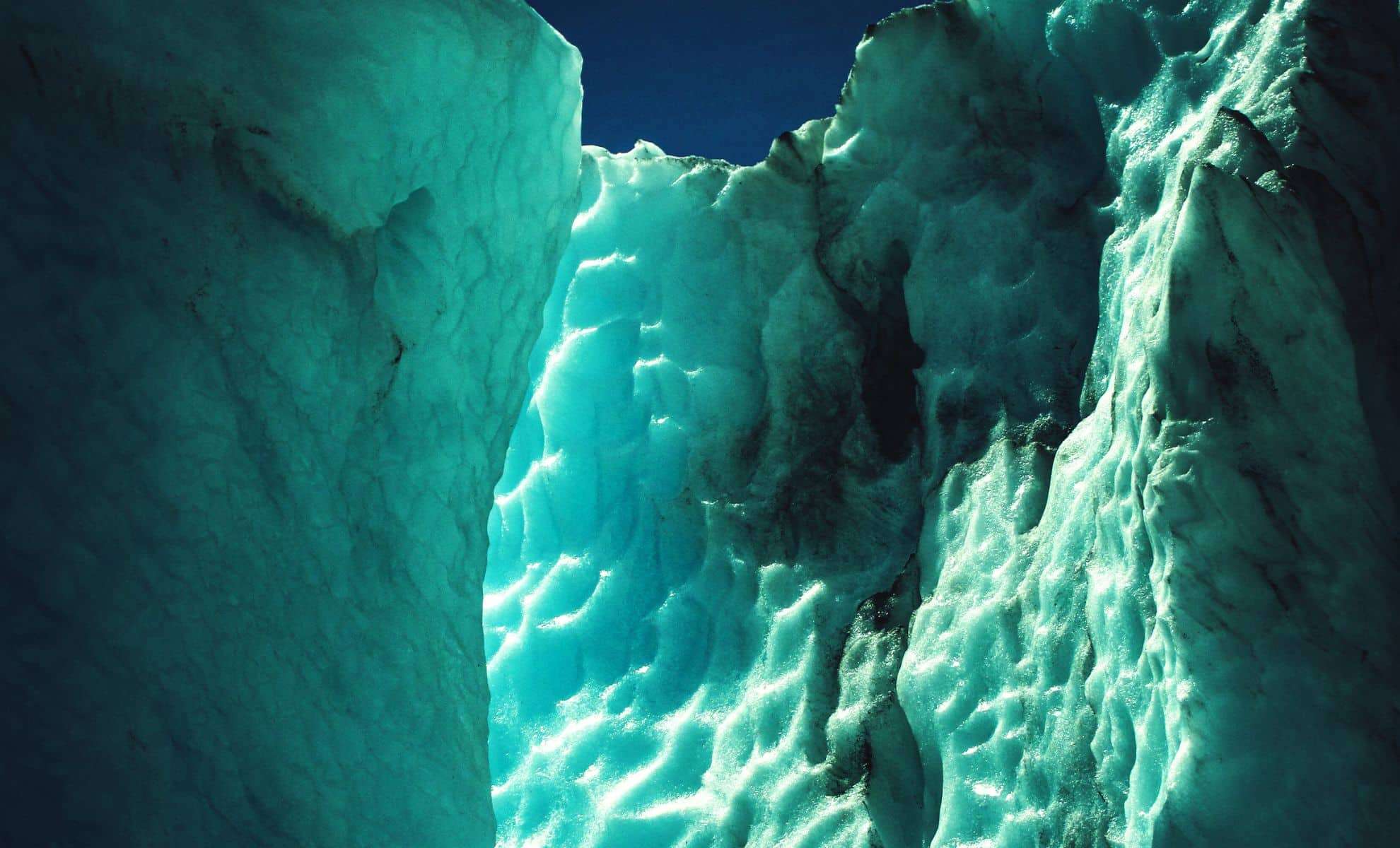
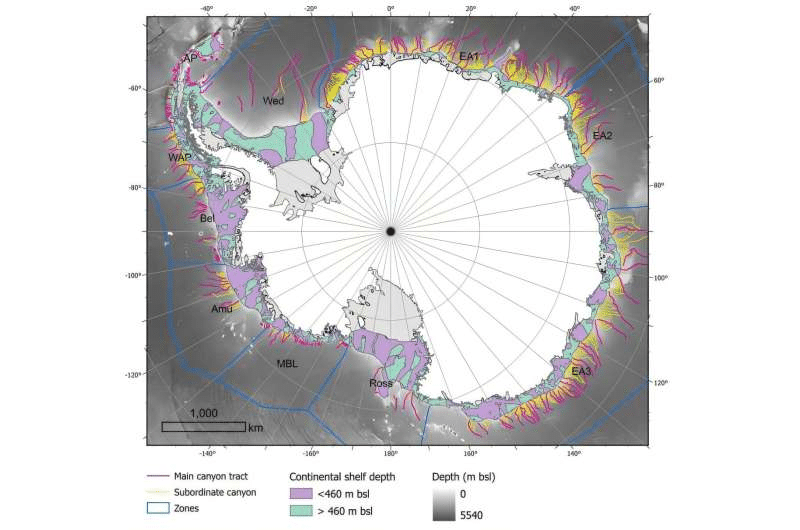
A recent investigation Marine Geology has unveiled 332 previously undetected submarine canyons lurking beneath Antarctica's frozen surface—over five times the number known before. This breakthrough enriches our knowledge of the Southern Ocean’s underwater landscape while emphasizing how these canyons influence ocean currents, ice shelf stability, and global climate patterns. Utilizing detailed bathymetry data, the research team led by David Amblàs from the University of Barcelona and Riccardo Arosio from University College Cork provides fresh insights into the continent’s submerged terrain. These discoveries could reshape perspectives on how Antarctica contributes to worldwide climate shifts, especially regarding ice melt and sea-level rise.
Exploring the Structure of Antarctic Underwater Canyons
Submarine canyons are among the most remarkable features sculpting the floors of Earth’s oceans globally. These deep, winding valleys often carve through the seafloor and can plunge to depths comparable to the heights of major mountain ranges. Antarctica’s canyons stand out due to their formation under unique polar conditions. Amblàs explains, "Much like Arctic canyons, those around Antarctica exhibit similar shapes but tend to be larger and deeper because of continuous glacial activity and vast sediment flows from glaciers onto the continental shelf."
These submarine canyons significantly impact ocean behavior by enabling water exchange between deep and surface layers, affecting marine ecosystems and global circulation patterns. They transport sediments and nutrients from the continental margins down to the ocean depths and provide important habitats for diverse sea life, highlighting their ecological value.

Contrasting Canyon Features in East and West Antarctica
The study distinguishes notable morphological differences between submarine canyons on East versus West Antarctica. East Antarctic canyons tend to be larger and deeper, with some plunging beyond 4,000 meters. According to Amblàs, "Several canyons studied reach depths exceeding 4,000 meters, with East Antarctica featuring intricate branching systems."
These extensive networks often originate near the continental shelf with multiple tributaries merging into a main channel before plunging steeply into the abyss. Their intricate structure suggests prolonged evolution under continuous glacial shaping. In contrast, West Antarctic canyons are generally shorter, steeper, and exhibit a V-shaped profile.
The distinctions likely reflect the distinct geological and climatic histories of each region. Arosio notes, "East Antarctic canyons show more complex, branched forms with U-shaped cross-sections, indicating sustained glacial sculpting involving erosion and sediment deposition over long timescales."
Impact of Antarctic Submarine Canyons on Ocean Circulation and Climate
These undersea canyons play an essential role in ocean circulation, especially in the production of Antarctic Bottom Water (AABW), a crucial driver of global currents. Cold, dense water formed near ice shelves flows through these canyon systems, assisting the movement of deep ocean waters that regulate heat distribution worldwide. This circulation is key to maintaining Earth's climate balance.
Moreover, warmer waters such as Circumpolar Deep Water (CDW) travel through the canyons toward Antarctica's coasts, interacting with ice shelves and accelerating melting from below. This process contributes to ice shelf thinning and potential collapse, which can trigger faster ice loss from the continent and elevate global sea levels.
Amblàs and Arosio emphasize that the complex physical dynamics within these canyons—including vertical mixing, channeling of currents, and deep-water renewal—are insufficiently captured in current climate models. This gap limits predictions of climate change impacts. They advocate for further detailed seafloor mapping and ongoing observations to improve understanding of these critical processes.
- Categories:
- News





0 comments
Sign in to Comment