
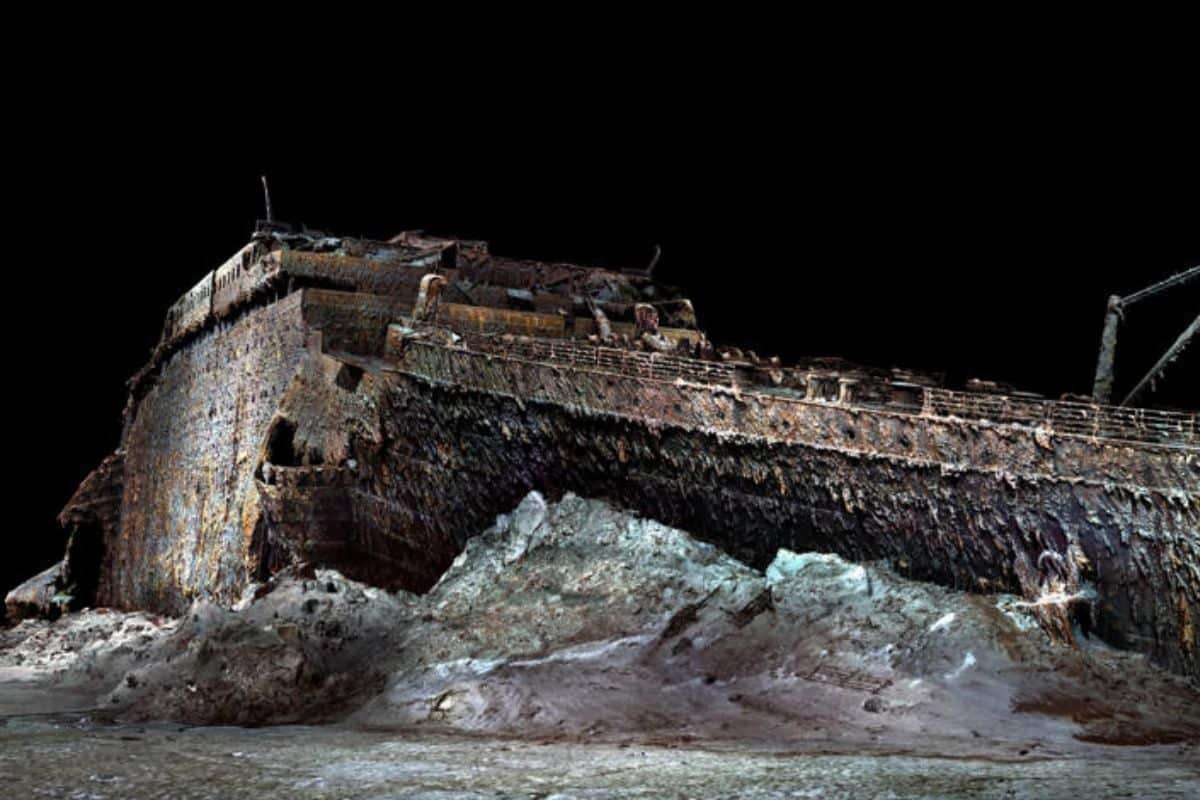
An advanced digital replica of the doomed Titanic, crafted using over 715,000 underwater scans, has unveiled extraordinary details about the vessel’s last hours.
Insight into Titanic’s Final Hour
This comprehensive digital depiction of the Titanic illustrates the ship’s gradual descent into the Atlantic Ocean with remarkable precision. The highly detailed model highlights new discoveries, including evidence that the engineering crew maintained power by keeping vital systems operational throughout the disaster.
Among the significant findings is the identification of a steam valve remaining open until the very end of the sinking. Maritime specialist Captain Chris Hearne explained, “This valve controlled steam flow from the boiler room to the emergency dynamos.”

He continued, “These dynamos powered essential functions like lighting, heating, and pumping. The fact that the steam valve stayed open shows continuous energy supply, an effort that undoubtedly saved many lives.”
Unveiling the Titanic’s Secrets Through Cutting-Edge Tech
The remarkable 3D reconstruction, created by Magellan Ltd and Atlantic Productions, delivers unparalleled detail. It enables life-size projections allowing experts to virtually explore areas of the wreck normally out of reach.
Parks Stephenson, a consultant on the project, shared, “While I’ve ridden in a submersible, visibility is limited to a few meters. This digital model gives me a clearer, broader view of the Titanic than ever before.”
This innovative reconstruction is not only a technical achievement but also critical for dissecting the ship’s collision with the iceberg and its immediate effects during the sinking.
Honoring Titanic’s Crew Bravery
The unwavering dedication of the engineering team is just one example of the heroism on board. Notably, William Murdoch, the first officer often misunderstood, has been vindicated through new evidence.
Scanning revealed a lifeboat davit in an upright position, indicating Murdoch and his team actively prepared lifeboats as the tragedy unfolded.
Discovering the Titanic’s Fractured Sinking Process
Contrary to prior beliefs that the ship split cleanly, the scans reveal a violent rupture especially in the first-class cabins, shelters for prominent passengers such as JJ Astor and Benjamin Guggenheim.
The model depicts a series of holes roughly the size of an A4 sheet along the hull, marking where the iceberg scraped the ship's side. A broken porthole supports survivor Margaret Swift’s account of ice entering cabins.
“Margaret Swift’s observation confirms the iceberg extended to at least 30 feet above the water’s surface,” said Dr Jennifer Hooper, a specialist in material sciences. “These scans help refine our understanding of that night’s collision.”
Exploring Titanic’s Enduring Legacy
Located nearly 2.5 miles beneath the ocean surface, the wreckage’s bow and stern are approximately 2,600 feet apart, with debris spanning a vast 15-square-mile zone. The digital imagery has facilitated the identification of hull fragments, some showing propeller serial numbers.
Detailed scans continue to uncover personal belongings like pocket watches, purses, gold coins, hair combs, footwear, and a shark tooth charm.
For the first time, researchers have an integrated perspective on the entire site, paving the way to resolve long-standing mysteries about the Titanic’s tragic end.
- Categories:
- News











0 comments
Sign in to Comment