
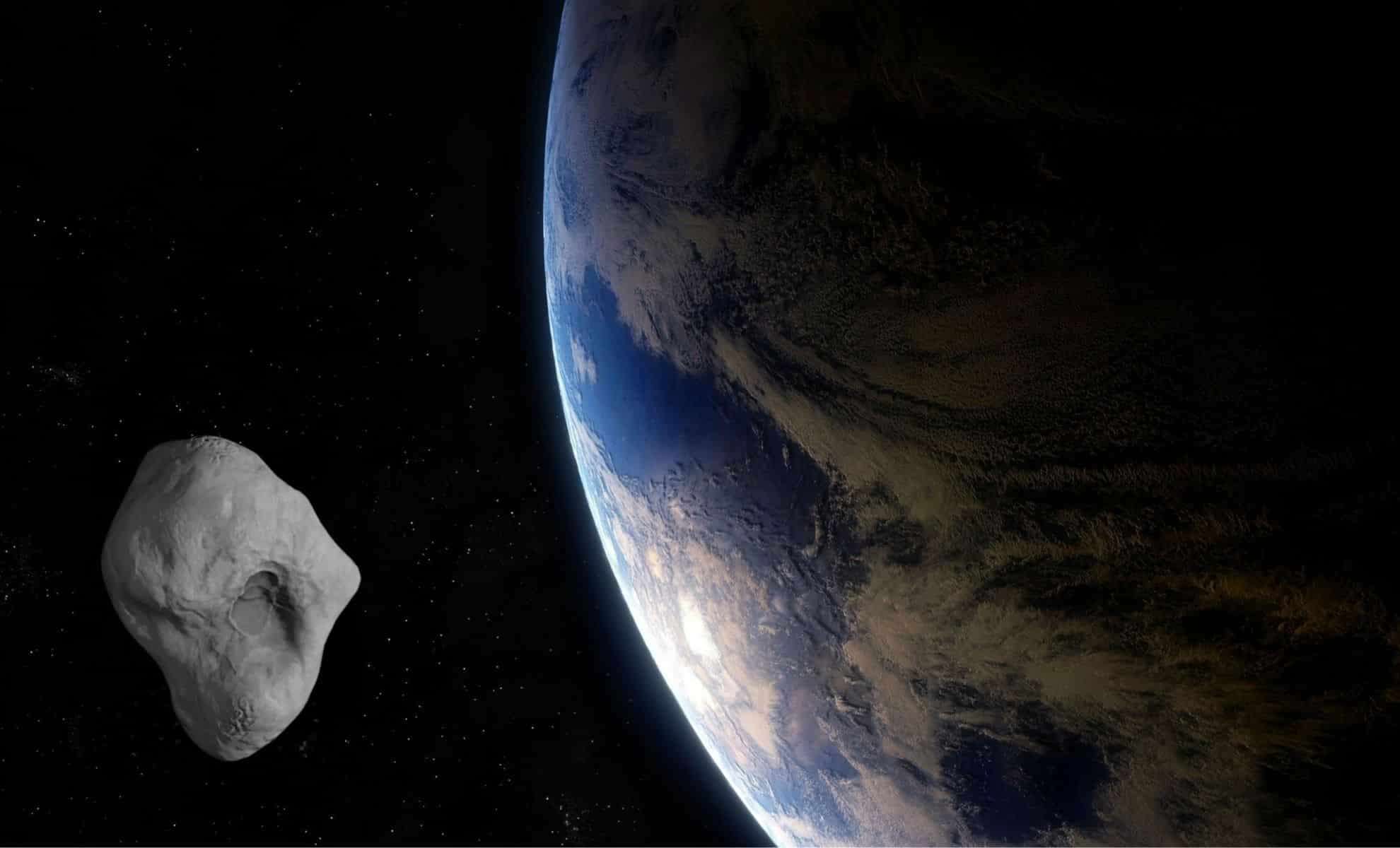
The enormous near-Earth asteroid (887) Alinda is currently making one of its nearest passages to Earth in recent memory. Measuring a staggering 2.6 miles across, this ancient celestial body ranks among the largest near-Earth objects (NEOs) to come so close to our planet. At its closest, Alinda will pass at a distance of 7.6 million miles (12.3 million kilometers), a rare occurrence with both thrilling observation potential and scientific importance. To put this in perspective, although safely distant, this is only 32 times the distance between Earth and the Moon—a surprisingly tight approach for an asteroid of this magnitude.
Asteroids such as Alinda fascinate astronomers because they act as windows into the early solar system. Made up of primordial material that has endured largely unchanged for billions of years, these space rocks serve as natural time capsules. This flyby will enable researchers to study Alinda more closely, advancing knowledge about how such bodies travel and evolve in space.
Examining (887) Alinda: Key Facts About This Rare Encounter
Before discussing how to observe this impressive event, let's review some essential details about (887) Alinda and its current proximity to Earth. The asteroid's unique attributes make it a captivating subject for study among NEO enthusiasts.

These characteristics highlight why Alinda’s flyby is generating significant interest within the astronomy community. Its impressive size ranks it among the largest NEOs observed near Earth, and its orbital period of approximately 3.8 Earth years results in a distinctive orbit that seldom approaches our planet. Typically, Alinda remains within the asteroid belt between Mars and Jupiter, far from Earth’s immediate environment, making this close encounter especially unique.
How to Watch Alinda’s Spectacular Passage
Although this event is observable globally, seeing the asteroid with the naked eye is unlikely for most. Luckily, amateur astronomers equipped with basic tools can still witness this remarkable flyby.
To view Alinda, a pair of binoculars or a modest telescope is recommended. 10×50 binoculars provide an ideal combination of magnification and brightness, perfect for tracking the asteroid. Alinda will travel across the constellation Gemini, predominantly visible in the Northern Hemisphere during evening hours. Its brightness will peak at magnitude 9.4 as it reaches its closest point, making it accessible even under moderately light-polluted skies.
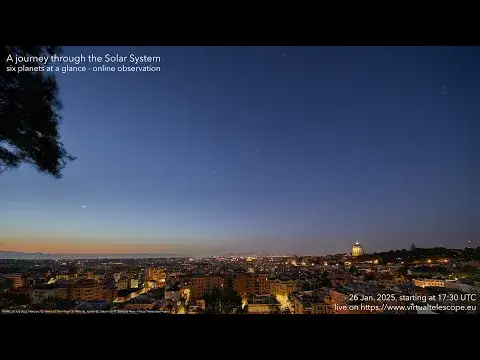
For those without observational gear or seeking an enhanced experience, the Virtual Telescope Project is broadcasting live coverage. This online event, timed to coincide with Alinda’s peak brightness, will feature expert insights and detailed views, bringing the asteroid’s close approach right to your screen.
Why (887) Alinda Captivates Scientists
Aside from its impressive size and proximity, (887) Alinda holds special significance in the study of near-Earth objects. This asteroid belongs to a rare classification known as Alinda-type asteroids, defined by their similar orbits. Unlike smaller, more frequent NEO flybys, Alinda’s larger dimensions and four-year orbit make it a remarkable subject whose close encounters are uncommon.
Scientists are particularly intrigued by Alinda’s composition and resilience. Its substantial size suggests it has withstood numerous impacts and modifications over billions of years, offering clues to asteroid evolution and longevity. Observations during this flyby will help refine calculations of its path, essential for assessing long-term planetary defense risks from potentially hazardous objects.
Other Exciting Celestial Events This Month
This January promises plenty of fireworks for stargazers beyond Alinda’s passage. Two additional notable occurrences include:
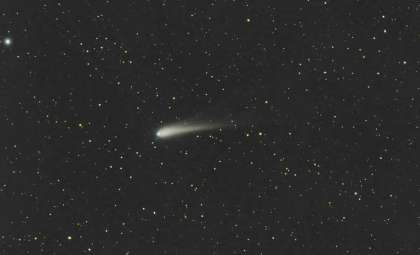
- Comet ATLAS G3: A beautiful long-period comet originating from the Oort Cloud, currently nearing the Sun. Primarily visible in the Southern Hemisphere, it may shine as brightly as Venus, though its fragile makeup could lead to disintegration under solar heat.
- Wolf Moon Occultation of Mars: A rare spectacle where January’s full moon temporarily hides Mars from view, visible across North America—a breathtaking sight for astronomy fans.
The Larger Significance of Alinda’s Close Flyby
While Alinda poses no immediate hazard, its close approach emphasizes the critical importance of monitoring near-Earth objects. Agencies like NASA’s Planetary Defense Coordination Office and the European Space Agency’s NEO program continuously track asteroids that may threaten Earth. Close studies of objects like Alinda enhance these efforts and contribute to planetary defense readiness.
Additionally, events such as this stimulate public interest in space exploration and astronomy. By providing accessible data and live streaming opportunities, organizations invite everyone to partake in the wonders of the universe, inspiring new generations of space scientists and enthusiasts.
- Categories:
- News




0 comments
Sign in to Comment