
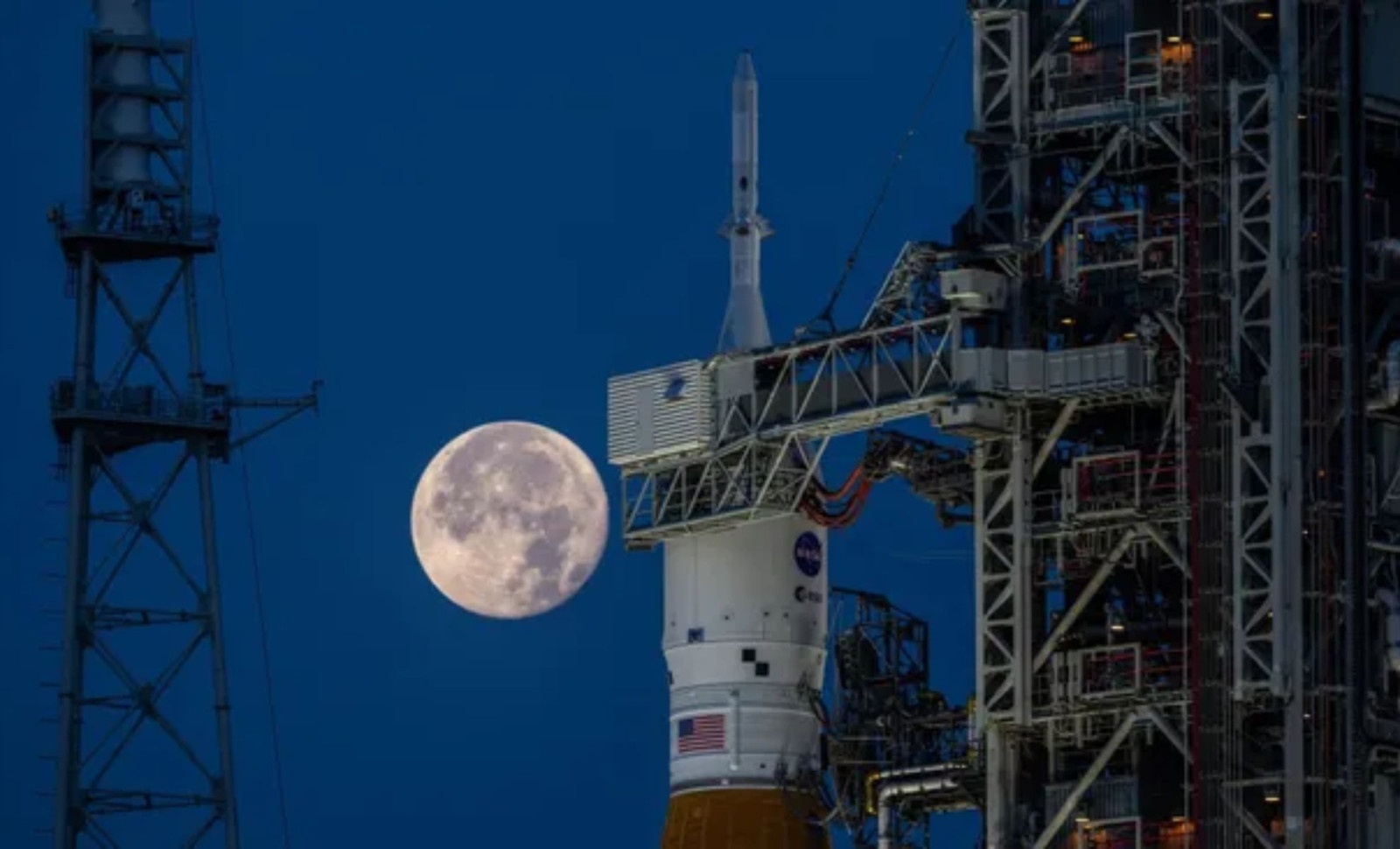
NASA is preparing to deploy its Space Launch System (SLS) rocket paired with the Orion spacecraft for the Artemis II mission, marking humanity’s first crewed journey beyond the lunar vicinity in over five decades. The agency has revealed that the rollout process could start as soon as next Saturday, signaling a critical step toward reaching farther into space than ever before.
With launch opportunities potentially opening on February 6, NASA is entering a vital period. This mission’s objective is to demonstrate the Orion capsule’s capability to sustain astronauts through deep space travel, laying groundwork for future lunar surface missions.
Final Preparations Prior to Rollout
Before the SLS rocket is moved to Launch Pad 39B at Kennedy Space Center, engineers are conducting last-minute checks. Since October, the integrated rocket and spacecraft have been housed within the Vehicle Assembly Building for continuous final adjustments. Recently, a flight termination system cable that was out of tolerance was replaced, and a valve malfunction related to Orion’s hatch pressurization system was fixed after issues emerged during a countdown test, reported by Phys.org.

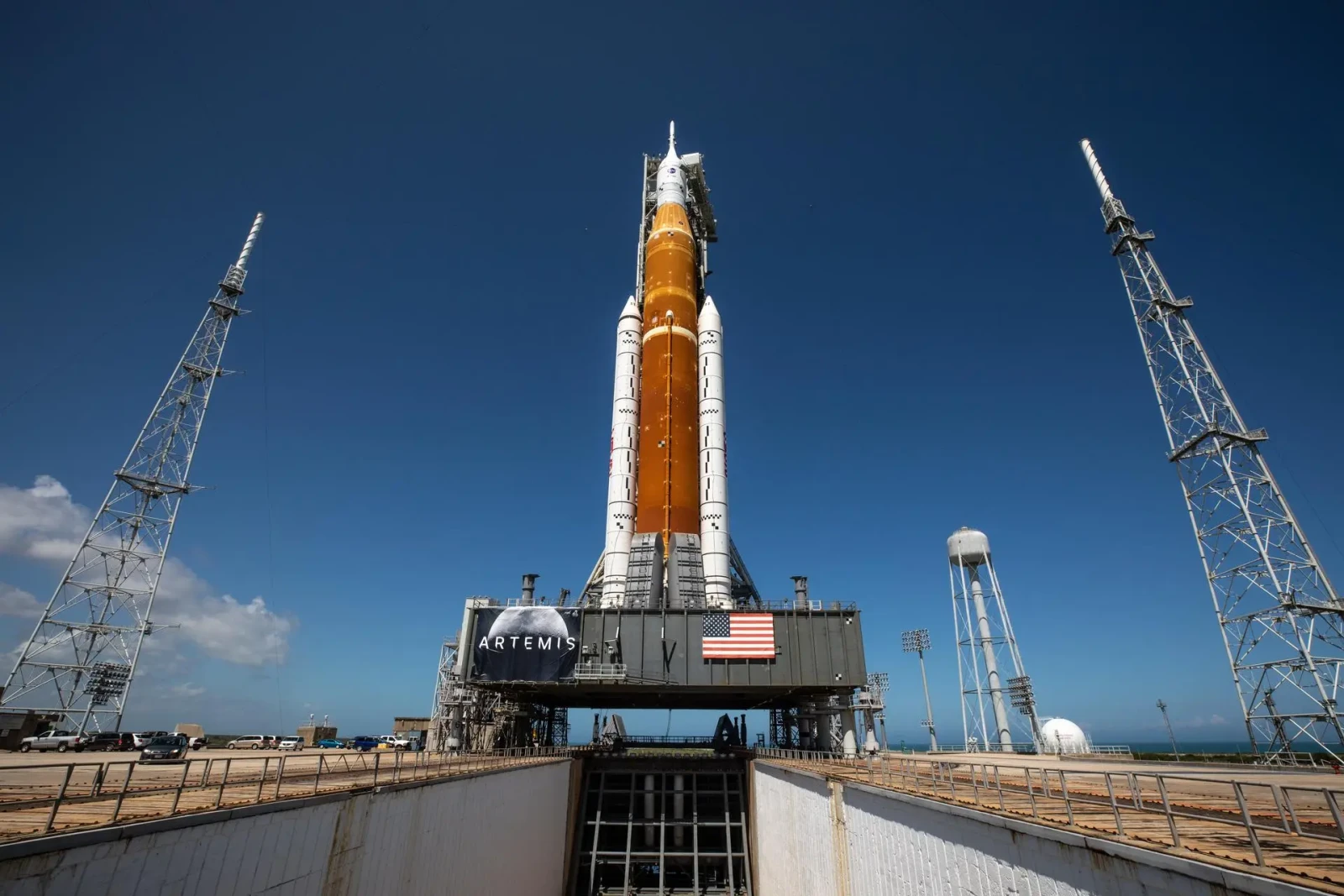
Once positioned at the launch pad, teams will link the mobile launcher’s electrical, cryogenic, and environmental systems to verify operational readiness. The crawler-transporter 2 will slowly make this crucial four-mile trek, finalizing a key transition toward liftoff.
“We are moving closer to Artemis II, with rollout just around the corner,” stated Lori Glaze, the interim head of NASA’s Exploration Systems Development Mission Directorate. “We have important steps remaining on our path to launch, and crew safety will remain our top priority at every turn as we near humanity’s return to the Moon.”
Countdown Simulation to Test Launch Readiness
A comprehensive countdown practice, called the wet dress rehearsal, is scheduled at the launch site. This drill involves loading over 700,000 gallons of liquid hydrogen and liquid oxygen into the rocket and Orion. Engineers will simulate a countdown to T-30 seconds, then reset the clock to T-10 minutes and run the countdown again to evaluate system responses.
“While NASA has integrated lessons learned from Artemis I into the launch countdown procedures, the agency will pause to address any issues during the test or at any other point should technical challenges arise,” the space agency wrote in an update on its official site.
Particular emphasis will be on monitoring liquid hydrogen, which proved challenging during Artemis I. Additionally, updated protocols are in place to track inert nitrogen accumulation between Orion’s crew module and the launch abort system. Should the initial rehearsal fall short of objectives, additional runs may be carried out.
Initial Earth Orbit Before Heading Toward the Moon
After Artemis II’s launch, the crew will first remain in Earth orbit to verify the Orion spacecraft’s operational health. Only after confirming system performance will the vehicle perform a trans-lunar injection maneuver, propelling it on a trajectory past the moon.
Launch windows are carefully selected to avoid prolonged exposure to the moon’s shadow, which could weaken power generated by Orion’s solar panels. According to the official NASA update, some potential launch dates have been excluded for this reason, and there may be as many as four opportunities to launch during each available window, contingent on conditions.
- Categories:
- Space











0 comments
Sign in to Comment