

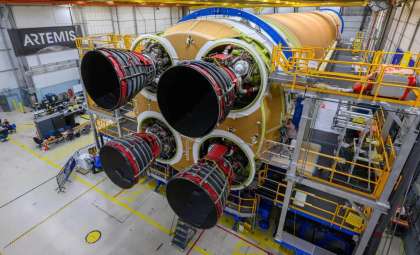
NASA has achieved a key achievement in its Artemis initiative by rolling out the second core stage of the Space Launch System (SLS) rocket, which is set to power the Artemis 2 mission.
Constructed with precision at the Michoud Assembly Facility in New Orleans, this core stage was transported aboard the Pegasus barge on July 16. It is now en route to the Kennedy Space Center (KSC) in Florida, where it will undergo essential final assembly and testing ahead of its targeted launch date, no earlier than September 2025.
Transportation and Launch Preparation
The transfer of the core stage from Michoud to the barge marked a pivotal transition from manufacturing to final mission readiness. John Honeycutt, the SLS program manager for NASA, remarked, “Delivering the SLS core stage for Artemis 2 to Kennedy Space Center represents a major step forward as we shift focus from production toward launch preparations, with ongoing advancements in hardware for upcoming SLS configurations.”

Upon arrival at KSC, this core stage will be outfitted further and then integrated with two solid rocket boosters and an interim cryogenic upper stage within the Vehicle Assembly Building. This intricate assembly guarantees each component fits together flawlessly, setting the stage for a successful lunar orbit mission.

Enhanced Production and Upcoming Strategies
Experience gained from building the initial core stage has streamlined the creation of this second one. Dave Dutcher, Boeing’s SLS program manager and principal contractor, shared, “This second unit incorporates numerous improvements; the overall build and testing phases are cleaner and more efficient than those for the first core stage.”
Boeing has embraced lean manufacturing practices that have optimized workflows and supply chain coordination. These enhancements include cutting out unnecessary testing and refining procedures conducted in clean room settings. Dutcher highlighted, “An important lesson has been the advantage of performing as much assembly as possible in the vertical orientation to maximize efficiency.”
Assembly Operations at Kennedy Space Center
NASA and Boeing plan to expand final assembly efforts for future core stages at Kennedy Space Center starting with Artemis 3.
This strategy involves building the engine section in a controlled clean room environment and increasing vertical assembly tasks to significantly reduce overall build time.
Dutcher noted, “These adjustments already represent substantial time savings, and we continue to explore ways to further enhance the SLS build process.”
Highlights from the Rollout Ceremony
The festive rollout held in New Orleans drew hundreds of Michoud facility staff and visitors, marking a proud moment for the Artemis program community.
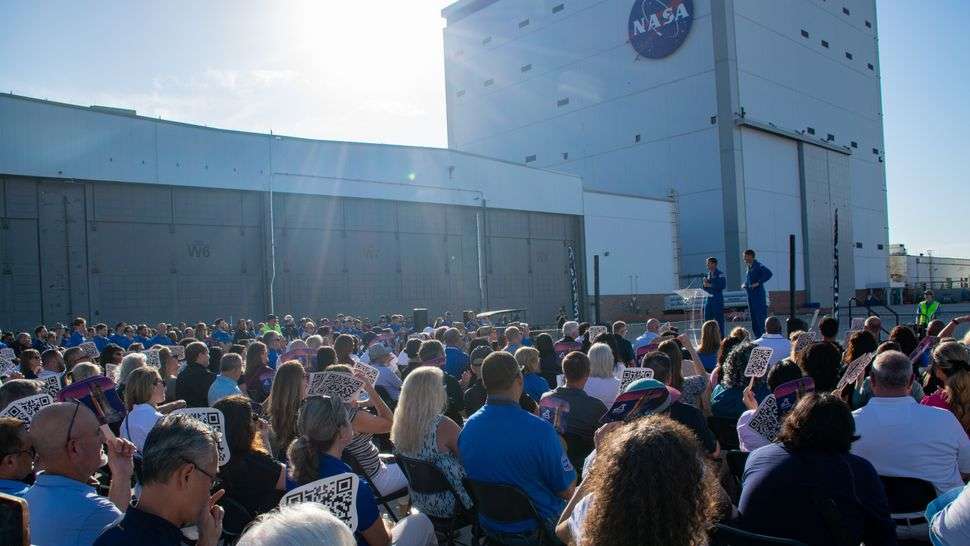
Joseph Pelfrey, NASA’s Marshall Space Flight Center director, addressed attendees, saying, “For over sixty years, Marshall and Michoud have played pivotal roles in some of the nation’s most significant space exploration milestones ranging from Apollo missions to shuttle flights, culminating in the achievement we commemorate today.”
Pelfrey praised the dedication of engineers and technicians whose efforts have been critical in developing the SLS core stage.
What Lies Ahead for Artemis 2
Following its arrival at Kennedy Space Center, the core stage will undergo additional integration and testing alongside key mission components like the Orion crew vehicle.
Artemis 2 will carry astronauts Reid Wiseman, Victor Glover, Christina Koch, and Jeremy Hansen on the first human lunar flyby since the 1970s Apollo program.
Witnessing the core stage rollout, Wiseman shared his enthusiasm: “We often talk about Artemis and lunar missions, but seeing the hardware here—the Orion spacecraft, the boosters at Kennedy Space Center, and now the core stage rolling by—it’s clear all the pieces are falling into place.”
This milestone is a vital precursor to a successful Artemis 2 launch, paving the way for later missions such as Artemis 3, aiming to land astronauts on the Moon. The Artemis program embodies NASA’s ambitious goal to establish a sustainable lunar presence and prepare for human exploration of Mars.
As Wiseman reflected, “Replacing ideas with real, tangible hardware assembled by teams across multiple states exemplifies the spirit of American space innovation. It’s inspiring.”








0 comments
Sign in to Comment