
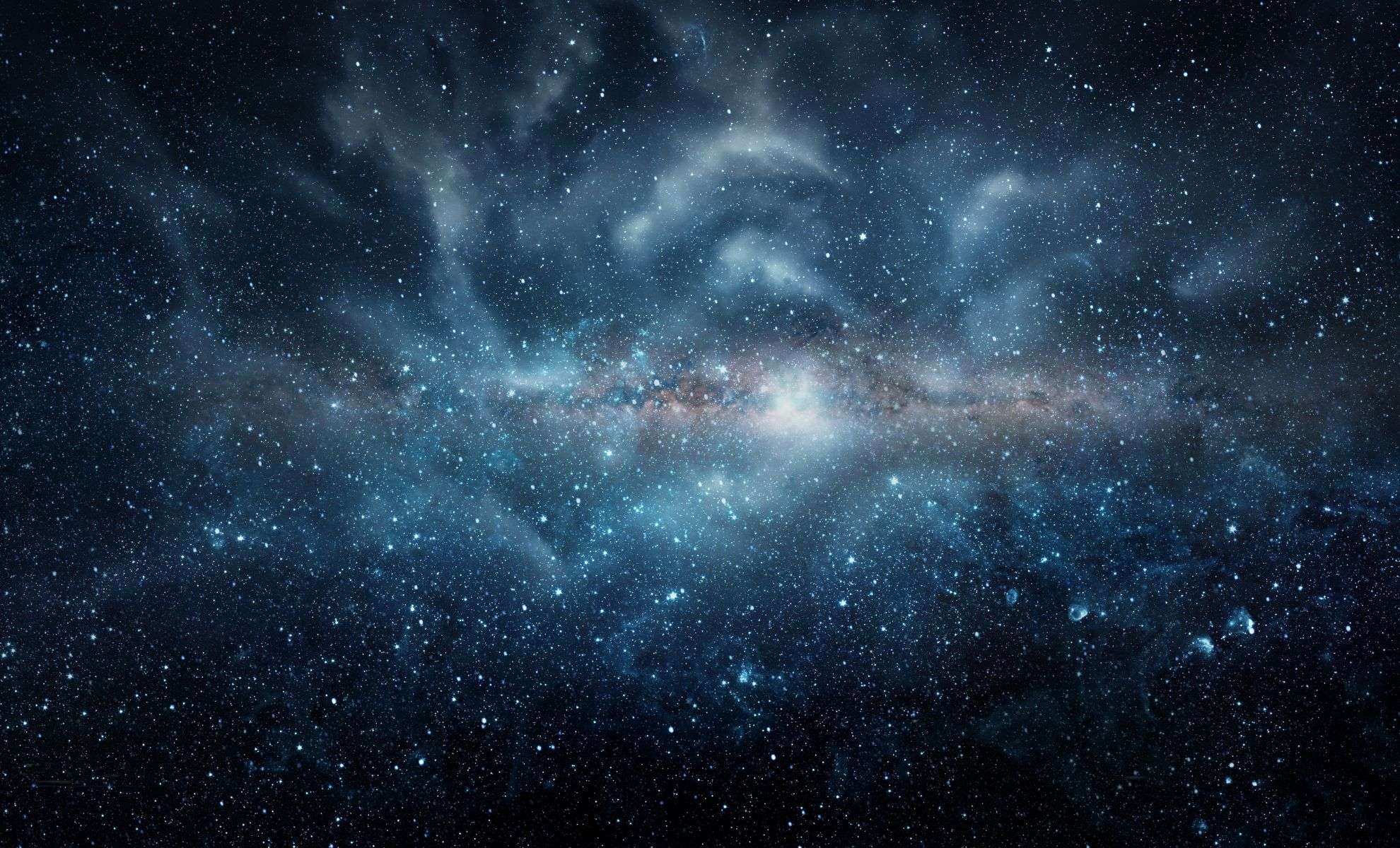
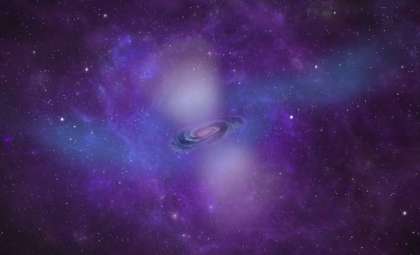
Recent astronomical research indicates that the Hercules–Corona Borealis Great Wall, an immense cosmic formation, might be significantly larger and situated nearer to Earth than previously believed.
This groundbreaking discovery is presented in a 2025 paper published in Universe by Dr. Jon Hakkila and colleagues at the University of Alabama in Huntsville. Spanning an astonishing ten billion light years, the Hercules–Corona Borealis Great Wall now holds the title of the biggest structure identified in the cosmos.
Exploring the Hercules–Corona Borealis Great Wall
The Hercules–Corona Borealis Great Wall is a staggering grouping of galaxies linked by gravitational forces and traced through the detection of gamma-ray bursts (GRBs). These powerful bursts are energetic releases caused by dramatic cosmic events like supernova detonations or the collisions of neutron stars. Tracking GRBs lets astronomers map distant galaxies and unveil large-scale structures of the universe.

Scientists have utilized GRBs to outline the edges of this colossal formation, revealing a vast interconnected series of galaxies creating a “wall” of cosmic material. At its immense length of 10 billion light years, the Hercules–Corona Borealis Great Wall dwarfs older record holders such as the Sloan Great Wall, which is nearly 25 times smaller.
Is This a Cosmic Anomaly or a New Paradigm?
Despite the immense scale, some experts urge caution in fully endorsing the dimensions and reach of the Hercules–Corona Borealis Great Wall. Dr. Jon Hakkila's team at the University of Alabama in Huntsville notes that current data precision may be insufficient for conclusive claims.
The exact placements and redshifts of gamma-ray bursts can be uncertain. Additionally, certain parts of the sky are hard to study due to intervening dust and other cosmic obstructions, introducing potential data sampling challenges.
Critics also highlight that structures exceeding 1.2 billion light years might contradict the cosmological principle, which states that the universe should appear homogeneous at vast scales.
Gamma-Ray Bursts as Cosmic Distance Markers
Gamma-ray bursts have emerged as invaluable tools for gauging enormous cosmic distances. Their intense energy output surpasses typical stellar phenomena, making them detectable over mind-boggling expanses, which enables astronomers to examine even the farthest reaches of the universe.
By studying these bursts, scientists obtain crucial information about the spatial distribution of matter, facilitating the mapping of gigantic structures. In the case of the Hercules–Corona Borealis Great Wall, gamma-ray bursts serve as pointers defining the boundaries of this immense formation and helping reveal its remarkable scale.
How It Stands Among Other Cosmic Giants
This isn’t the first enormous cosmic formation to challenge existing views on universal scale. Other colossal structures, including the Sloan Great Wall, the Huge Large Quasar Group, and the Giant Quasar Arc, have pushed scientists to reevaluate how extensive such formations can be.
Nonetheless, none approach the sheer magnitude of the Hercules–Corona Borealis Great Wall, which exceeds the Sloan Great Wall's size by more than 25 times. While these previous giant structures challenged our understanding of cosmic uniformity, the Hercules–Corona Borealis Great Wall takes this to a new extreme.
Awaiting Further Observations
One of the main challenges in confirming the true extent of the Hercules–Corona Borealis Great Wall is the lack of comprehensive data. The team behind the study used 542 gamma-ray bursts, but only about half of these were located in the appropriate parts of the sky to trace the structure.
“Since the most distant extent of the Hercules–Corona Borealis Great Wall is hard to verify, the most interesting finding is that the closest parts of it lie closer to us than had previously been identified,” explained Dr. Hakkila.
Definitive insights into the actual size of this vast superstructure will require more thorough, uniform data. Future space missions, like the upcoming European THESEUS satellite, are expected to deliver enhanced observations that could confirm or refine our understanding of the Hercules–Corona Borealis Great Wall.
- Categories:
- Space


0 comments
Sign in to Comment