
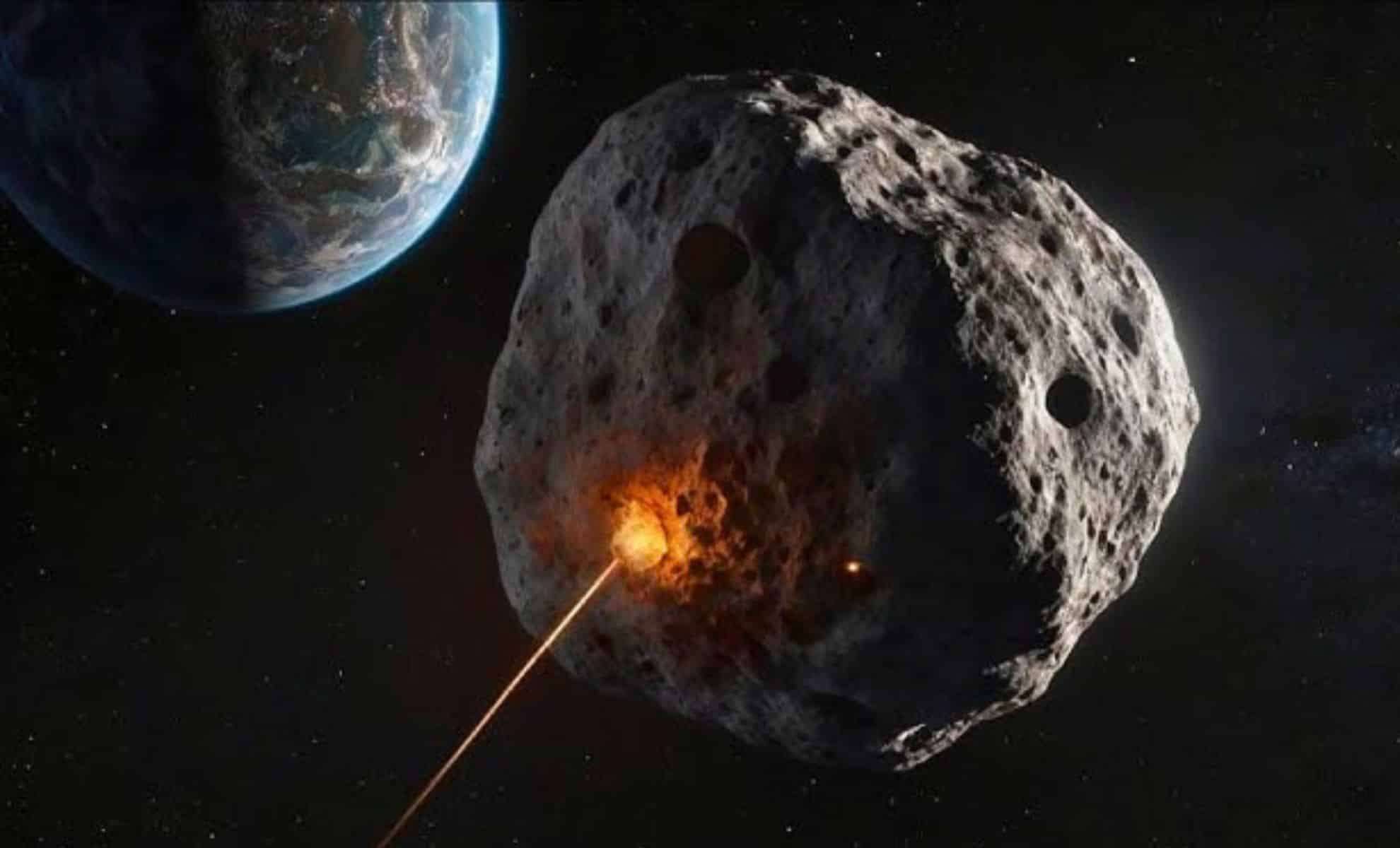
A space rock named 2024 YR4, spanning an estimated 40 to 90 meters across, has been identified as a potential threat to our planet. First spotted on December 27, 2024, this asteroid has been flagged by NASA's Center for Near Earth Object Studies (CNEOS) as a possible hazard, presenting a 2.3% chance (1 in 43) of striking Earth on December 22, 2032.
This relatively high probability ranks 2024 YR4 among the more alarming near-Earth objects discovered recently, prompting urgent discussions among scientists and space authorities about mitigation strategies. With less than a decade remaining, the window to devise an effective response is rapidly closing.
Is Deflection Still Feasible for 2024 YR4?
The primary hurdle involves the limited timeframe to analyze and potentially intercept the asteroid.

Volcanologist and science communicator Dr. Robin George Andrews highlighted this challenge in a Twitter thread posted on February 11:
“We have less than eight years to potentially deal with it, but it takes 10 years or more to plan, build, and execute an asteroid deflection mission.”
This suggests any delay could mean the asteroid’s collision with Earth becomes inevitable.
Can NASA’s DART Approach Work?
NASA’s Double Asteroid Redirection Test (DART) showcased the possibility of altering an asteroid’s path by intentionally impacting it with a spacecraft. Successfully executed in 2022, DART changed the orbit of asteroid Dimorphos, proving kinetic impact isn’t merely theoretical.
However, 2024 YR4’s characteristics may limit the effectiveness of this method. Unlike the solid Dimorphos, many asteroids consist of loosely bound aggregates of rocks and dust known as rubble piles.
Dr. Andrews cautions that striking a rubble pile asteroid could backfire:
“So many things could go wrong if we try to hit it with something like DART.”
Impacting a rubble pile might fragment the asteroid into numerous dangerous debris pieces, which would still pose a threat to Earth, just dispersed over a wider area.
Moreover, if 2024 YR4 is sufficiently large, one impactor may not achieve the desired deflection. Coordinating multiple spacecraft missions would increase mission difficulties.
“No one wants to accidentally disrupt an asteroid only to have its components still head toward Earth,” explains Andrews.
There is also the risk that a deflection attempt could shift the asteroid’s orbit insufficiently, causing it to strike Earth at an unexpected site.
“With only a few years of advance warning, we could accidentally shift its trajectory, but not enough to avoid the planet. Instead, it could hit a completely different, unexpected location.”
Potential Impact Zones and Possible Damage
The aftermath of a collision depends considerably on the asteroid’s make-up, velocity, and where it strikes.
- Striking land could trigger an explosion equivalent to multiple nuclear warheads, devastating an area extending hundreds of kilometers.
- A hit in the ocean might generate powerful tsunamis, endangering coastal populations and affecting global climates.
- If the asteroid has a metallic core, it could bury deeper on impact, intensifying seismic shockwaves and creating a larger crater.
The impact scenario might resemble the 1908 Tunguska event, which flattened a vast Siberian forest. However, 2024 YR4’s larger size and unpredictable target area could result in far more severe consequences.

The Challenge of Tracking: Visibility Loss by 2025
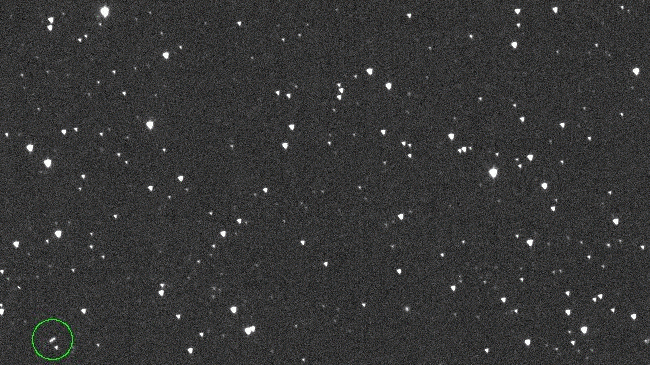
Tracking 2024 YR4 poses another difficulty as it moves away from Earth, fading rapidly to become unobservable by telescopes starting in 2025.
“We won’t be able to track it again until 2028,” warns Andrews.
This three-year observational gap means scientists cannot refine its orbit or update risk assessments during this period, delaying any potential intervention plans.
Nuclear Deflection: The Last Option?
If kinetic impact deflection proves unfeasible, space agencies might contemplate deploying a nuclear device near the asteroid to alter its course.
“Maybe we’ll break a troublesome taboo and decide to use a nuclear warhead to try and deflect it.”
This theoretical approach aims to vaporize surface material through a near-miss explosion, producing thrust capable of nudging the asteroid off path.
However, this strategy carries inherent dangers:
- Detonations too close could fragment the asteroid, multiplying hazardous debris fragments.
- An inaccurate blast might fail to sufficiently divert the asteroid, resulting in an impact nonetheless.
- Legal and diplomatic restrictions currently ban nuclear explosions in space, complicating deployment.
Moving Forward: Monitoring and Preparedness
Efforts are intensifying to better determine 2024 YR4’s physical properties and orbit before it slips beyond telescope detection.
Depending on updated risk evaluations, early deflection missions or contingency planning may need to begin ahead of its return to view in 2028.
As the critical date of December 22, 2032 draws nearer, the global scientific community remains vigilant, striving to prevent a potential catastrophe.
- Categories:
- Space











0 comments
Sign in to Comment