

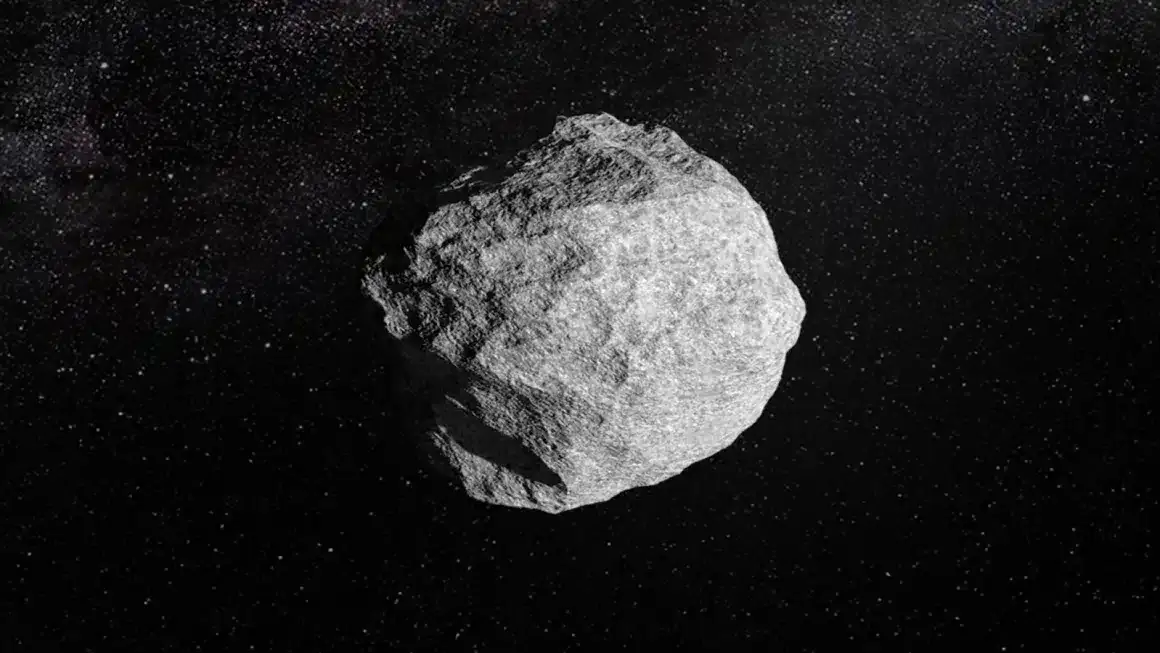
A recently identified asteroid, designated 2024 YR4, has scientists worldwide concerned as its likelihood of striking Earth has notably increased. Discovered on December 27, 2024 at the Rio Hurtado Observatory in Chile, this celestial object is currently orbiting at a distance roughly twice that of the Moon. Measuring between 40 and 100 meters in diameter, 2024 YR4 is now a focal point for astronomers monitoring near-Earth space.
Increasing chances of collision
Initially, the probability of 2024 YR4 impacting Earth was estimated at about 1 in 83 (or 1.2%). However, recent data has nearly doubled this risk to approximately 1 in 43 (around 2.3%). Earlier this week, estimates hovered near 1.9%. The potential impact date has been projected for December 22, 2032. In light of this, NASA and other agencies are vigilantly monitoring the asteroid and have elevated it to the highest alert level on their Sentry Risk List.
This situation is unprecedented, as experts note that no known object has presented such a high probability of collision since impact risk calculations began, underscoring the need for close observation.

NASA’s dedicated tracking efforts
NASA has been actively tracking 2024 YR4, continually updating its impact probability. Instruments like the repurposed WISE Space Telescope, which concluded its extended mission on August 8, 2024, have been vital in detecting near-Earth objects. Furthermore, NASA plans to launch a new infrared space telescope specialized in identifying asteroids, enhancing detection capabilities for future potential threats.
The European Southern Observatory’s Very Large Telescope in Chile captured detailed images of the asteroid in early January, providing crucial data to refine its trajectory and assess potential impact scenarios.
Challenges in detection and observation
Detecting asteroids such as 2024 YR4 is complex, as they are best observed when close to Earth and illuminated by the Sun. While radar imaging offers precise size and speed measurements, the asteroid’s predicted distance during its next close approach in 2028—around twenty times the Moon’s orbit—poses difficulties for radar’s effectiveness.
Infrared astronomy fills this gap by delivering more accurate size estimates. The James Webb Space Telescope (JWST), equipped with advanced infrared sensors, is a key instrument for these measurements.
Coordinated global response and advancing technology
Worldwide collaboration is essential for planetary defense. The Minor Planet Center in Cambridge, Massachusetts, functions as the primary repository for asteroid tracking data, encouraging observatories globally to contribute their findings.
NASA's upcoming Near-Earth Object Surveyor mission aims to strengthen asteroid detection through an infrared observatory dedicated to identifying potential threats like 2024 YR4. Additionally, the JWST has been authorized to support planetary defense efforts, significantly enhancing the global tracking network.
While still an extremely low possibility, asteroid 2024 YR4's impact probability with Earth has increased from about 1% to a 2.3% chance on Dec. 22, 2032. As we observe the asteroid more, the impact probability will become better known. More: https://t.co/VWiASTMBDi pic.twitter.com/Z1mpb4UPaC
— NASA Asteroid Watch (@AsteroidWatch) February 7, 2025
Future monitoring and preparation
Upcoming observations during 2024 YR4’s close approach in 2028 will enable scientists to refine impact predictions for 2032, potentially reducing estimated collision chances. Researchers will also analyze archival data from before its discovery to better constrain its orbit.
This case highlights the critical importance of vigilant sky monitoring and advancing detection technologies to safeguard Earth from cosmic hazards. As experts continue to track and model 2024 YR4’s trajectory, staying informed remains crucial for preparedness.
- Categories:
- Space










0 comments
Sign in to Comment