
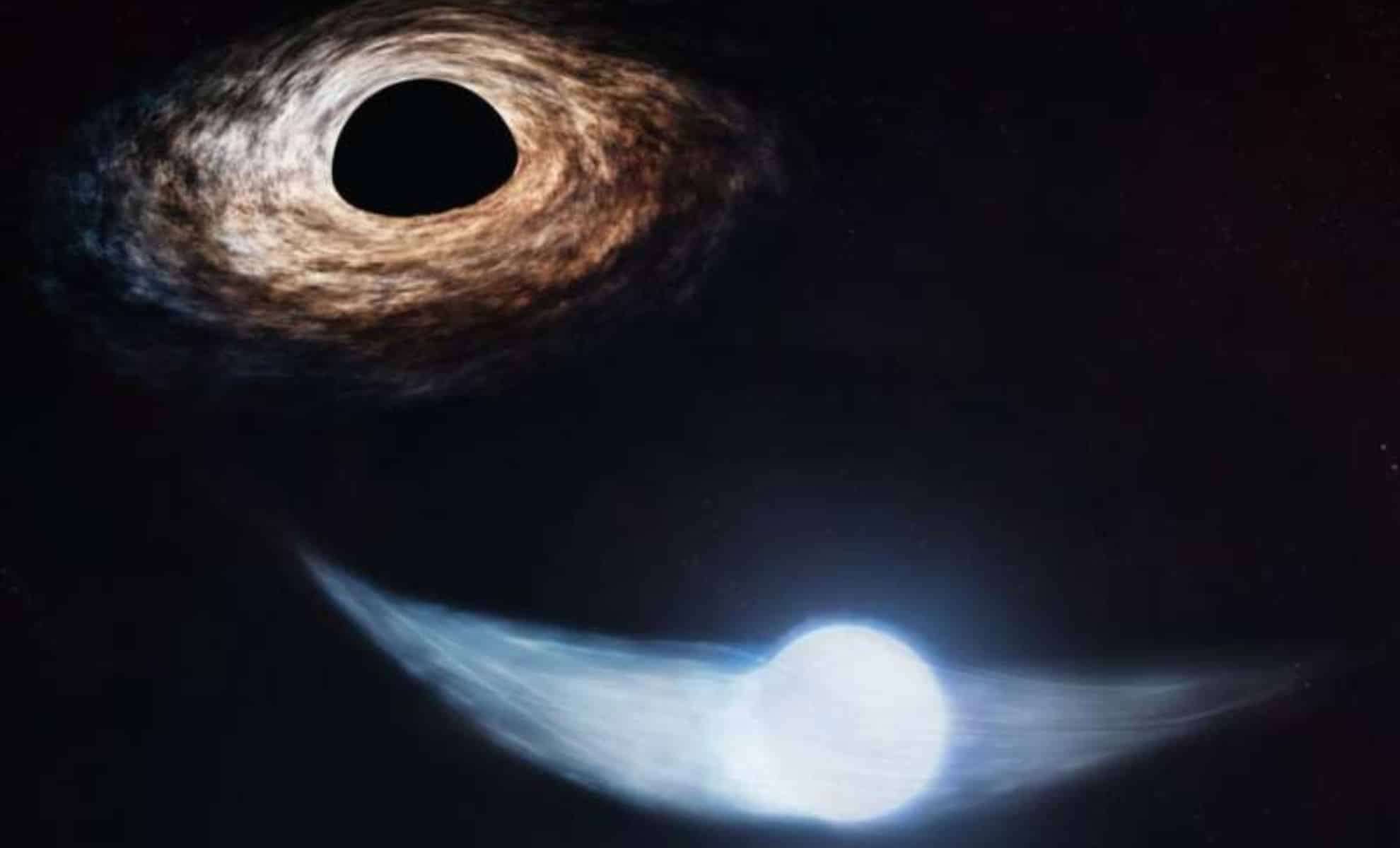
Scientists have captured the slow process of a black hole devouring a star, providing new insights into these extraordinary phenomena and allowing predictions of future encounters.
This observation grants researchers a closer look at black hole feeding mechanisms and improves the understanding of such events.
The Remarkable Survival of a Star’s Core Near a Black Hole
Contrary to expectations, the star’s core remained intact after its initial interaction with the black hole. Normally, when a star is engulfed by a black hole, it is obliterated in a single violent episode called a tidal disruption event (TDE).

In a typical TDE, the star is shredded by intense gravitational forces, with some of its matter pulled into the black hole and other parts hurled into space. Here, though, the star’s core survived the initial encounter and continues to orbit the black hole. This unique scenario offers astronomers ongoing opportunities to study the black hole’s feeding process across multiple cycles.
Thomas Wevers from the Space Telescope Science Institute commented, “At first, we believed this was a straightforward case of a black hole completely tearing apart a star. Instead, the star seems to be enduring for another round.” This unexpected survival allows scientists to observe a repeated partial tidal disruption, where the star is slowly consumed over several passages.
Each close approach causes the star to lose layers, which then form a luminous accretion disk as the black hole’s gravity draws in the material. This generates regularly occurring flares detected by astronomers.
Forecasting the Black Hole’s Upcoming Encounter
Thanks to data on the star’s trajectory and emission patterns captured by telescopes, astronomers can successfully forecast when the black hole will next consume parts of the star. Identified as AT2018fyk, the star’s elliptical orbit brings it close enough to the black hole every 3.5 years for material to be stripped away.

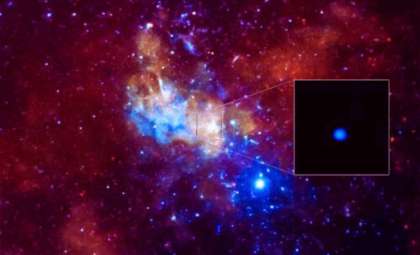
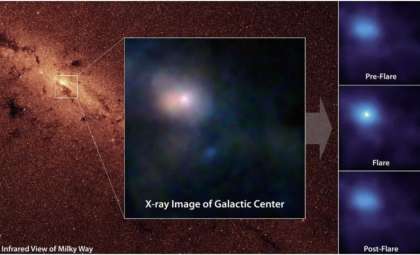
These periodic events produce bursts of X-ray and ultraviolet radiation, captured by instruments such as Chandra, Swift, and XMM-Newton. In August 2023, astronomers confirmed the accuracy of their predictions after noticing a notable dimming of the star’s light, evidence that the black hole had devoured another portion of the star’s material.
Eric Coughlin, physics professor at Syracuse University, said the next feeding episode is anticipated between May and August 2025. “This will likely be more like a small bite rather than a full feast,” Coughlin noted, highlighting the gradual nature of the star’s demise.
Being able to anticipate these events marks a significant leap forward in black hole research, enabling scientists to witness these interactions in real time and hone theoretical frameworks of black hole activity.
The Enigma of the Star’s Resilience
The star’s endurance is particularly notable because it once had a companion star. During its encounter with the black hole, the companion was violently expelled at speeds around 1,000 kilometers per second (621 miles per second).
While the companion sped away, the star remained gravitationally bound to the black hole. Muryel Guolo from Johns Hopkins University explained, “The doomed star was forced to switch its companion—from another star to a massive black hole. Its stellar partner escaped, but it remained.”
This extraordinary interaction sheds light on stellar behavior and dynamics within extreme environments. The star’s ongoing orbit and gradual consumption provide a rare chance to study how black holes feed over extended periods, challenging the notion that they obliterate stars in one swift action.
Advancing Our Knowledge of Black Holes
This finding marks a major advancement in comprehending black hole behavior and the complex gravitational dance when stars become caught in their sway. By unraveling this black hole’s intermittent “snacking” process, researchers aim to refine models of how black holes consume matter in their surroundings. Coughlin added, “We expect this model will become a key tool for scientists detecting similar phenomena.”
These results deepen our understanding of star lifecycles near black holes and contribute to broader efforts to uncover the mysteries surrounding these cosmic giants. As further observations come from observatories like Chandra and Swift, researchers anticipate gaining even greater insights into the forces driving such extraordinary cosmic events.
- Categories:
- Astronomy ,
- News ,
- Space ,
- Nasa






0 comments
Sign in to Comment