
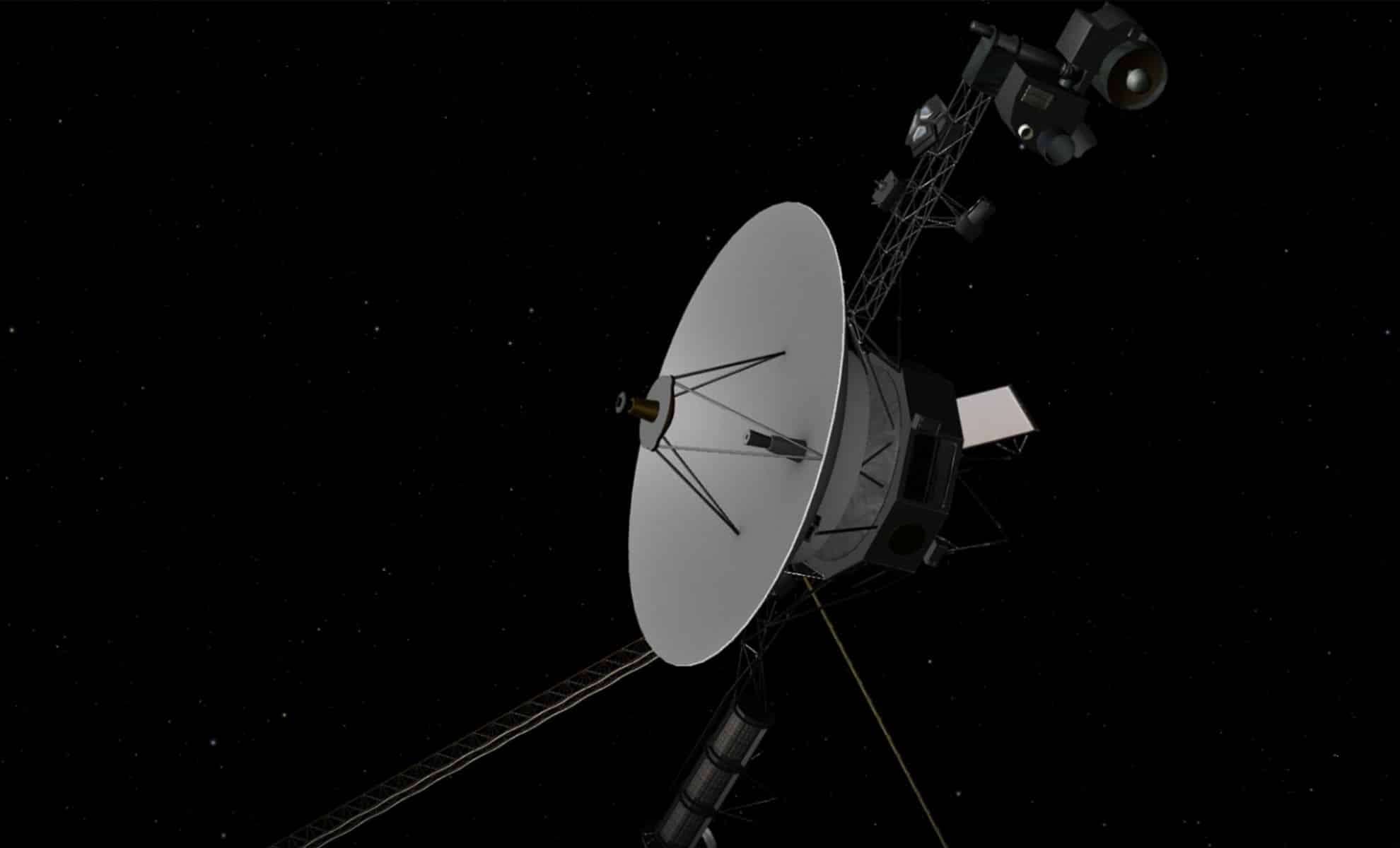
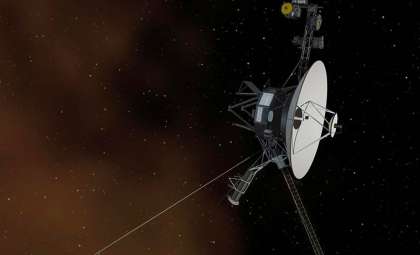
NASA’s Voyager 1 spacecraft, journeying through space for nearly 47 years, has successfully resumed sending scientific information from all four of its instruments.
This accomplishment represents a crucial breakthrough for the mission, which recently encountered technical setbacks. Voyager 1, now situated over 15 billion miles away from Earth, remains an invaluable source of data about the interstellar environment.
Voyager 1 Overcomes Technical Issues to Restore Data Stream
The restoration of data flow follows a period beginning in November 2023 when a computer malfunction caused Voyager 1 to transmit corrupted data. NASA’s engineers promptly assembled a specialized "tiger team" to investigate and resolve the issue.

They pinpointed the problem to a damaged memory chip and successfully modified the spacecraft’s software to bypass the defective component. By April, communication was reestablished, and by May 19, two instruments were delivering data again, followed quickly by the remaining two.
Linda Spilker, the Voyager project scientist, emphasized the significance: “The tiger team was able to reprogram and relocate that code, first for the engineering portion of the data modes coming from the spacecraft. We are now getting science data back from all four Voyager 1 science instruments. This is the first flight software update made to a spacecraft in interstellar space.”
Continuing Maintenance and System Adjustments
Although all instruments are operational once again, engineers must perform additional adjustments to optimize the spacecraft’s functioning. This includes resynchronizing the timing software among Voyager 1’s three onboard computers to guarantee precise command execution. Maintenance tasks will also target the digital tape recorder, which stores certain data for the plasma wave instrument and transmits it to Earth biannually. Most science data from the Voyagers, however, are transmitted directly.
Together with its counterpart Voyager 2, NASA’s Voyager 1 is the longest-lived and farthest spacecraft in history. Voyager 2 currently lies over 12 billion miles from Earth. Both probes have delivered invaluable insights since their 1977 launch, exploring Jupiter and Saturn, with Voyager 2 additionally visiting Uranus and Neptune.
Power and Thermal Management Challenges
The mission’s biggest hurdle now is the gradual reduction in power. Each Voyager loses roughly four watts per year as their plutonium-238 fuel decays and their thermocouples, converting heat into electricity, degrade.
To combat this, mission operators disable nonessential systems, including heaters that protect instruments and components from the cold.
Spilker explained ongoing efforts: “What’s happening is that the spacecraft is becoming cold, so we have both a power concern as well as a thermal concern. At some point, the mission will have to start turning off instruments themselves, but we are hopeful that the spacecraft can continue to operate perhaps into the next decade.”
Future Prospects for Voyager 1
The team aims to keep Voyager 1 functional through at least 2027, commemorating 50 years since its launch. If operational through 2035, it will be located around 200 astronomical units (about 30 billion kilometers) from the Sun. Continued activity offers opportunities to deepen our understanding of the interstellar medium and the environment beyond our solar system.
This update comes shortly after the passing of Ed Stone, who led the Voyager project from its start in 1972 until retiring in 2022. Stone was instrumental to the mission’s success and legacy.
Reflecting on his impact, Spilker said, “Ed Stone would often say during the planetary flyby phase that we had a rare opportunity with the alignment of the planets and we seized it. I would add that both Voyagers still have rare opportunities, and Ed will continue to seize them.”
Voyager 1’s ongoing ability to deliver scientific data after nearly five decades in space exemplifies the dedication and innovation of the engineers and scientists behind it. As it ventures farther into interstellar space, it extends the frontiers of exploration and expands our cosmic knowledge.
- Categories:
- Astronomy ,
- Space ,
- Nasa ,
- Aircraft





0 comments
Sign in to Comment