

NASA’s Parker Solar Probe has reached its 20th close pass by the sun, marking a key achievement in its quest to investigate the solar corona.
This accomplishment highlights the probe’s durability and the precise mission planning that enables it to unravel the mysteries of the sun’s outer atmosphere.
Since its 2018 launch, the Parker Solar Probe has continuously expanded the frontiers of solar science, delivering crucial data that deepen our comprehension of the sun and its vast influence across the solar system.

A History of Record-Breaking Solar Approaches
On June 30, 2024, the Parker Solar Probe (PSP) approached to within 4.51 million miles (7.26 million kilometers) of the sun’s surface, tying its closest distance to date. At this perihelion, the spacecraft sped along at an incredible 394,736 miles per hour (635,266 kilometers per hour).
This perihelion represents the midpoint of the probe’s 20th solar flyby, spanning from June 25 to July 5. Teams at the Johns Hopkins Applied Physics Laboratory—the facility where the spacecraft was engineered and assembled—confirmed that all systems remain fully operational after the encounter. This milestone showcases not only the probe’s ruggedness but also the soundness of its design and mission execution.
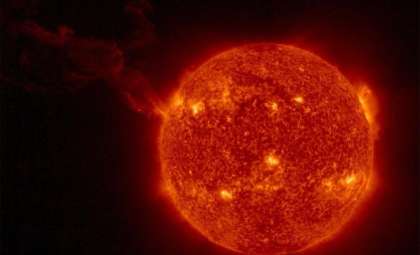
The Parker Solar Probe’s consecutive record-setting approaches demonstrate its success at surviving and operating within the sun’s intense environment. Each close pass enables the spacecraft to collect critical information about the solar corona, the sun’s outermost atmospheric layer.
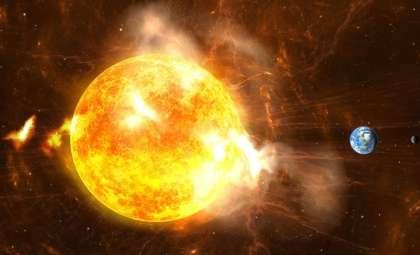
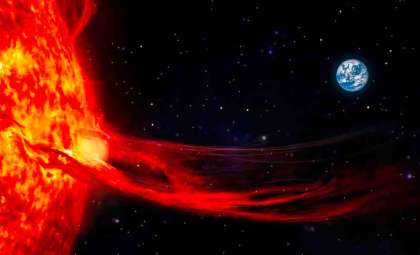
This region is scientifically vital as it holds answers to the forces behind solar winds and space weather events that influence Earth’s technological infrastructure. By traveling closer to the sun than any predecessor, the probe captures unprecedented details about these dynamic solar phenomena.
Key Scientific Aims of the Parker Solar Mission
Deployed in 2018, the Parker Solar Probe focuses on exploring the sun’s corona. Unveiling the processes occurring in this high-energy region assists researchers in understanding solar winds and space weather effects impacting our planet.
The corona mystifies scientists with temperatures soaring to millions of degrees—far hotter than the sun’s visible surface. Investigating this temperature anomaly is a core objective of the probe.
The mission uses a sequence of gravity assists near Venus to steadily shrink the probe’s orbit, enabling progressively closer solar approaches. These carefully planned maneuvers allow the probe to penetrate the corona and gather invaluable observations.
Equipped with advanced instruments designed to endure the sun’s extreme heat and radiation, the probe captures high-definition images along with detailed measurements of magnetic fields, plasma flows, and energetic particles in the corona.
"PSP was launched in 2018. It is designed to study the upper layer of the solar atmosphere, called the corona, and the processes taking place in it," noted Universe Magazine. This data paves the way for a deeper grasp of solar dynamics and their ripple effects throughout the solar system.
Insights from the Parker Solar Probe are anticipated to enhance space weather forecasting, crucial for safeguarding communication networks, satellites, and electrical grids on Earth.
Upcoming Missions and Final Trajectory Adjustments
The Parker Solar Probe will undertake another close solar pass on September 30, 2024, maintaining its record-tying speed and proximity. A critical mission milestone awaits on November 6, 2024, when the probe executes its concluding Venus flyby.
This final maneuver will position the spacecraft for its nearest planned orbit, bringing it to about 3.8 million miles (6.2 million kilometers) from the sun’s surface on December 24, 2024. At this juncture, the probe is projected to hit approximately 430,000 miles per hour (700,000 kilometers per hour), establishing a new speed record for human-made objects.
These calculated close encounters will allow the Parker Solar Probe to amass extraordinary data on solar dynamics and the sun’s outer atmospheric layers. The findings will significantly refine models of the corona and its interactions with the heliosphere—Earth’s expansive protective bubble shaped by solar magnetic fields and winds.
The probe’s successful close passes validate its robust engineering and the precise planning of its mission, fueling expectations for major breakthroughs that enhance our solar knowledge and reveal the sun’s influence on the broader space environment.
The Parker Solar Probe’s journey stands as a monumental advance in solar research, offering new perspectives on the fundamental processes that power our star and affect the entire solar system.
- Categories:
- Astronomy ,
- News ,
- Space ,
- Nasa ,
- Aircraft







0 comments
Sign in to Comment