
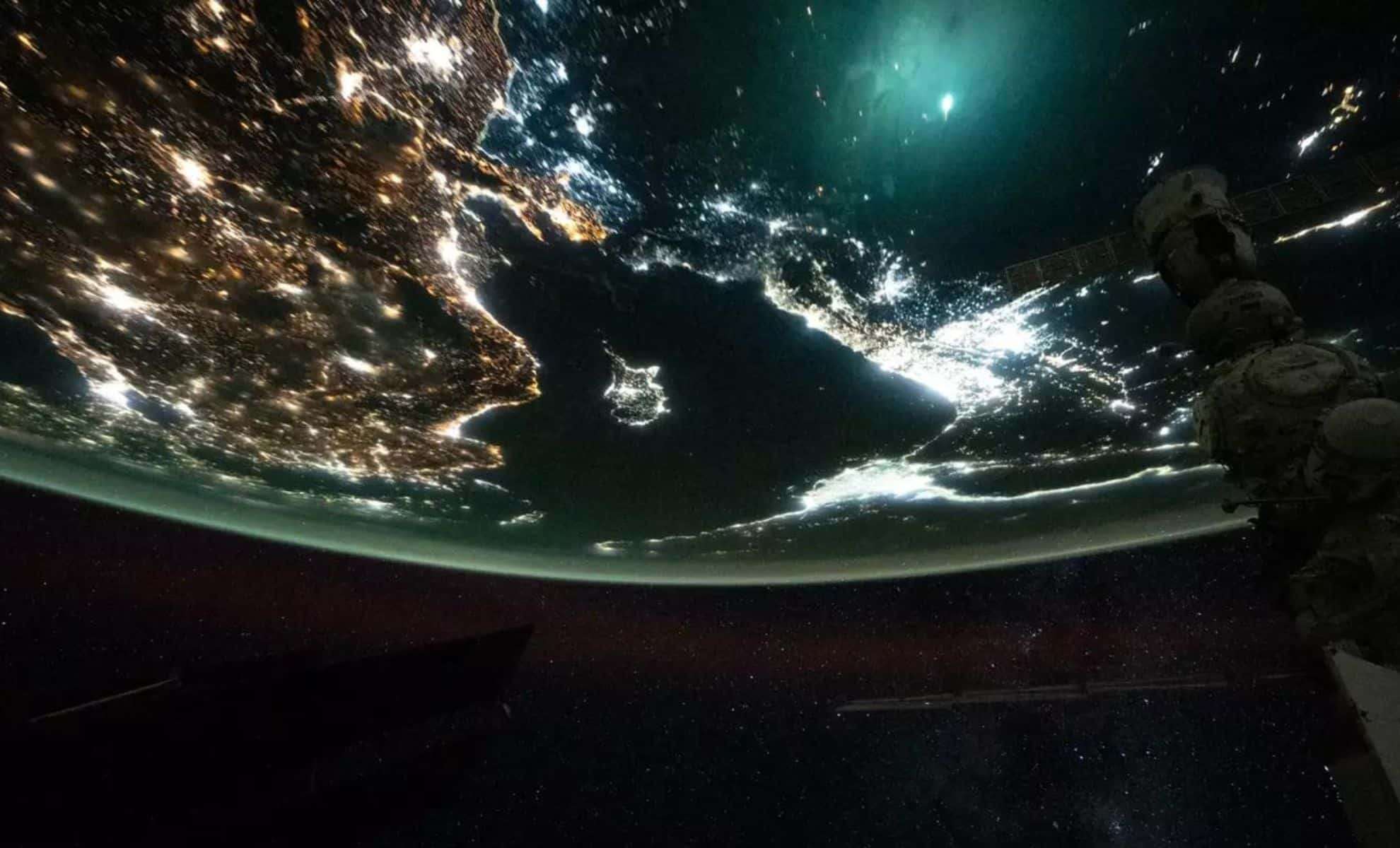
NASA astronaut Matthew Dominick, aboard the International Space Station (ISS), recorded an awe-inspiring video of a meteor bursting in a brilliant flash as it entered Earth’s atmosphere above North Africa.
This spectacular occurrence, known as a bolide, highlights the unique observational advantages of astronauts orbiting our planet and demonstrates the incredible phenomena that can be witnessed from space. The viral footage contributes to the impressive collection of extraordinary visuals broadcast by crews aboard the ISS.
Meteor Bolide Lights Up North African Skies
The sighting took place on September 2, 2024, at 20:12 GMT, while the ISS was traversing the area above Cairo, Egypt. Dominick’s video captures the meteor streaking rapidly through the atmosphere before detonating in a striking green flash that illuminated the night sky. Bolides are meteors distinguished by their intense brightness and explosive disintegration, making them visible over vast regions.

Sharing the clip on social media, Dominick slowed down the footage to one frame per second to emphasize the details of the event. Upon noticing the extraordinary flash while reviewing Earth timelapses, he consulted experts who confirmed it was a bolide. The combination of the explosion and nearby lightning storms captured from space added dramatic effect to the imagery.
I showed this to a couple of friends yesterday to see what they thought. They both thought it was a meteor exploding in the atmosphere – a rather bright one called a bolide. Timelapse is slowed down to one frame per second for you to see it streaking and then exploding.
If you… pic.twitter.com/tn2KmWgnoE
— Matthew Dominick (@dominickmatthew) September 3, 2024
The Science Behind Bolides
A bolide is a rare type of meteor known for its explosive breakup in the atmosphere, producing flashes far brighter than typical meteors. According to NASA’s Center for Near-Earth Object Studies (CNEOS), these events are notable for their wide visibility and intense bursts of light, sometimes observed from space. The North African bolide was so luminous that it was clearly recorded by the ISS, offering researchers a valuable glimpse into such powerful atmospheric interactions.
These explosive meteors hold scientific importance by revealing the characteristics and compositions of incoming meteoroids. The bolide’s bright detonation, which momentarily eclipsed atmospheric effects like lightning, provides a rare chance to study these energetic events and their dynamics as space debris enters Earth’s atmosphere.
Unique Views from the International Space Station
The ISS provides a remarkable platform for witnessing phenomena that are difficult or impossible to observe from Earth’s surface. Astronauts like Dominick have the rare opportunity to document breathtaking natural events, such as this meteor explosion, by capturing footage from their high-altitude perch. The ISS’s orbit over North Africa enabled this extraordinary recording.
In addition to the meteor event, Dominick’s video also displays lightning activity across the African continent. The UK Met Office estimates Earth endures about 44 lightning strikes every second, totaling roughly 1.4 billion annually. This combination of lightning and meteor bolide generated a truly exceptional spectacle in the ISS's continuously changing panorama.
Advancing Meteor Research Through Bolide Captures
Bolides offer critical data for scientists investigating meteors and near-Earth objects. Their explosive entries release substantial energy, making them important for both scientific inquiry and planetary defense strategies. Dominick’s unique space-based perspective contributes valuable observations that enhance understanding of meteor behavior during atmospheric entry.
Insights from bolide events help improve predictions about meteor frequency and potential threats. Documentations like this also aid near-Earth object monitoring efforts, vital for safeguarding Earth against larger meteor impacts. While most bolides pose no danger, continued study enhances preparedness for possible future encounters with hazardous space objects.
- Categories:
- Astronomy ,
- News ,
- Space ,
- Nasa








0 comments
Sign in to Comment