
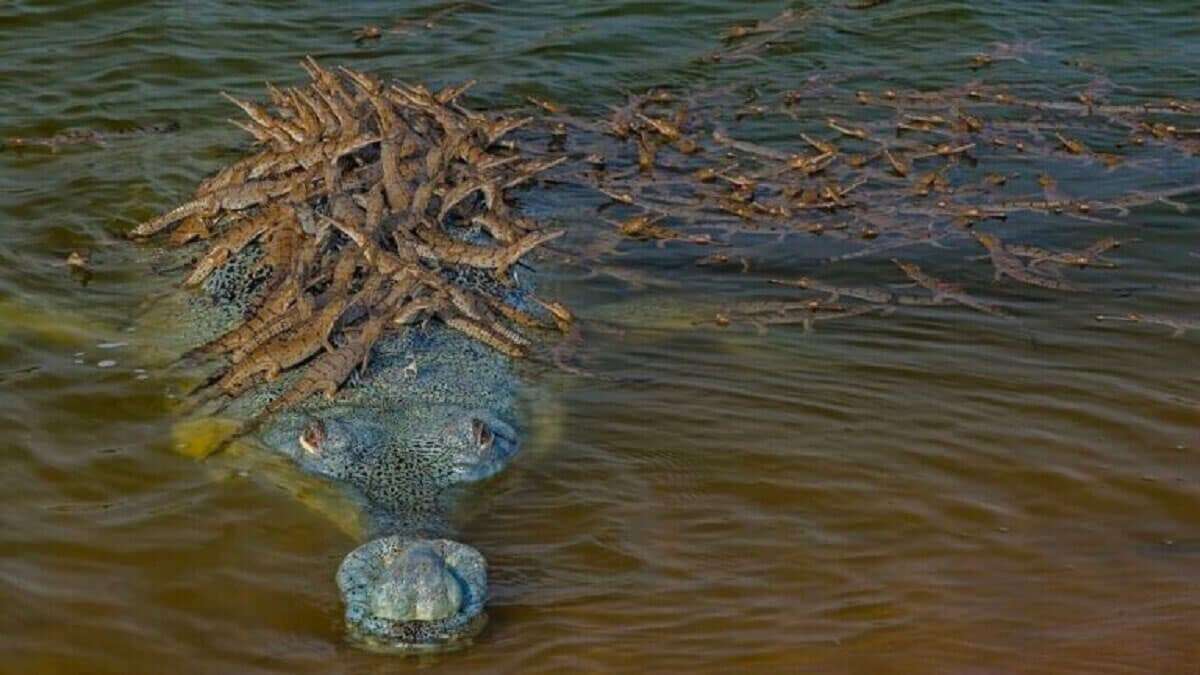
A captivating photograph by wildlife expert Dhritiman Mukherjee reveals an extraordinary glimpse into crocodilian care. The image features a male gharial, an endangered crocodile species, gliding elegantly through the water while carrying nearly 100 tiny hatchlings on his rugged back.
This rare parenting technique illustrates the adaptability of gharials. Unlike other crocodilians that usually transport their young in their mouths, gharials have evolved a different way to protect their offspring, thanks to their unique anatomy:
- Elongated, slim snouts
- Sharp, needle-like teeth
- Limited ability to safely hold babies in their jaws
By offering a safe passage on their backs, adult gharials enhance their young's chances of survival amid fast-flowing river environments. This behavior sheds light on the complexity of animal parenting strategies and echoes the diverse ways that life adapts to environmental challenges, comparable to how asteroid debris and cosmic dust may have kickstarted life on Earth.

Role of viral imagery in gharial conservation
The widespread popularity of this photo has shone a spotlight on the precarious status of gharials. With roughly 650 mature gharials left in natural habitats, each breeding success plays a vital part in the species’ future. The Chambal River basin, home to the largest gharial populations, currently shelters about 500 animals facing threats on multiple fronts.
Patrick Campbell, senior reptile curator at the Natural History Museum, highlights the importance of this rare scene:
Gharial Traits Conservation Issues Can exceed 4 meters in length Destruction of habitat Weight reaching up to 900 kilograms Illegal hunting Classified as critically endangered Small breeding groups
This captivating photo has become a powerful catalyst for awareness, encouraging appreciation for fragile ecosystems and stressing the necessity of biodiversity preservation going forward.
Insight into the photographer’s journey
Dhritiman Mukherjee’s skilled eye and commitment are reflected in this mesmerizing shot that has fascinated an international audience. Spending many weeks within the wildlife reserve, Mukherjee displayed remarkable patience while respecting the creatures’ environment. His photographic philosophy includes:
- Minimizing interference with natural settings
- Documenting genuine animal behaviors
- Harnessing photography to boost conservation awareness
His work was honored with a shortlist nomination for the renowned Wildlife Photographer of the Year and won a major contest held by the Natural History Museum. This acclaim highlights the impact of visual storytelling in bridging people to wildlife and galvanizing conservation initiatives.
Driving factors for worldwide conservation momentum
The viral spread of this remarkable image has caused a surge in attention toward endangered species and their ecosystems. Conservation groups report increased public engagement and support following the photo’s circulation, showcasing the influence visual media holds in fostering positive environmental action.
As this incredible scene continues to inspire viewers worldwide, it stands as a moving symbol of nature’s resilience and the shared responsibility to protect it. From the tranquil river currents to millions of screens, this father gharial with his young passengers encapsulates hope in the effort to conserve biodiversity.
Beyond celebrating this natural marvel, the global interest also emphasizes the urgent need for sustained wildlife protection and habitat conservation. Witnessing 100 juveniles safely riding on their father’s back reminds us of the delicate interconnections supporting life on Earth and the crucial role we have in preserving these ecosystems for the future.
- Categories:
- News












0 comments
Sign in to Comment