
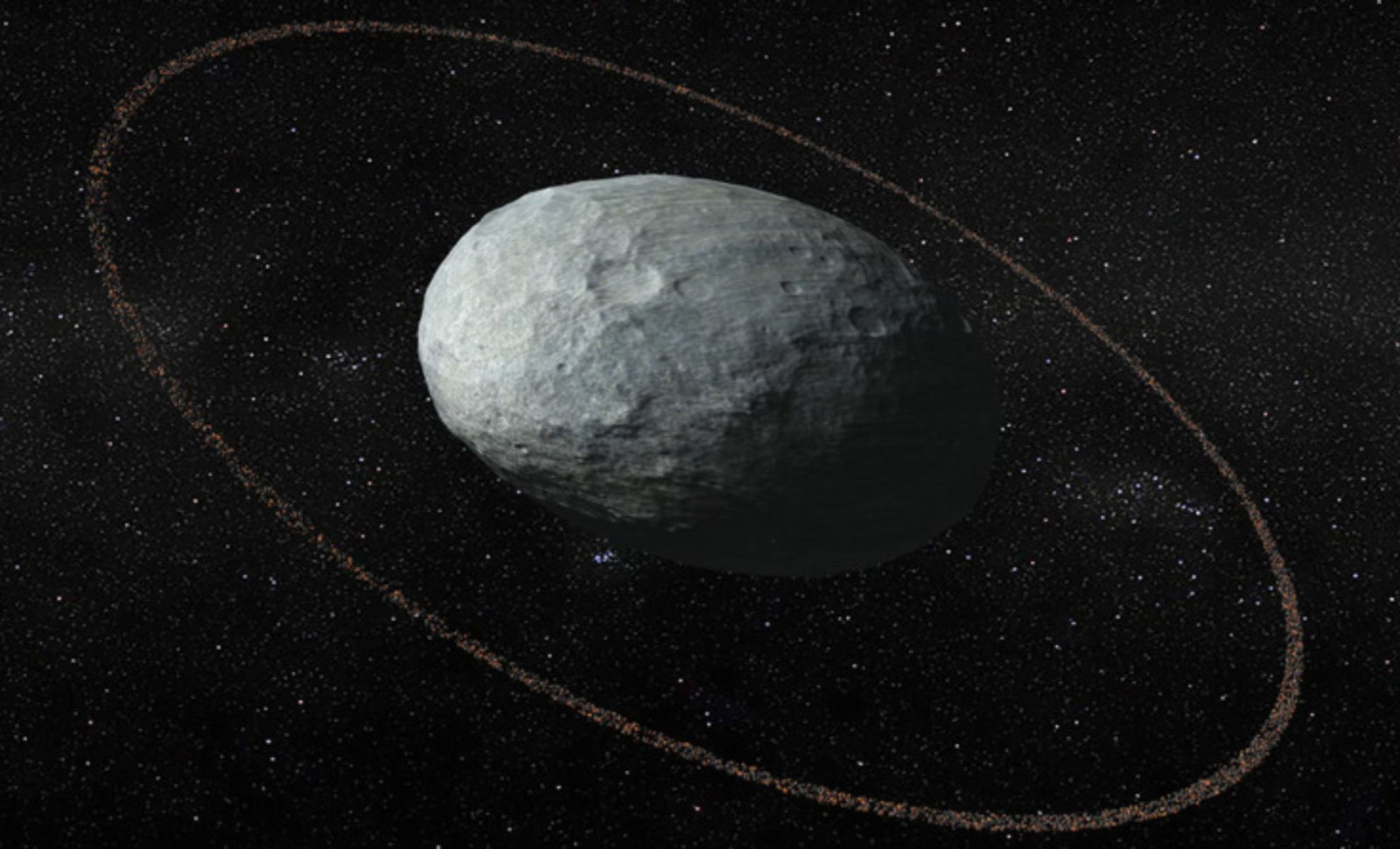
Identified back in 2004, the dwarf planet Haumea immediately attracted attention due to its swift spin and oblong appearance. The 2017 identification of a ring system around Haumea added another intriguing twist to its already unique characteristics. As astronomers continue to investigate the Kuiper Belt, discoveries like this highlight the region's surprising diversity and complexity.
Located over four billion miles from the Sun, Haumea resides in a frigid, dimly lit area filled with icy bodies that are remnants from the solar system's formation. Orbiting far beyond Neptune, it is part of a distant population of objects with largely unknown composition and behaviors. The presence of a ring circling such a remote world, combined with its distinctive shape and rapid rotation, has sparked new interest in understanding the forces at work in the outer solar system.
Unexpected Ring Found During Stellar Occultation
The ring encircling Haumea was uncovered in 2017 when the dwarf planet passed in front of a distant star, an event known as a stellar occultation. This method allows scientists to analyze the silhouette of an object by observing how it blocks starlight. Based on a study published in Nature, astronomers detected a drop in brightness that did not match Haumea’s main body, indicating the presence of a thin, luminous ring surrounding it.

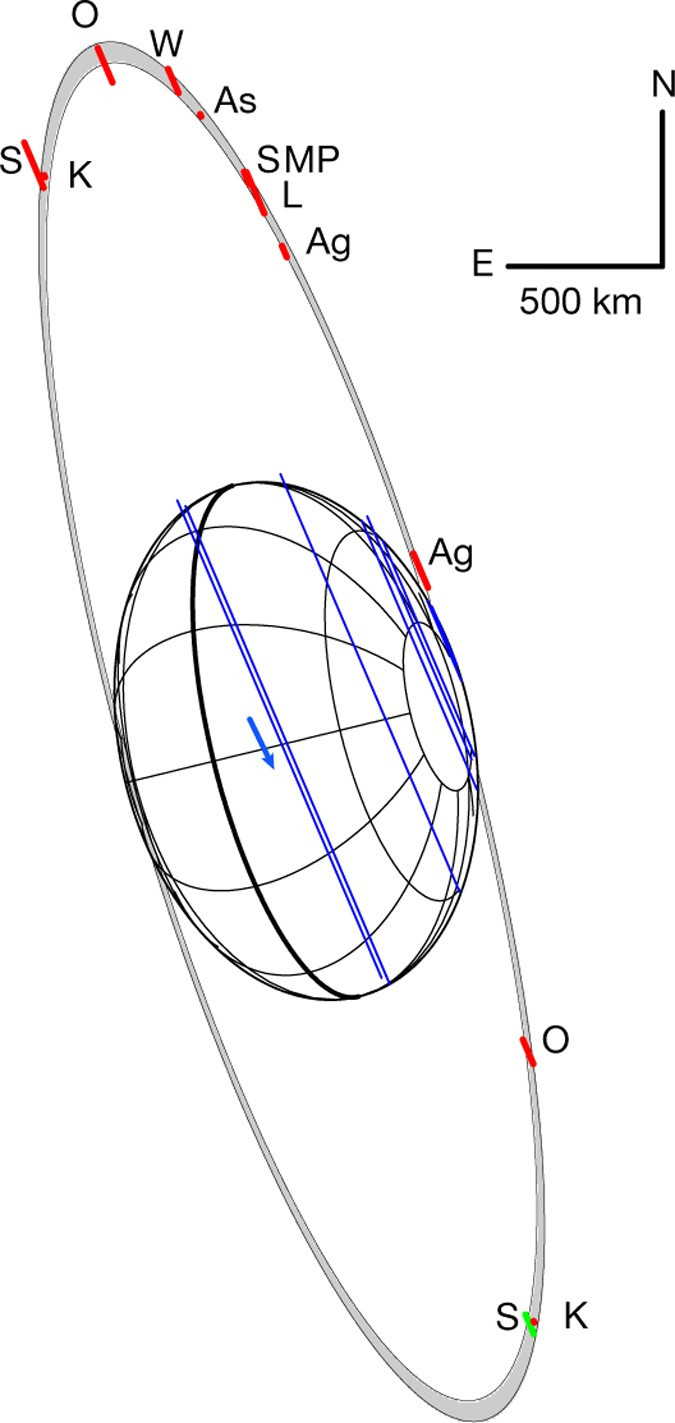
This ring orbits approximately 1,000 kilometers above Haumea’s surface and measures about 70 kilometers wide. This finding was notable because rings had previously only been observed around gas giants like Saturn and Uranus, as well as a few smaller bodies such as the centaur Chariklo.
“Our discovery proves that there is a lot more diversity and imagination in our solar system than we had thought,” study co-author Bruno Sicardy of the Paris Observatory.
Haumea’s ring broadens the scope of known ringed objects and suggests such phenomena might be more common within the Kuiper Belt than previously assumed.
Swift Rotation Shapes Haumea Into an Egg-like Form
One of Haumea's most extraordinary traits is its exceptionally rapid spin, completing a full rotation every four hours. This rate surpasses that of any other sizable body in the solar system and causes the dwarf planet to elongate, resulting in an oval, stretched shape.
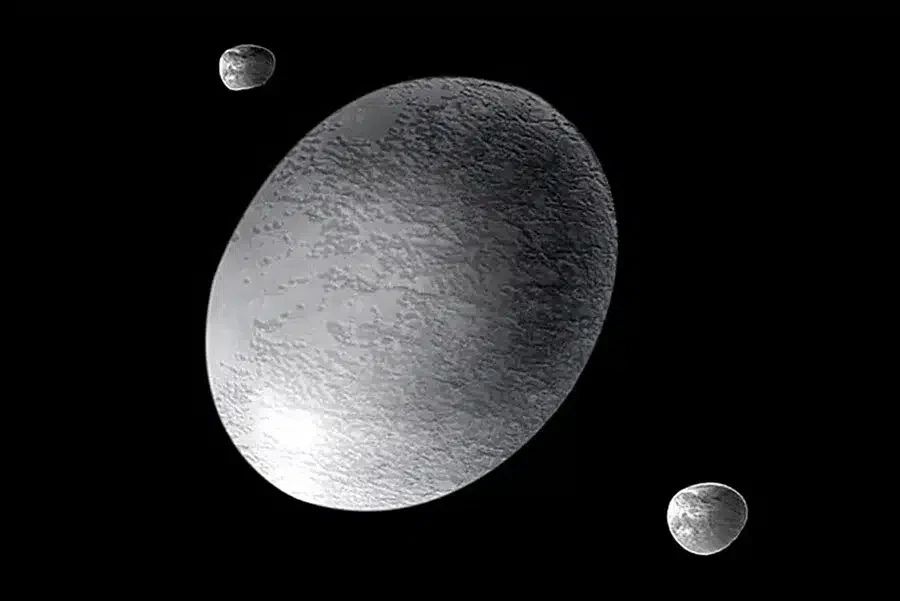
This intense spin might have propelled debris into orbit, potentially forming the ring and Haumea’s two known satellites, Hiʻiaka and Namaka. Unlike other icy objects with smoother exteriors, Haumea’s surface is coated with crystalline water ice, giving it a bright, reflective quality and reinforcing its distinct appearance. The interplay of rapid rotation, unusual shape, and reflective surface renders Haumea one of the most remarkable objects discovered in the outer solar system.
Fresh Insights Into Distant Solar System Bodies
Discoveries related to Haumea are guiding scientists towards a revised understanding of the Kuiper Belt. Previously considered a relatively quiet domain of inert bodies, the existence of a ring around this dwarf planet points to a far more active and intricate region. It raises the possibility that ring systems may form under diverse circumstances, not solely around massive planets.
Haumea’s unique combination of rapid rotation and unusual shape challenges traditional notions about the environments where planetary rings can emerge. As outlined by BGR, this finding contributes to an expanding set of evidence prompting new models for planetary evolution in the solar system’s icy outskirts.
- Categories:
- Space






0 comments
Sign in to Comment