

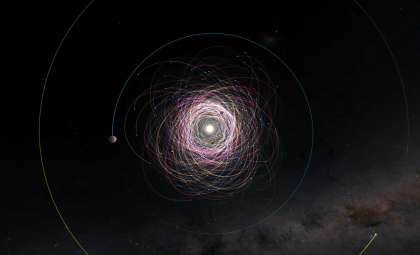
Scientists at MIT have introduced an innovative technique aimed at discovering and monitoring smaller asteroids that could disrupt vital satellite operations and space infrastructure. Featured in the Research Notes of the AAS, the paper draws attention to the risks posed by decameter-scale asteroids. Though smaller than the massive impactors linked to mass extinction events, these objects present a substantial hazard to the communication and navigation networks integral to modern life. The approach leverages data from the James Webb Space Telescope (JWST), enabling the detection of faint asteroids that ground-based observatories often miss. This advancement marks a significant step forward in enhancing Earth’s planetary defense systems.
The Increasing Danger of Smaller Space Rocks
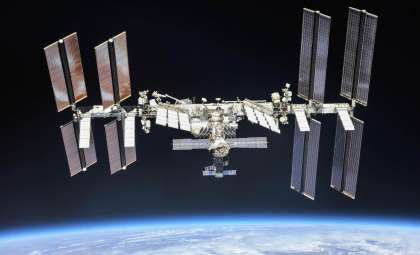
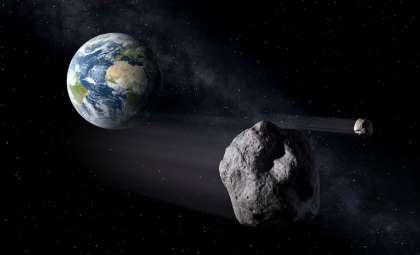
While large asteroid collisions often capture public imagination, smaller asteroids that are roughly building-sized are much more frequent and still pose serious risks. These decameter-scale objects are estimated to collide with Earth approximately every twenty years, much more regularly than the rare catastrophic impacts from giant asteroids. Although they are unlikely to cause widespread loss of life, such impacts can severely disrupt satellite networks, compromising critical services like global communication, GPS navigation, and national security operations.
In today’s tech-dependent world, timely detection of these smaller asteroids is essential. The MIT study emphasizes the necessity of enhancing our observational capabilities to safeguard Earth’s increasingly delicate space-based assets from these more common but hazardous threats.

Revolutionizing Planetary Protection with JWST
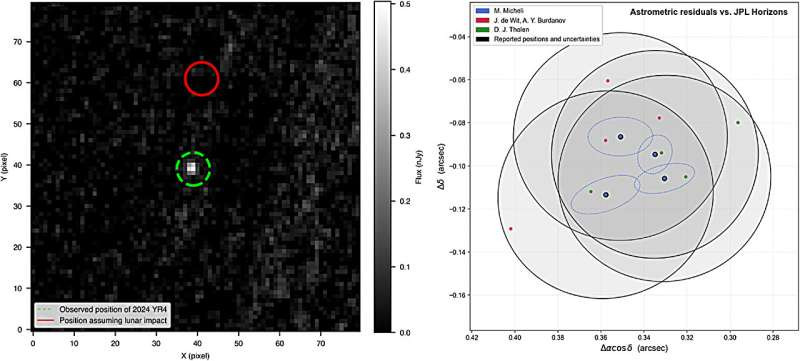
The MIT team’s novel detection approach, outlined in their publication in the Research Notes of the AAS, capitalizes on the advanced infrared imaging capabilities of the James Webb Space Telescope. Unlike traditional ground-based telescopes hindered by the faintness and distance of small asteroids, JWST can discern these elusive objects in deep space. Using this method, researchers identified and tracked the movement of asteroid 2024 YR4, a decameter-sized asteroid, demonstrating the technique’s effectiveness.
This capability holds significant promise for planetary defense by allowing early warning of smaller objects that could damage satellite networks. Understanding these asteroids' trajectories, sizes, and material makeup is crucial in designing appropriate mitigation tactics and preparing prompt defensive measures if necessary.
Strengthening Global Efforts through Collaboration
Though JWST broadens observational reach, other facilities contribute importantly to detecting and characterizing small asteroids. The Vera Rubin Observatory, soon to begin operations in Chile, is expected to boost asteroid discoveries by an order of magnitude. MIT researchers highlight that just spotting these objects is insufficient; rapid and detailed follow-up observations are vital. That’s why institutions like the MIT Haystack Observatory and Wallace Observatory are integrated into a coordinated planetary defense framework.
This multidisciplinary cooperation combines astronomy, engineering, and data analysis, creating a comprehensive defense infrastructure that can quickly evaluate and respond to emerging threats with accuracy and efficiency.
Shaping the Future of Asteroid Defense
MIT’s role extends beyond detection research into strategic planning for future planetary defense measures. According to Professor Julien de Wit, the higher frequency of smaller asteroid encounters, alongside capabilities provided by advanced telescopes like JWST, means humanity must prepare for potential impacts in the near future. Though not civilization-ending, these events could critically affect satellite operations.
The Planetary Defense at MIT Project focuses on developing swift, cost-efficient strategies to intervene against small asteroids, potentially deflecting or disrupting them before pose threats to Earth's orbit. By bringing together experts from a range of scientific and technical fields, MIT is pioneering approaches that anticipate a future where smaller asteroid impacts are more effectively detected and countered.
Educating Tomorrow’s Defenders
MIT also prioritizes education and training to ensure a steady pipeline of skilled professionals in planetary defense. Through student programs like the Student Observing Lab at the Wallace Observatory, undergraduates gain practical experience managing telescopes and analyzing asteroid data. Their contributions advance real-time research efforts while cultivating the next generation of scientists and engineers poised to protect Earth from space hazards.
By integrating cutting-edge technology, international partnership, and educational outreach, MIT continues to lead efforts that enhance our planet’s resilience. With future telescopes and monitoring systems on the horizon, the ability to detect and mitigate risks from smaller asteroids has never been stronger.
- Categories:
- Space





0 comments
Sign in to Comment