
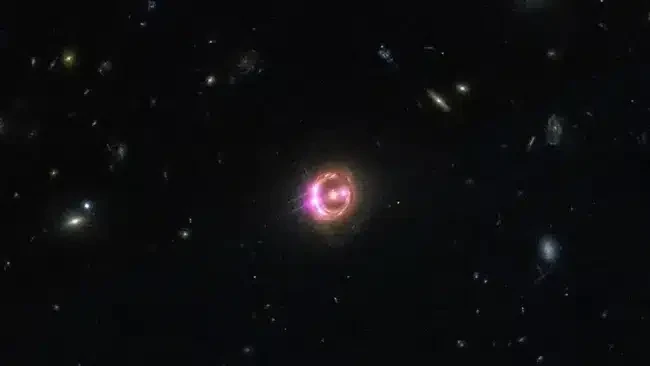
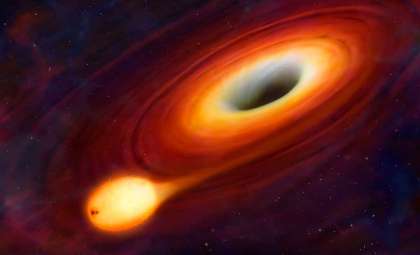
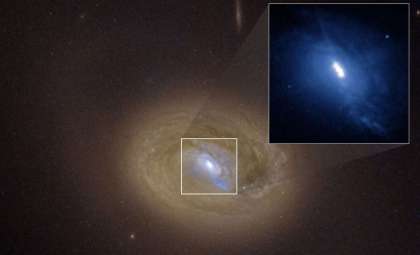
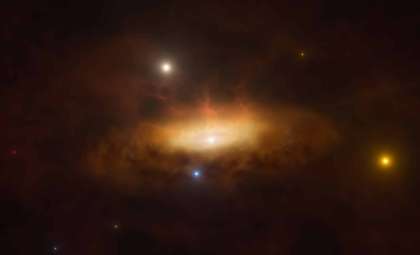
Researchers have finally detected the elusive corona enveloping a supermassive black hole in the quasar RX J1131, situated roughly 6 billion light-years away. Leveraging the powerful capabilities of the Atacama Large Millimeter/submillimeter Array (ALMA) in Chile, they analyzed subtle fluctuations in the quasar’s light to reveal the size and shape of the scorching gas encircling the black hole.
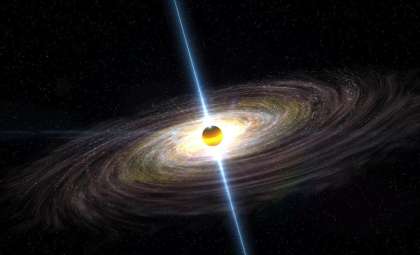
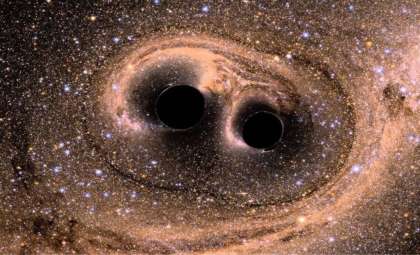
The quasar RX J1131 is energized by a supermassive black hole drawing in surrounding dust and gas, unleashing vast energy across the electromagnetic spectrum, from X-rays to radio waves. This process forms a region called the corona, which had remained a challenging feature to observe directly. Thanks to cutting-edge instruments and a fortuitous cosmic setup, scientists have now gained unprecedented insight into this energetic zone.
Gravitational Lensing: Nature’s Cosmic Magnifier
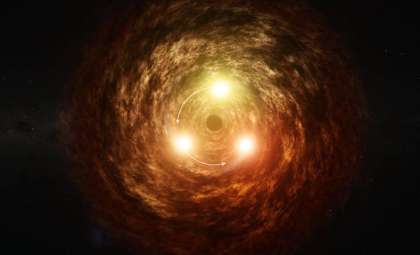
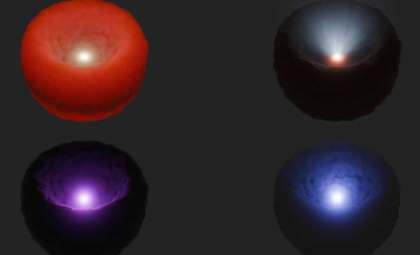
One key to exploring RX J1131 was gravitational lensing, where the gravity of an intervening galaxy bends and amplifies the light travelling toward Earth. This phenomenon, triggered when a massive galaxy lies between us and a remote object such as the quasar RX J1131, creates multiple distinct images of the quasar by bending its light paths.

The published research in Astronomy & Astrophysics explains how this gravitational lensing effect enabled astronomers to inspect the quasar’s light more closely than direct observation would allow. Each of the four lensed images corresponds to a different route taken by the light through space.
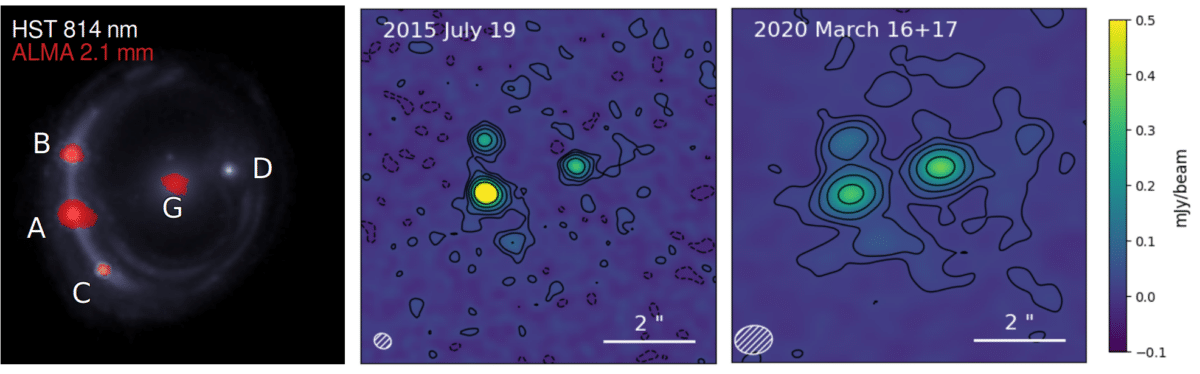
Additionally, microlensing caused by stars in the lensing galaxy acted like a natural zoom lens, briefly concentrating light from particular spots on the corona for enhanced detail.
A Closer Examination of the Black Hole’s Corona
By scrutinizing the brightness variations from RX J1131, scientists calculated that the corona spans roughly 50 astronomical units—comparable to the distance between the Sun and the farthest bounds of our solar system. This reveals the corona to be far more compact than previously anticipated. The data also confirmed that the corona emits both millimeter waves and X-rays, shedding light on the extreme conditions near the black hole.
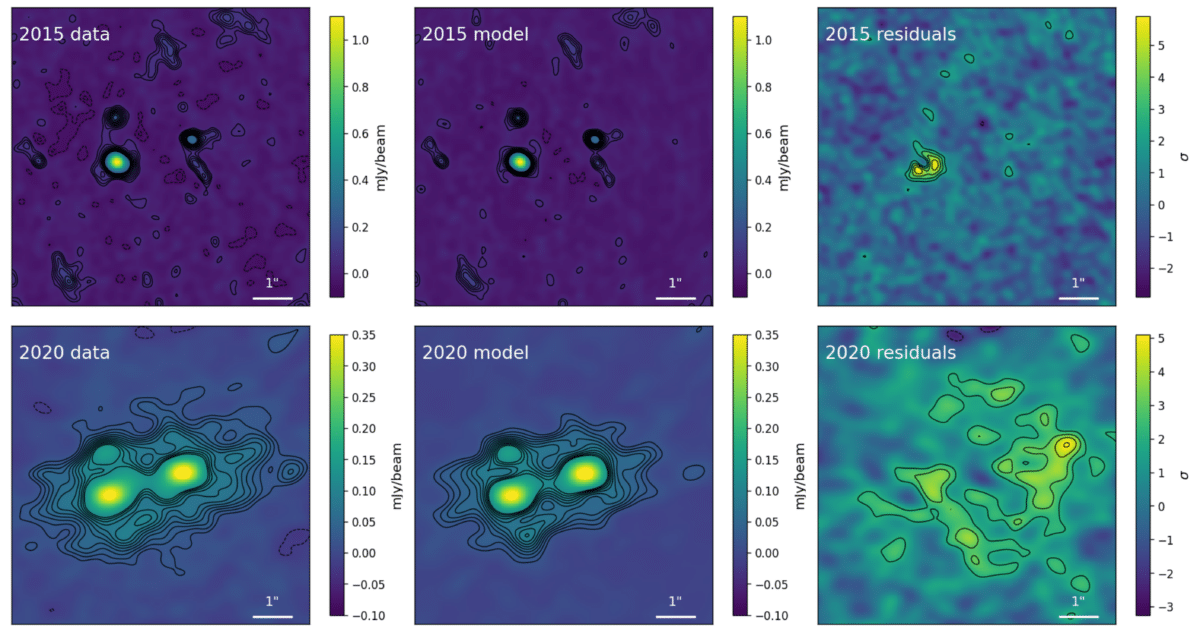
Matus Rybak, who led the investigation at Leiden University, pointed out that the observed brightness shifts suggest the emission arises from localized regions surrounding the black hole, rather than uniformly across the entire quasar. This insight allowed for precise measurements of the corona’s dimensions and configuration.
“Understanding how these black holes grow is the main potential here,” Rybak said. “But this was one of those moments when you realize, ‘No, things change, and they change a lot.”
Magnetic Forces Mold the Corona
Recent findings from RX J1131 reinforce the idea that the corona acts as a compact, magnetically intense zone. Observations showed emissions in both millimeter waves and energetic X-rays, consistent with models describing magnetically driven regions near supermassive black holes.
This discovery is significant because the emission patterns align with the Gudel-Benz relation, a connection linking radio and X-ray emissions in active stellar objects. This correlation bolsters the theory that magnetic fields are crucial in channeling energy in these extreme environments.
As instruments like ALMA expand into lower radio frequencies, astronomers anticipate uncovering further secrets about black hole coronas. With the upcoming Vera C. Rubin Observatory poised to revolutionize studies of distant cosmic phenomena, groundbreaking insights into supermassive black holes are expected to emerge.
- Categories:
- Space



0 comments
Sign in to Comment