
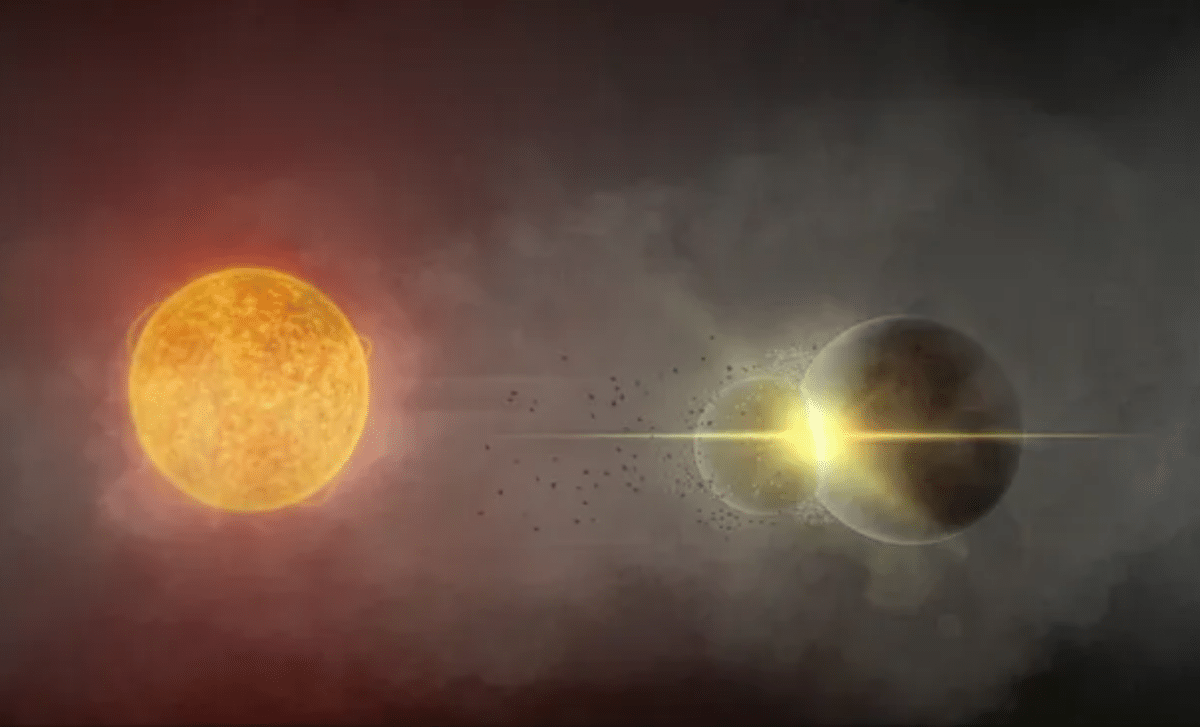
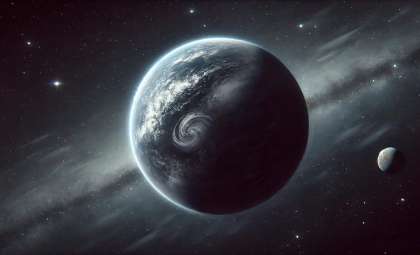
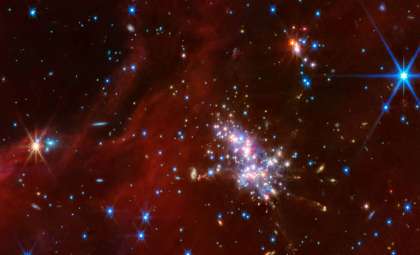
Scientists have identified compelling signs of a rare and extreme collision between two planets orbiting Gaia20ehk, a star situated more than 11,000 light-years from Earth. Reported in The Astrophysical Journal Letters, this remarkable finding sheds light on the tumultuous events that shaped our solar system’s past, indicating that massive planetary impacts, such as the one that formed Earth's moon, may occur more frequently than previously recognized.
The Enigma of Gaia20ehk: A Star Acting Unpredictably
Gaia20ehk, a seemingly stable star in the far-off parts of the Milky Way, behaved routinely for years until 2016, when astronomers detected unusual activity. This Sun-like star started showing erratic flickering and brightness fluctuations that defied expectations.
“It went completely bonkers,” said team leader and University of Washington researcher Anastasios Tzanidakis. “I can’t emphasize enough that stars like our sun don’t do that. So when we saw this one, we were like ‘Hello, what’s going on here?'”
Add Cosmo Herald as a Preferred Source

Such atypical variations are usually due to processes occurring within stars themselves, like pulsations or magnetic disturbances. However, Gaia20ehk’s erratic brightness changes were triggered not by the star's intrinsic activity but by a far more dramatic event: a violent smashup between two orbiting planets.
Unraveling the Mystery: Debris Reveals Planetary Impact
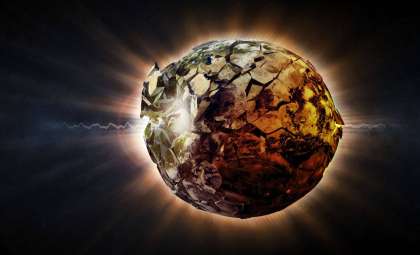
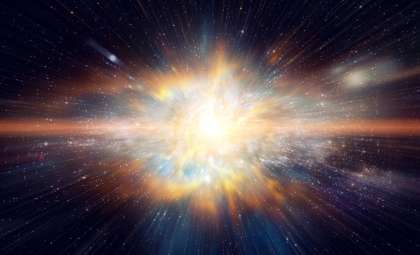
Through observations with several telescopes, researchers found that the star’s fluctuating light was caused by enormous clouds of dust and fragments orbiting in front of Gaia20ehk. These clouds resulted from a cataclysmic collision of two planets, which had been spiraling toward one another over millions of years.
This extraordinary occurrence, detailed in The Astrophysical Journal Letters, is exceptionally rare, with only a few observed examples of such grand planetary collisions to date.
“It’s incredible that various telescopes caught this impact in real time,” Tzanidakis explained. “There are only a few other planetary collisions of any kind on record, and none that bear so many similarities to the impact that created the Earth and moon. If we can observe more moments like this elsewhere in the galaxy, it will teach us lots about the formation of our world.”
The researchers propose that this event closely mirrors the ancient collision that formed Earth's moon around 4.5 billion years ago, a pivotal moment that set the stage for life on our planet.
Using Infrared Light to Gauge Collision Heat
To measure the event's magnitude, astronomers examined infrared data, revealing further insight into the fiery nature of the collision.
“The infrared light curve was the complete opposite of the visible light,” said Tzanidakis. “As the visible light began to flicker and dim, the infrared light spiked. Which could mean that the material blocking the star is hot—so hot that it’s glowing in the infrared.”
This infrared surge serves as crucial proof of the intense heat unleashed by the impact. The two planets had been slowly converging, producing minor grazing encounters with little infrared radiation, but the final, devastating collision generated significant heat and debris, confirming the event’s extraordinary scale. Such discoveries offer valuable clues about the violent early history of planetary systems including our own.
Consequences for Exomoon Formation and Life’s Origins
The aftermath of this violent encounter could have important consequences for how we understand the formation of moons and potentially habitable environments beyond our solar system. The debris left over now orbits Gaia20ehk at a distance comparable to the Earth-Moon separation. Over time, this material could cool and eventually form a natural satellite, or exomoon, similar to our Moon.
Observing such processes on a broader scale could deepen understanding of moon formation’s early stages. Researcher James Davenport highlighted the uniqueness of this investigation.
“Andy’s unique work leverages decades of data to find things that are happening slowly — astronomy stories that play out over the course of a decade,” Davenport said. “Not many researchers are looking for phenomena in this way, which means that all kinds of discoveries are potentially up for grabs.”
Moons like Earth’s are thought to play a vital role by stabilizing planetary tilt and influencing tides, factors essential for sustaining life. Learning how often such collisions and moon formations take place could be key to evaluating how common life-friendly moons may be around other planets, aiding in the search for extraterrestrial life.
- Categories:
- Space


0 comments
Sign in to Comment