
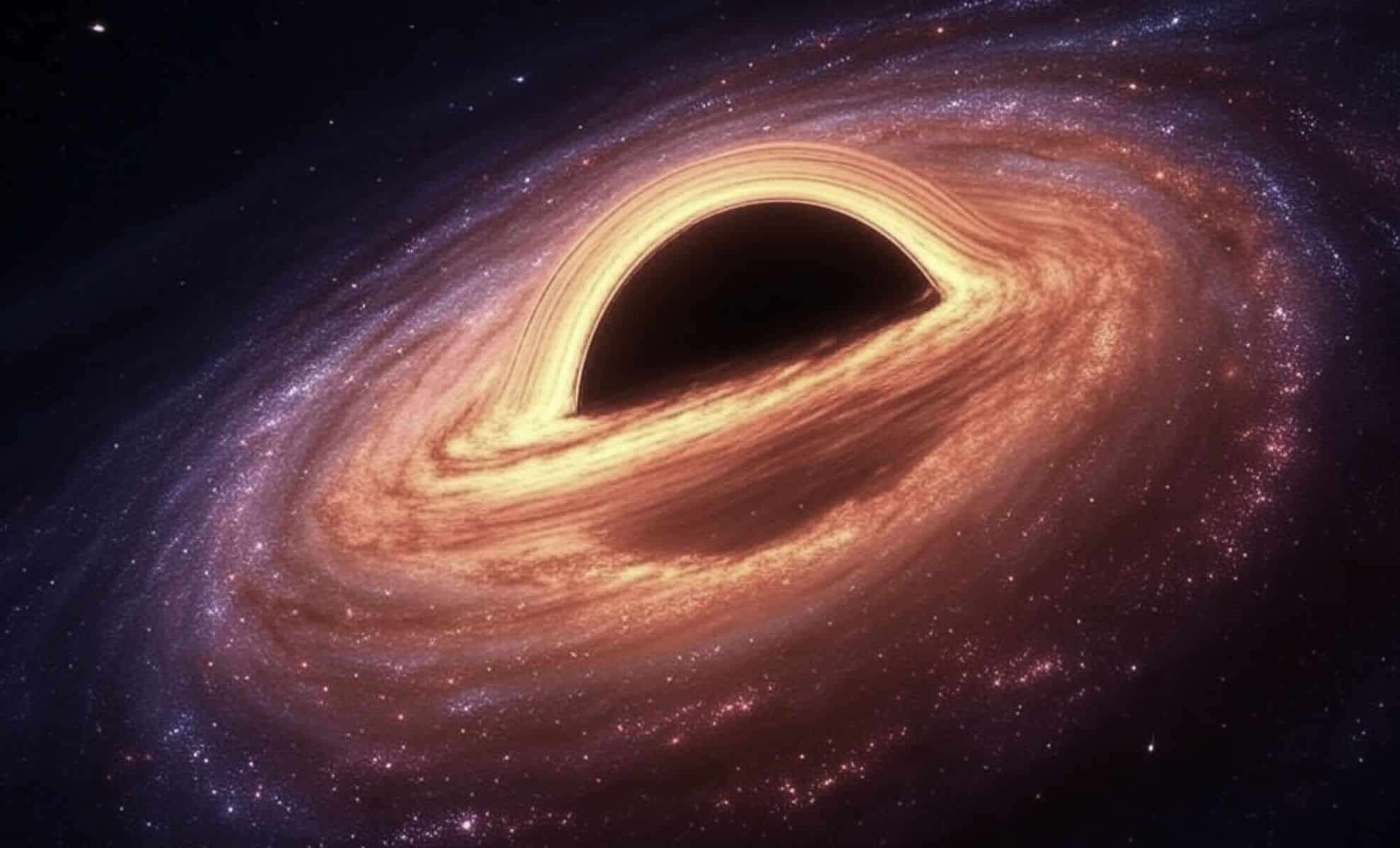
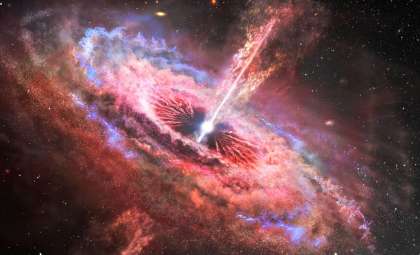
In a surprising breakthrough, scientists at NASA have discovered a supermassive black hole at the center of galaxy NGC 5084 that spins in a direction misaligned with the rotation of its host galaxy. This unexpected observation could significantly influence our comprehension of galactic behavior and the characteristics of black holes.
The Hidden Complexity of Galaxy NGC 5084
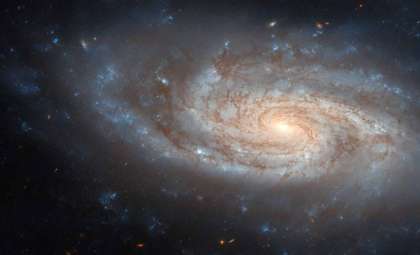
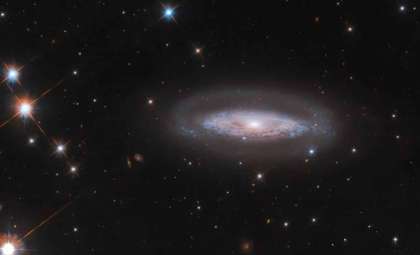
Located about 100 million light-years from Earth within the Virgo constellation, NGC 5084 is an elliptical galaxy that has drawn astronomers’ attention for decades. Originally cataloged in 1784 by William Herschel, this galaxy has been studied in detail by telescopes like the Chandra X-ray Observatory, Hubble Space Telescope, and the Atacama Large Millimeter/submillimeter Array (ALMA). Yet, recent analysis has uncovered something remarkable.
By applying a cutting-edge method called SAUNAS (Selective Amplification of Ultra Noisy Astronomical Signal), researchers were able to extract faint X-ray signatures typically overshadowed by stronger surrounding noise. This approach revealed a unique feature: the central black hole in NGC 5084 rotates at a significant angle different from the galaxy’s overall spin.

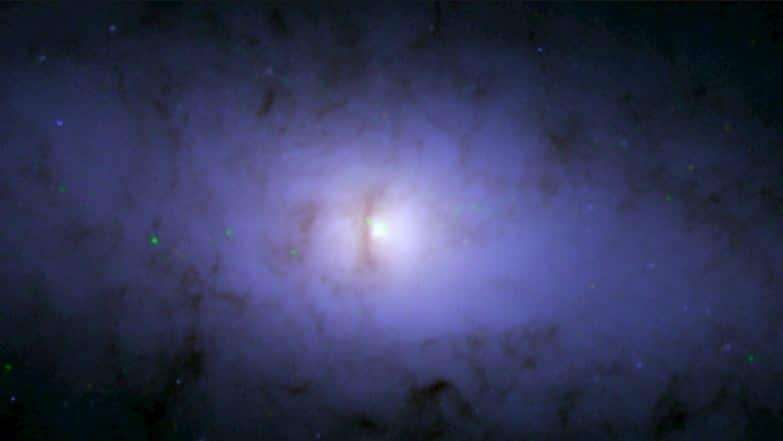
Key information about NGC 5084 and the observations that led to this groundbreaking discovery are detailed below:
Four X-Ray Jets and an Unconventional Black Hole Spin
Unlike the usual two opposing jets produced by supermassive black holes, scientists detected four separate X-ray plumes erupting from the galaxy’s center. Typically, these jets align along the galaxy’s spin axis, but NGC 5084 presents a different story:
- Two plumes are found along the galaxy’s plane.
- Two others extend perpendicular to this plane, both above and below.
Further observations with Hubble and ALMA uncovered an inner dust disk tilted almost 90 degrees compared to the main body of the galaxy. This confirms that the supermassive black hole's rotation axis is strongly misaligned, a phenomenon rarely observed in galactic centers.
Causes Behind NGC 5084’s Black Hole Misalignment
The unusual tilt likely resulted from a past galactic merger or gravitational interaction. Such cosmic collisions, while not common, can dramatically disrupt orientations of black holes and redistribute galactic components like stars, gas, and dust.
A plausible explanation involves NGC 5084 having undergone a collision with a smaller galaxy or having been influenced by a nearby massive structure. The impact would explain both the atypical angle of the black hole's spin and the peculiar pattern of X-ray jets.
Indicators of Previous Galactic Turbulence
- Misaligned dust disk: Observed in the galaxy’s core, hinting at gravitational upheaval.
- Irregular X-ray jets: Evidence for energetic black hole activity likely triggered by past disturbances.
Implications for Galactic Evolution Models
This extraordinary finding raises important questions about the prevalence of black holes with misaligned spins and whether such phenomena are exclusively driven by mergers. Moreover, it could have significant consequences for our understanding of how galaxies and their central black holes evolve over cosmic time.
Ongoing research positions NGC 5084 as an invaluable case study for probing the aftermath of galactic collisions and the long-term dynamics of black holes. This unique system may unlock new insights into the turbulent history and future development of galaxies throughout the universe.
The results are published in the Astrophysical Journal.
- Categories:
- Astronomy ,
- Space



0 comments
Sign in to Comment