
Far across the cosmos, more than 10 billion light-years away, scientists have identified an enormous yet completely unseen entity. This object emits no light, radio signals, or reflections, but its gravitational influence unmistakably bends the light from more distant galaxies, acting like a natural cosmic magnifier.
Weighing roughly a million times the mass of the Sun, this invisible giant was detected indirectly through a phenomenon theorized by Albert Einstein: gravitational lensing. When an intense gravitational field distorts the light passing behind it, astronomers can analyze these warps to infer the presence of hidden matter.
The discovery is not only surprising but also novel. The object’s size is too small to classify as a galaxy, its mass and spread are inconsistent with a black hole, and it differs from any known star cluster. Researchers suggest it might be a dark matter “clump”, one of the tiniest ever observed at such a far distance and uniquely identified purely through gravitational imaging.

This breakthrough, detailed this month in Nature Astronomy, could open new avenues for understanding the elusive cosmic web and challenge existing ideas about the nature of dark matter.
Unveiling the Invisible
The object was discovered during observations of JVAS B1938+666, a gravitational lens system identified in 1999. A global collaboration of radio telescopes using Very Long Baseline Interferometry (VLBI) produced some of the clearest radio images obtainable of this remote target.
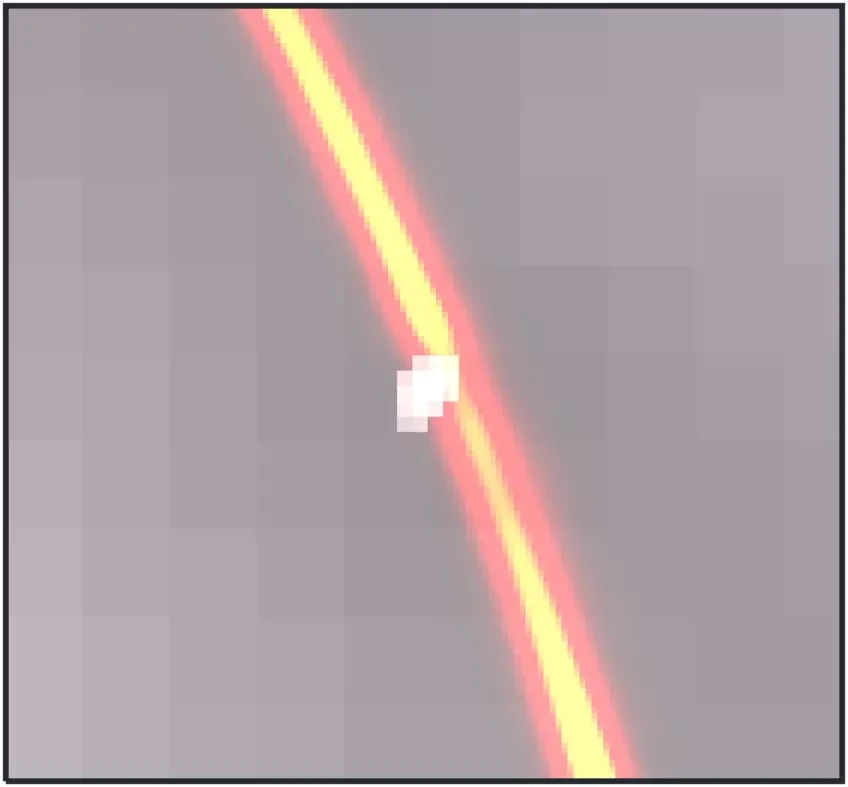
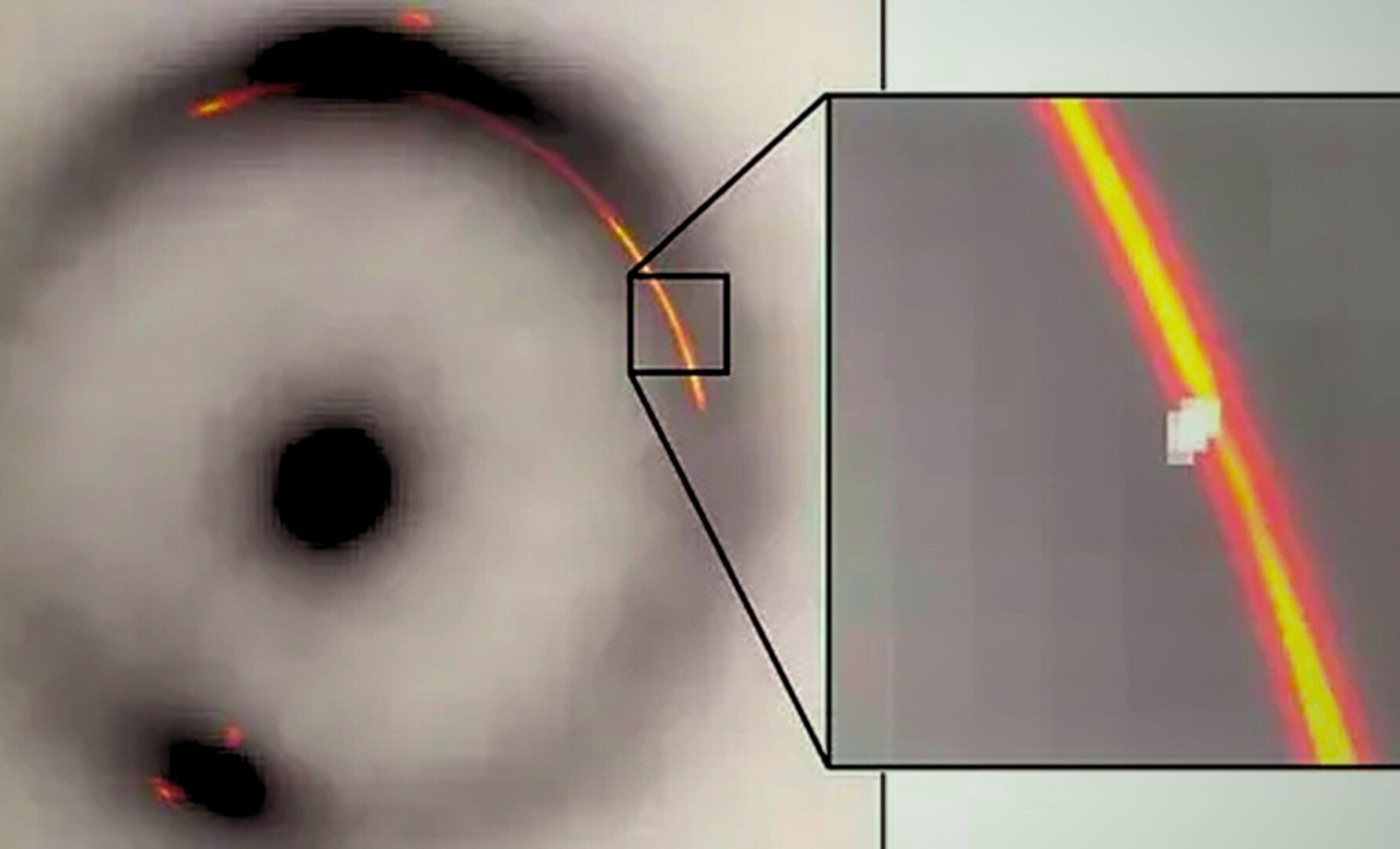
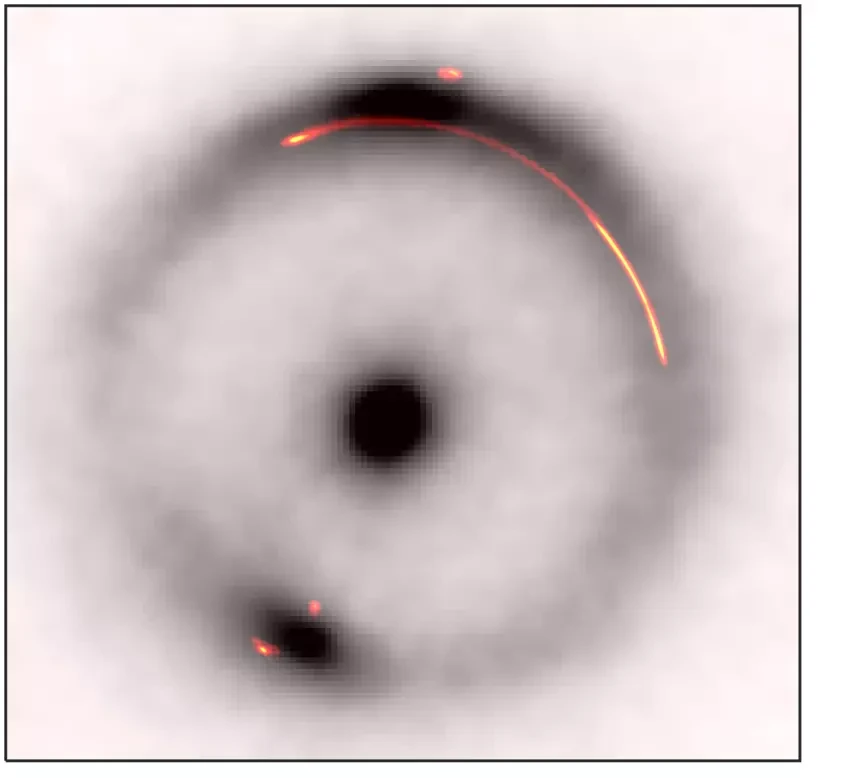
Central to the findings is a phenomenon called an Einstein ring, where a galaxy’s light is curved into a circle due to gravitational lensing by a nearer galaxy. However, the researchers noticed an unusual break in the ring—signifying an unseen mass interfering with the light’s path.
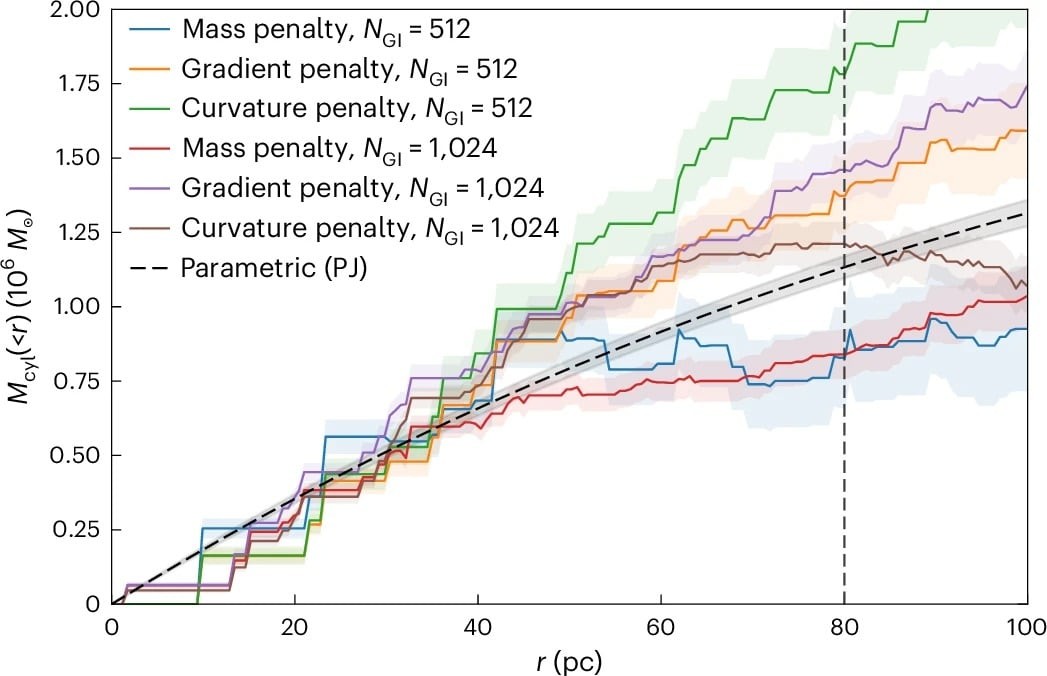
Using a technique known as gravitational imaging, the team mapped out the dark mass causing the disruption, dubbed 𝒱. With an estimated mass of 1.1 million Suns, it remains invisible across all visible and radio wavelengths.
Anomaly in the Dark
Dark matter—accounting for approximately 85% of all matter in the universe—has never been directly observed but manifests through gravitational influences like this. However, most dark matter concentrations seen via lensing are significantly larger, at times 10 to 100 times more massive than this newfound entity.
This makes 𝒱 an exceptional find. Its mass is right at the limit of current detection capabilities and lies at a redshift around z ≈ 0.9, meaning its light has been traveling since the universe was just over half as old as it is today. Such precision owes itself to the VLBI’s sharp resolution and refined lensing models.
If 𝒱 indeed represents a dark matter halo, this would reinforce essential predictions of the ΛCDM cosmological model, which anticipates that dark matter forms lumps on various scales throughout the history of the universe. Interestingly, the object’s concentrated density may hint that dark matter behaves differently at smaller scales than current simulations suggest.
Ruling Out Other Possibilities
What else could this mass be? The scientists tested various possibilities: mid-sized black holes, dense star clusters, and even ultracompact dwarf galaxies, but none matched the way it distorted the light.
In a related study led by astronomer Simona Vegetti from the Max Planck Institute for Astrophysics, alternative explanations are explored further. Preliminary conclusions suggest the object is best described as a dark, isolated halo—a subtle yet definitive gravitational imprint within the cosmic structure.
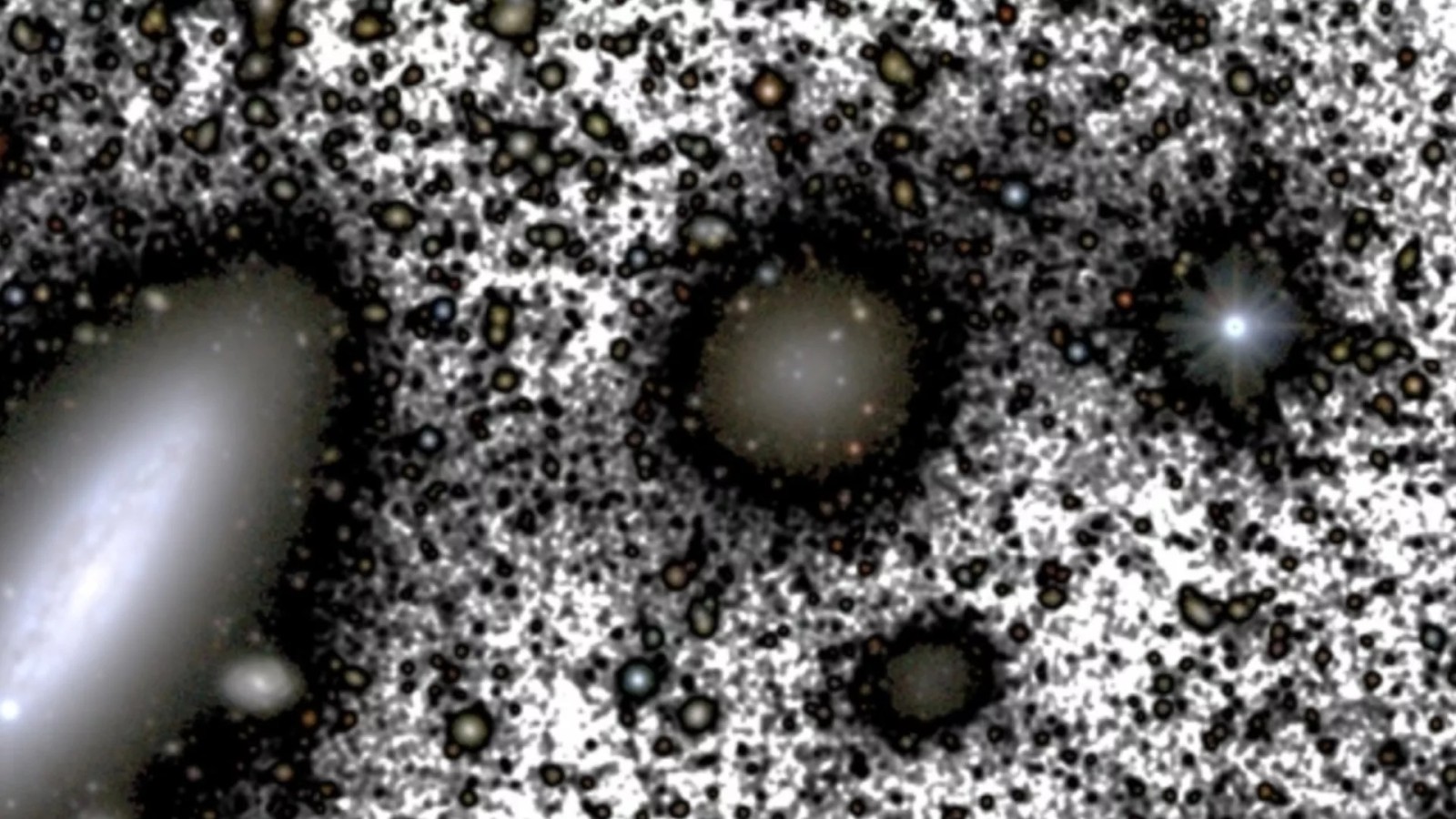
This find is often compared to previous detections of dark matter subhalos in lens systems like SDSS J0946+1006 and SDP.81, but 𝒱 stands out as the smallest confirmed instance of its kind. This milestone has significant implications for the future of observational cosmology, potentially revealing the smallest building blocks of the universe's dark matter scaffolding.
- Categories:
- Astronomy ,
- Space







0 comments
Sign in to Comment