
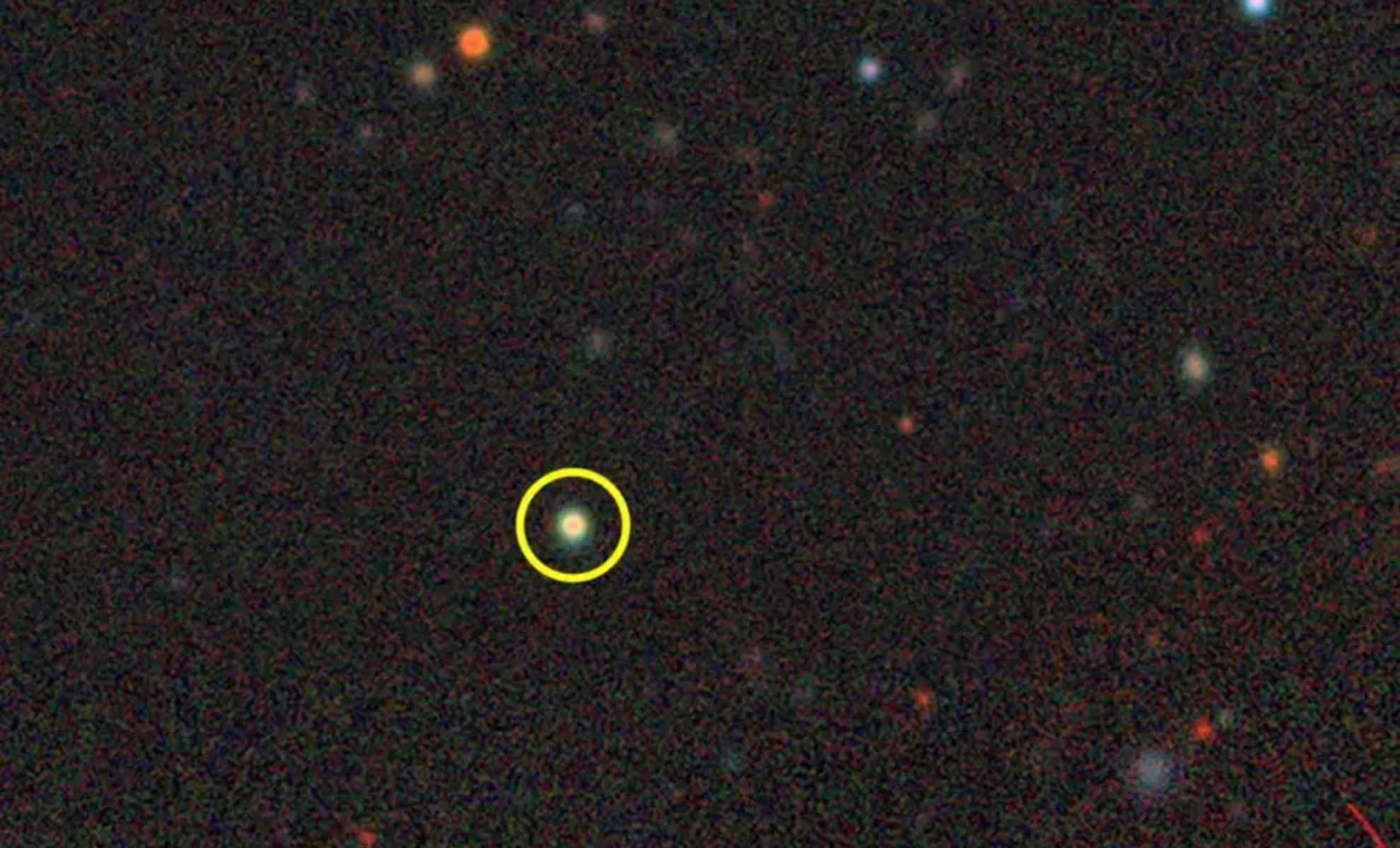
Scientists have uncovered a rare type of galaxy, previously thought to exist only during the universe's infancy, now appearing much closer to home. Known as little red dots (LRDs), these tiny, densely packed galaxies with a striking red coloration were first detected by the James Webb Space Telescope (JWST) in the farthest reaches of space. New findings reveal that three such galaxies have been identified within a mere 2.5 billion light-years from our planet.
Once Considered Exclusive to the Universe’s Formative Era
Recent research highlights that LRDs came into prominence after repeated detection in deep JWST observations, capturing light from over 13 billion years ago. These compact galaxies are linked to the cosmic dawn, the period marking the first billion years after the Big Bang. Their intense redness, compact size, and brightness suggest rapid star-forming activity or the presence of supermassive black holes.
Initially, astronomers believed LRDs were unique relics from the early universe, with characteristics tightly connected to initial galaxy formation, including phenomena such as black hole birth or gas cloud collapses. However, emerging observations challenge this notion, indicating these intriguing galaxies might still be appearing—or surviving—within a more recent cosmic timeframe.

New Nearby Detections Deepen the Puzzle
Leveraging the DESI Legacy Survey, researchers have pinpointed three LRDs astonishingly close in cosmic distance terms. Although these galaxies, situated up to 2.5 billion light-years away, are relatively younger than their distant counterparts, they exhibit strikingly similar characteristics.
A prominent example, designated J1025+1402, is notable for its vivid red coloration and dense structure. Like the early LRDs, it is compact yet contains a considerable mass within a small volume. This raises the possibility that either the processes forming LRDs continue today or that these galaxies are more varied than previously understood.
Reevaluating Galactic Evolution Theories
Finding LRDs in the nearby universe challenges existing ideas about galaxy evolution. If such compact, red galaxies are not confined to the distant, early cosmos, scientists may need to revise theories on when and how these galactic features develop. Their close proximity also presents a unique chance to scrutinize their structure, behavior, and makeup in far greater detail.
“We have a proposal for Hubble we’re waiting to get approved,” stated Anthony Taylor from the University of Texas at Austin. This observation could clarify critical questions, including whether LRDs represent young galaxies experiencing starburst phases, older systems where star formation has ceased, or potentially environments hosting active galactic nuclei.
- Categories:
- News





0 comments
Sign in to Comment