
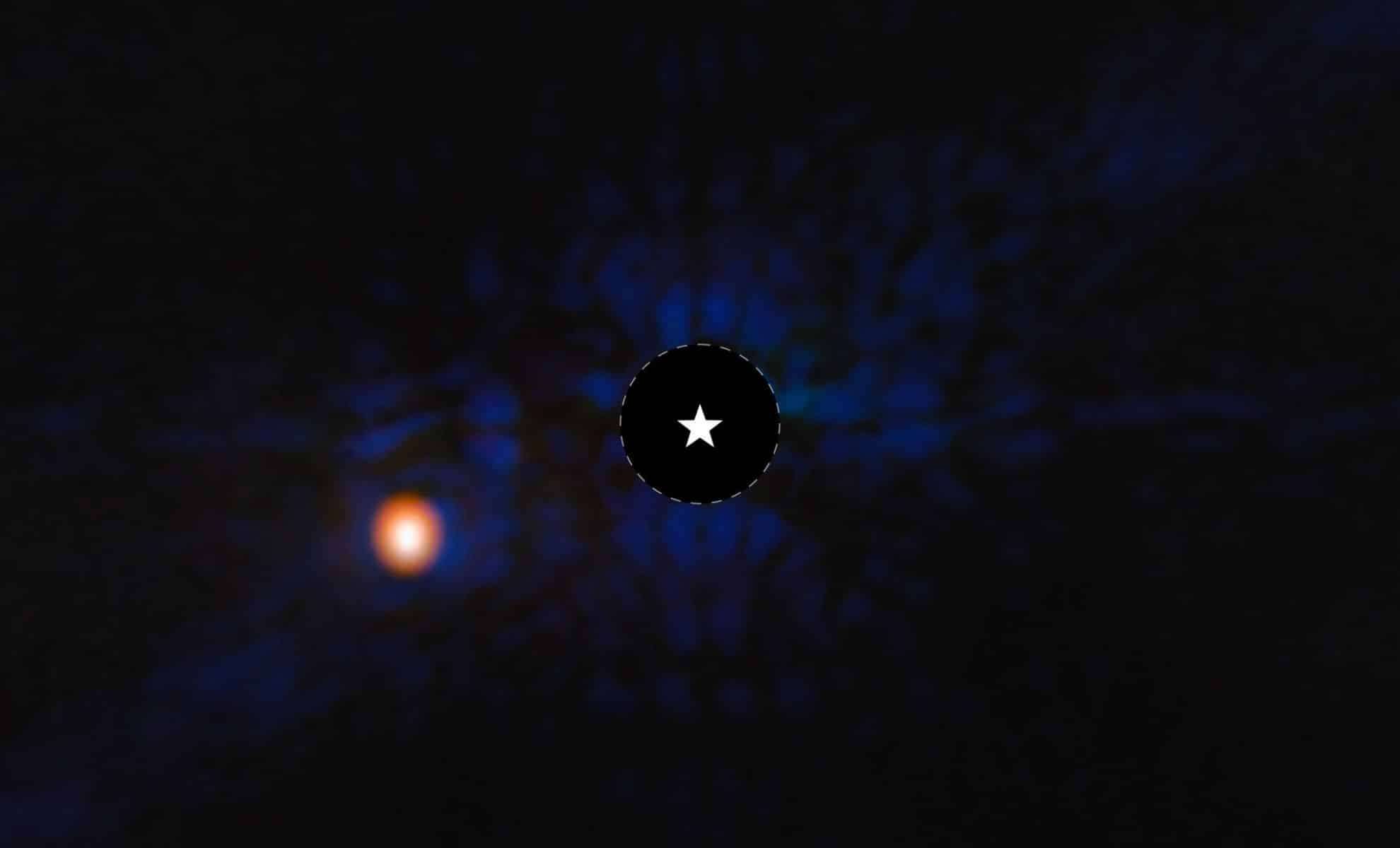
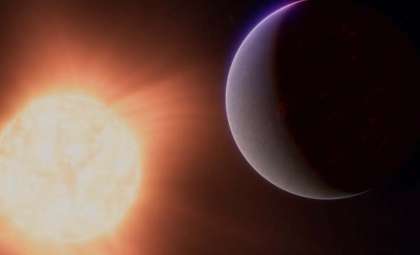
An international team of astronomers, utilizing the James Webb Space Telescope, has discovered a remarkable ‘super-Jupiter’ exoplanet named Epsilon Indi Ab, sitting roughly 12 light-years from our solar system.
This finding provides a rare glimpse into one of the coldest and largest gas giants yet directly imaged, offering new clues about planetary formation and atmospheric properties.
Introducing Epsilon Indi Ab: A Massive Gas Giant Close to Home
Epsilon Indi Ab is a gas giant several times more massive than Jupiter and orbits its host star Epsilon Indi A, a K-type star. Elisabeth Matthews from the Max Planck Institute for Astronomy describes the planet as “quite similar to Jupiter — it is a little warmer and larger, yet more akin to Jupiter than any other exoplanet captured in images so far.”

The planet’s surface temperature is estimated to be around 35 degrees Fahrenheit (2 degrees Celsius), making it one of the coldest exoplanets ever directly observed. This temperature is only about 180 degrees Fahrenheit (100 degrees Celsius) higher than the gas giants within our own solar system, suggesting a cooler, more stable environment compared to many known extrasolar planets.
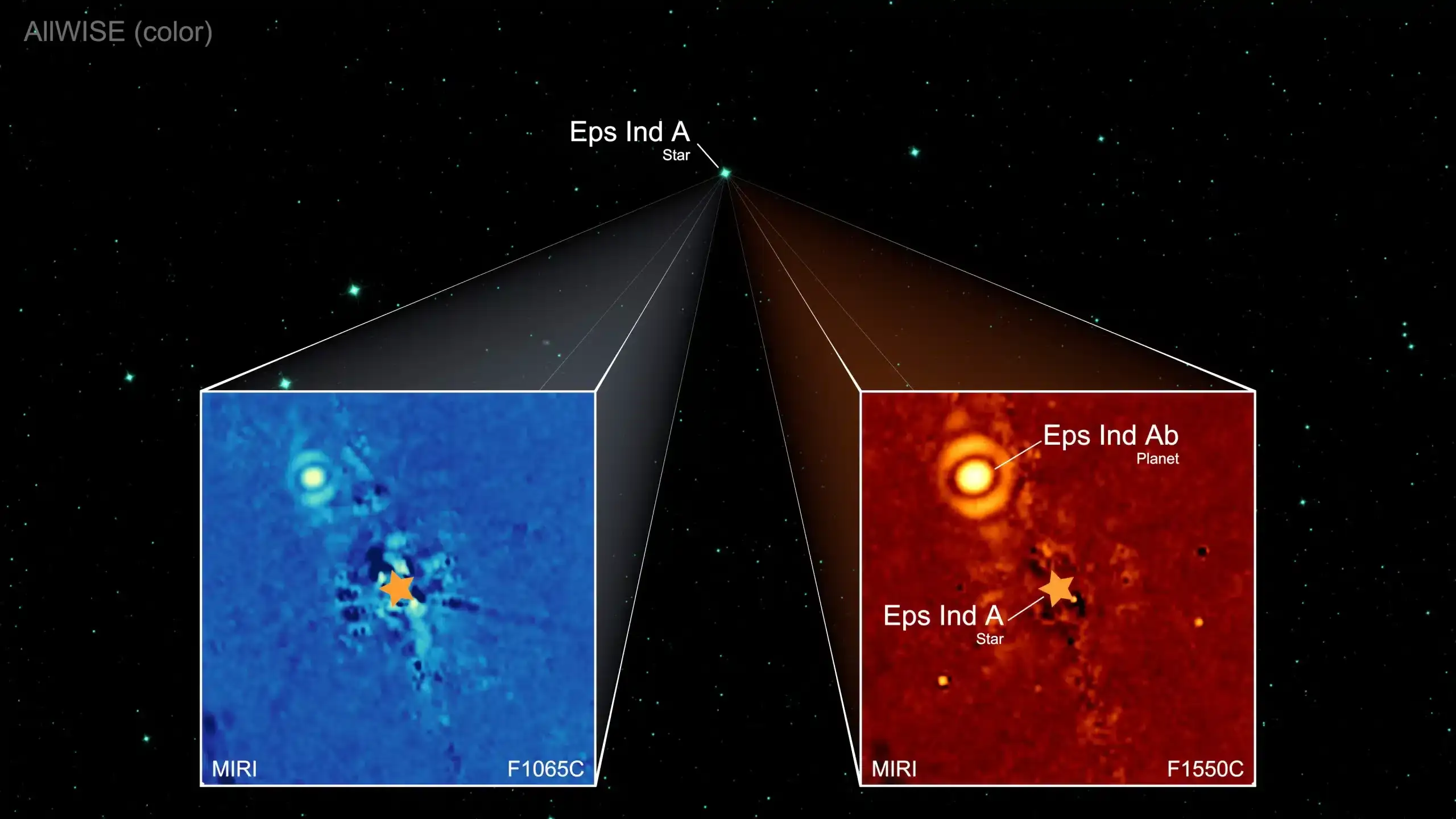
The discovery was achieved through use of the coronagraph aboard Webb’s Mid-Infrared Instrument (MIRI), which blocks out the star’s glare to directly detect the planet itself.
James Webb’s Direct Imaging: A Milestone in Exoplanet Studies
Capturing direct images of distant exoplanets such as Epsilon Indi Ab is exceptionally difficult due to their faint light and closeness to bright stars. As Matthews elaborated, “Cold planets emit very faint light, predominantly in the mid-infrared spectrum.”
The Webb telescope’s capacity for mid-infrared imaging—a feat nearly impossible from Earth’s surface—was crucial in this endeavor. Webb’s sizable mirror allowed scientists to resolve the planet and star separately in images.
This technique enables researchers to collect the planet’s light directly and analyze it across different wavelengths, revealing intricate details about its atmospheric makeup and conditions.
Detected atmospheric gases, including methane, carbon monoxide, and carbon dioxide, point to complex chemistry, possibly involving cloud formation and dynamic weather patterns.
Insights into Gas Giant Origins and Characteristics
The identification of Epsilon Indi Ab paves the way for deeper investigation of planets that resemble the giants in our solar system more closely than previously found exoplanets. Its relative closeness offers a prime opportunity for enhanced photometric and spectroscopic studies. “Being so near makes it highly accessible for follow-up observations with future instruments,” Matthews said, highlighting the significance for ongoing analysis.
James Webb’s observations also underscore the value of studying diverse stellar environments, such as cooler stars like Epsilon Indi A, potentially hosting planets with unique characteristics. These findings will inform upcoming space missions like NASA’s Nancy Grace Roman Space Telescope, designed to utilize a coronagraph for examining Jupiter-like planets orbiting stars similar to our Sun.
Exploring the Potential of the Epsilon Indi Planetary System
Although Epsilon Indi Ab itself is unlikely to harbor life due to its gaseous composition and extreme atmospheric conditions, this system serves as an important template for understanding planetary variety. The research raises hopes of uncovering smaller, rocky planets within similar orbits around cooler stars, possibly with environments more conducive to life.
Matthews remarked, “There’s no solid surface or liquid oceans here, which makes life improbable,” but she left open the possibility that other, more Earth-like worlds could exist in the system.
As scientists continue to study the Epsilon Indi system, they aim to learn more about how super-Jupiters form and whether such systems might also host habitable planets alongside massive gas giants.
- Categories:
- Astronomy ,
- News ,
- Space ,
- Nasa







0 comments
Sign in to Comment