
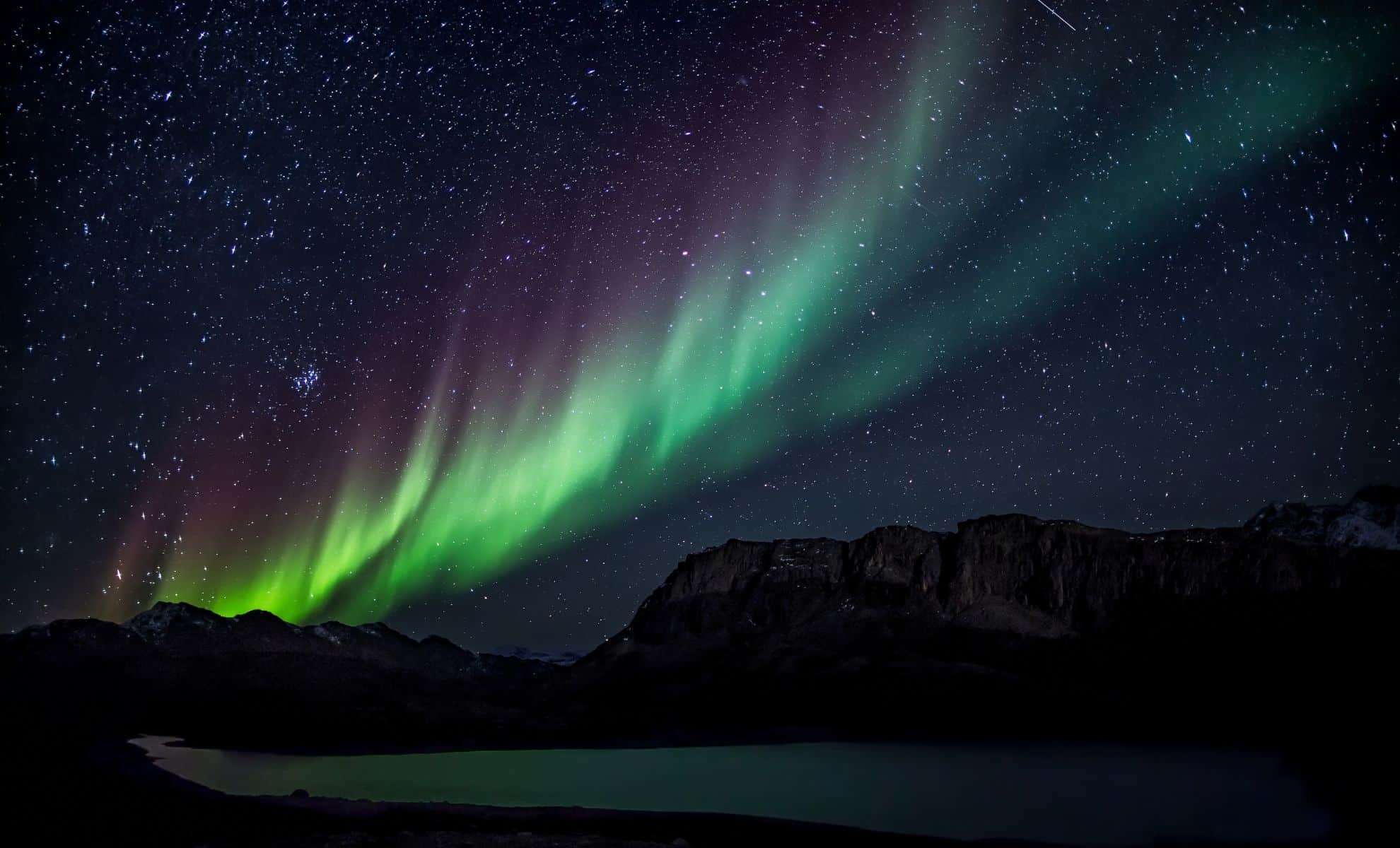
Glow in the northern skies, known as the aurora borealis, could be spotted tonight across parts of the upper Midwest thanks to a minor geomagnetic disturbance.
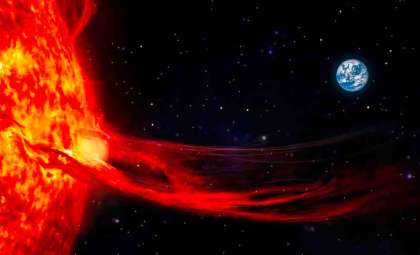
The Space Weather Prediction Center (SWPC) has issued a notification after a coronal mass ejection (CME) was released from the sun on June 25.
How Do the Northern Lights Form?
Aurora borealis arises when solar-charged particles collide with Earth's magnetic field, producing dazzling light displays. These are often initiated by coronal mass ejections (CMEs), which are vast bursts of plasma combined with magnetic fields emitted from the sun's outer atmosphere.

As explained by NASA, CMEs are "massive clouds of solar plasma laced with intense magnetic field lines that erupt from the sun over several hours." When these ejections reach Earth, they trigger geomagnetic storms that ignite the northern lights.

The arrival of a CME causes Earth's magnetosphere—the magnetic field bubble surrounding our planet—to compress. This energizes particles trapped within, which then collide with gases in the atmosphere.
These interactions excite atmospheric gases, releasing energy as luminous displays known as the aurora borealis. Different gases produce varying colors: oxygen creates green and red lights, whereas nitrogen results in blue and purple shades.
Geomagnetic storms range from G1 (minor) to G5 (severe) in intensity. The current G1 watch suggests a mild disturbance but one capable of producing visible aurora if conditions align.
Regions Likely to See the Auroras
Tonight and into tomorrow, faint auroras may be observable in parts of northern United States. The National Oceanic and Atmospheric Administration (NOAA) highlights possible visibility in states including Washington, Idaho, Montana, North Dakota, South Dakota, Minnesota, Wisconsin, Michigan, New York, Vermont, and Maine.
Aurora visibility hinges on factors like the strength of the geomagnetic storm, clear skies, and limited light pollution. To enhance chances, observers should seek rural, dark locations with an unobstructed view toward the northern horizon.
Tips for Observing the Northern Lights
For the best aurora viewing, choose spots far from artificial lights and ensure a clear northern vantage. Prime viewing hours typically fall between 10 p.m. and 2 a.m., when auroral activity tends to peak.
Modern smartphones often capture the auroras effectively, even when they're subtle to the naked eye. Activating night mode helps extend exposure times, improving photo quality. Checking weather forecasts for cloudless nights can significantly increase the odds of seeing the display.
Looking Ahead: Solar Activity and Auroras
Solar activity has surged recently as the sun approaches the peak of its 11-year solar cycle, known as Solar Cycle 25, anticipated to reach its maximum between late 2024 and early 2026. This uptick means geomagnetic storms and auroras will become more frequent.
Solar Cycle 25 began in December 2019 and has already exhibited greater-than-expected sunspot activity, which drives these storms. As the cycle climbs toward its height, auroras could become visible farther south than usual, providing more chances to witness this celestial light show.
Stay updated with the SWPC for current aurora forecasts and space weather events. Tonight may present an excellent opportunity to enjoy the northern lights’ natural spectacle.
- Categories:
- Astronomy ,
- News ,
- Space ,
- Nasa







0 comments
Sign in to Comment