
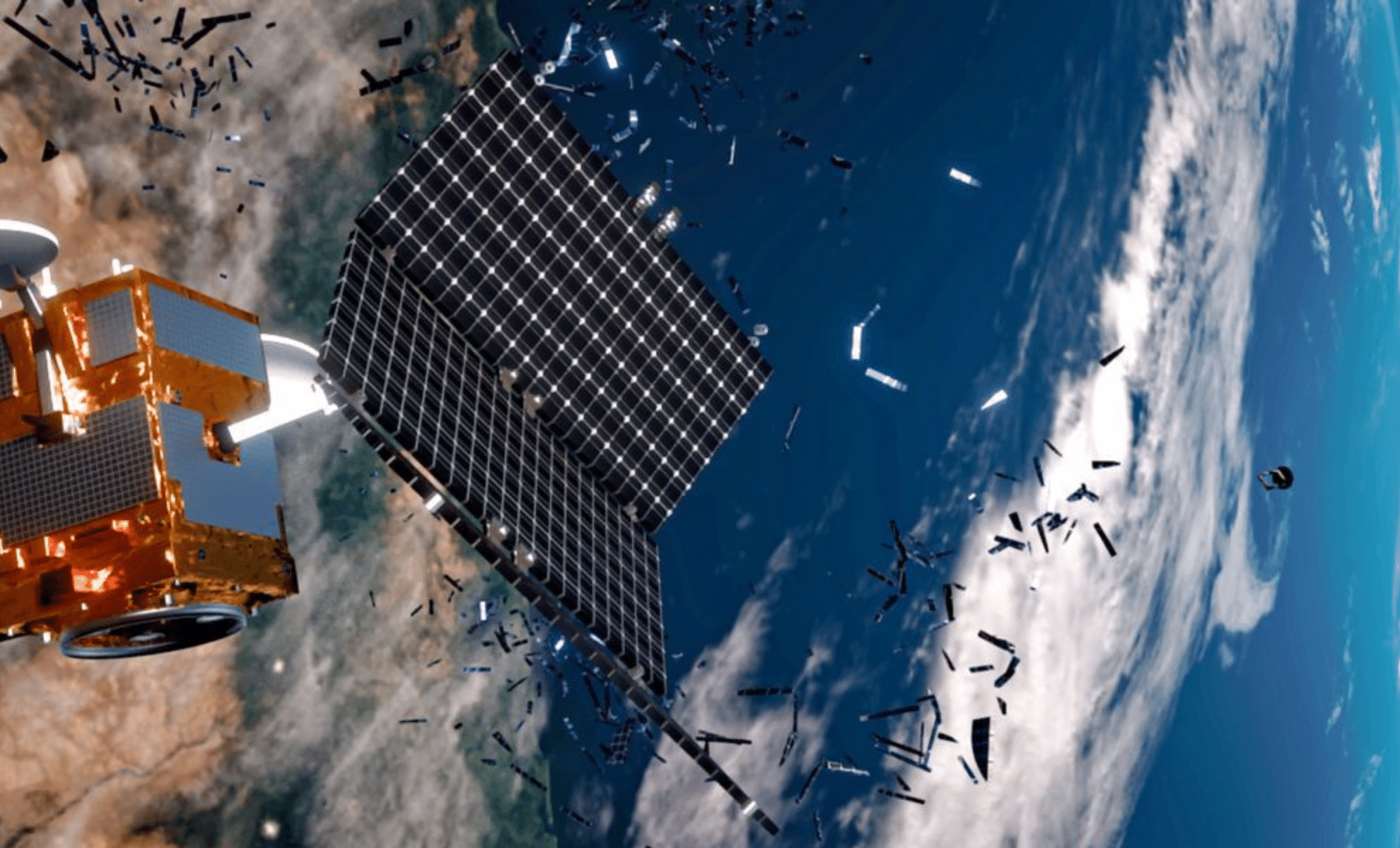
On June 26, a defunct Russian satellite disintegrated in low Earth orbit, producing over 100 pieces of detectable debris and causing astronauts aboard the International Space Station (ISS) to seek temporary refuge.
This event has intensified worries about the escalating problem of orbital debris and its potential risks to space operations.
Incident Overview
The spacecraft, known as Resurs P1, broke apart around noon Eastern Time, according to U.S. Space Command (USSPACECOM). Although the precise cause remains unclear, early hypotheses include an internal malfunction or impact with an undetected object. USSPACECOM stated, “USSPACECOM has observed no immediate threats and is continuing to conduct routine conjunction assessments to support the safety and sustainability of the space domain.”

LeoLabs, a company dedicated to space debris tracking, was among the first to confirm the fragmentation, estimating over 180 new fragments. LeoLabs noted via social media, “Given the low altitude of this debris field, we anticipate the hazard could persist for weeks or even months.”
LeoLabs has detected a debris-generating event in Low Earth Orbit.
Early indications are that a non-operational Russian spacecraft, Resurs P1 (SATNO 39186), released a number of fragments between 13:05 UTC 26 June and 00:51 UTC 27 June.
— LeoLabs (@LeoLabs_Space) June 27, 2024
Effect on the International Space Station
The debris cloud posed a brief risk to the ISS, leading NASA to order the astronauts to take shelter in their docked spacecraft for safety. The station’s crew—including six American astronauts and Russian cosmonauts—followed established safety guidelines.

NASA explained the situation: “Starting around 8:45 p.m. EDT on Wednesday, June 26, NASA prompted station crews to take shelter in their respective vehicles as a precaution upon learning of the satellite breakup occurring at an altitude near that of the station earlier that day.” After approximately an hour of monitoring debris trajectories with no immediate danger identified, the crew was cleared to continue normal activities.
Background on Resurs P1
Resurs P1, launched by Russia in 2013, served as an Earth-observing satellite. Decommissioned in late 2021 due to malfunctions in its onboard systems, it had been gradually descending and anticipated to re-enter Earth's atmosphere before the end of 2024.
Weighing close to 6,000 kilograms, the satellite’s fragmentation adds to the substantial amount of debris circling low Earth orbit. Roscosmos, Russia’s space agency, has not yet issued any official comment or acknowledged the break-up on its social platforms.
Possible Reasons for the Satellite’s Breakup
The exact cause behind the fragmentation remains uncertain, but experts suggest several scenarios. One theory proposes that Resurs P1 may not have been properly passivated post-mission—meaning residual energy sources like batteries or fuel remained, which can cause explosions. SpaceNews contributor Jeff Foust explains, “Passivation involves depleting energy sources, including battery drainage and tank venting, which have been linked to previous satellite breakups.” Another explanation involves a collision with untracked debris.
Speculation about a possible anti-satellite (ASAT) weapons test has also emerged, drawing comparisons to Russia’s 2021 ASAT missile test, which created significant debris. However, no official confirmation or evidence has linked this breakup to such a test. Harvard astronomer and space tracker Jonathan McDowell remarked, “I find it unlikely they would use a large satellite like this as an ASAT target.”
Continuous Observation and Broader Implications
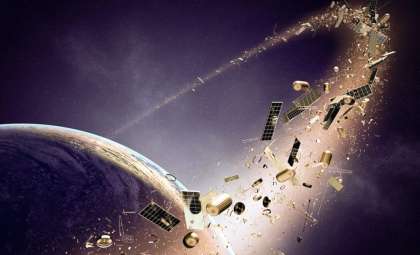
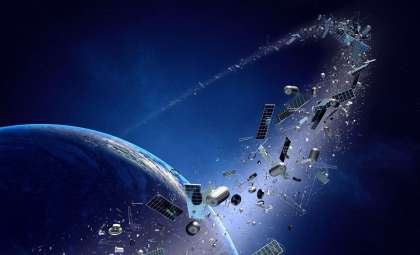
USSPACECOM remains vigilant, conducting ongoing collision risk assessments to maintain space safety. This event highlights the increasing challenges posed by orbital debris on the viability of space activities. Currently, over 25,000 trackable debris pieces larger than 10 centimeters orbit Earth, raising the risk of in-orbit collisions and triggering the dangerous chain reaction known as Kessler syndrome.
Though rare, such debris-producing breakups threaten the growing satellite networks that underpin essential services like global communications, internet, and navigation. The urgent need for advanced space traffic coordination and debris reduction efforts has never been clearer to protect future space endeavors.





0 comments
Sign in to Comment