
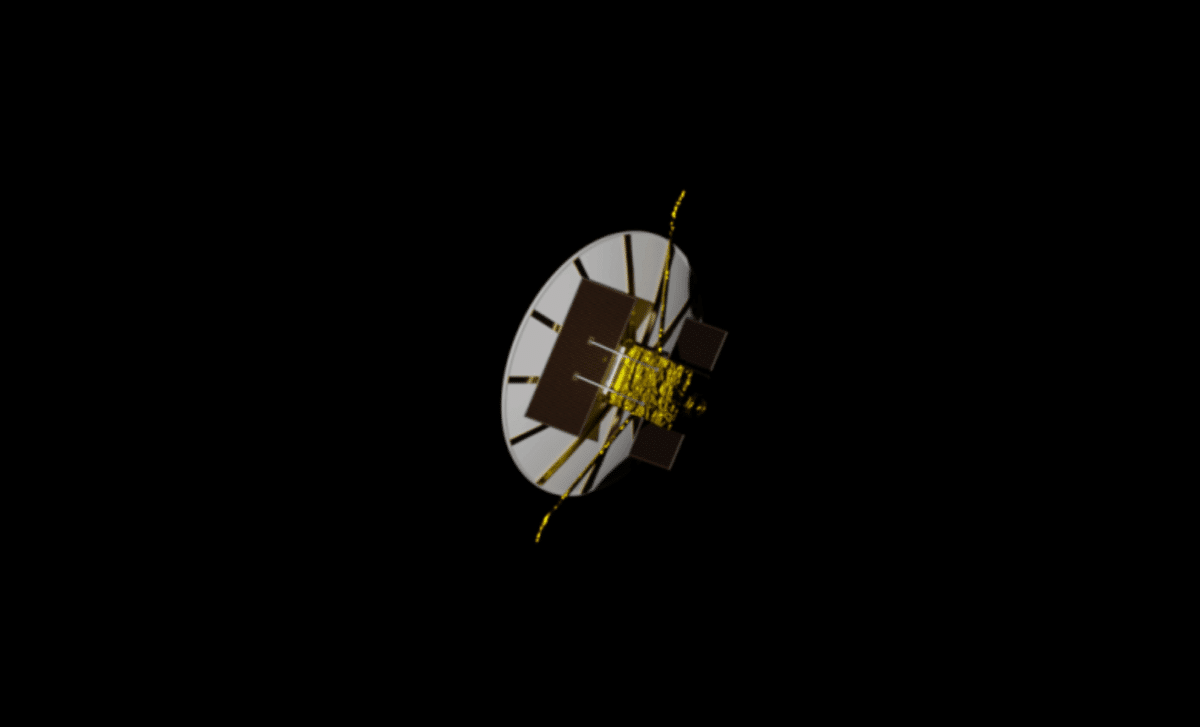
HEO, an Australian aerospace firm, has unveiled detailed visuals of a Chinese spacecraft that had previously remained enigmatic. Captured shortly before its fiery descent back to Earth, the craft known as Xinjishu Yanzheng-7 (XJY-7) was originally launched to trial advanced remote sensing technologies.
By employing a novel satellite-to-satellite observation technique, HEO has crafted an unparalleled visual and structural analysis of the orbiter. This innovative approach, termed non-Earth imaging, is revolutionizing our grasp of orbital phenomena.
Decoding a Silent Satellite's Secrets
The XJY-7 satellite was launched in December 2020 atop China’s inaugural Long March 8 rocket. Initially described only as a “technology validation” vehicle with no detailed mission specifics, it entered orbit under heavy secrecy. Without available imagery and limited information beyond schematic outlines, it quickly joined the ranks of elusive space assets.

HEO’s advanced imaging capabilities changed that narrative. Through multiple observations from varying perspectives, the company succeeded in producing a precise 3D reconstruction of the satellite’s form and features.
“HEO has characterised and verified key features of the XJY-7 satellite through repeated observations. These include the large radar dish that is now deployed and a SAR antenna,” the company told SpaceNews.
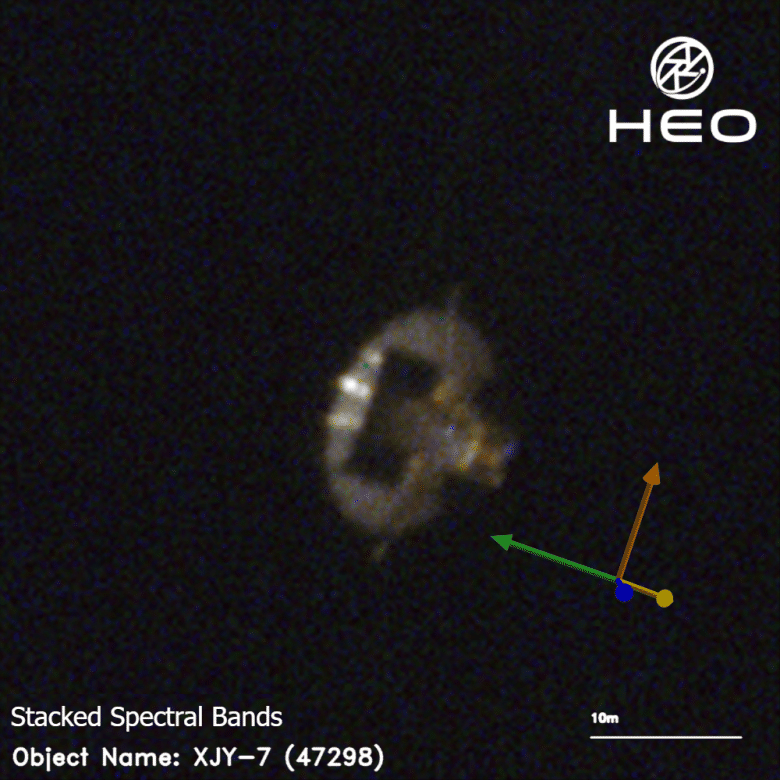
The satellite features identified hint at capabilities beyond a simple technology demonstrator, suggesting involvement in synthetic aperture radar (SAR) operations or possibly electromagnetic intelligence gathering. This finding highlights the critical importance of independent assessments of covert space missions.
Advancing Orbital Insight Through Rapid Imaging
HEO’s breakthrough lies not only in capturing images but in pioneering a form of behavioral intelligence. By observing XJY-7 simultaneously from multiple satellites, they detected the spacecraft's movement patterns and operational characteristics in near real-time.
“To maintain power generation, the spacecraft had to rotate its entire body due to fixed solar arrays. We also completed a few simultaneous imaging missions—where two satellites in our network imaged XJY-7 at the same time—that provided additional behavioural intelligence as we saw almost the entire satellite at a snapshot in time over certain geographies.”
This enriched understanding surpasses the capabilities of conventional space domain awareness (SDA) technologies, including radar and earth-based telescopes. Non-Earth imaging offers deeper insights into spacecraft attitude control, energy management, and maneuverability.
Having amassed over 4,000 orbital imaging operations, HEO exemplifies how private enterprises are increasingly driving progress in space surveillance. Their strategy, which uses compact sensors mounted on third-party satellites, is both more rapid and scalable compared to launching dedicated observation platforms.
Transparency and Tension in Earth’s Orbital Theater
The implications of this imaging technique extend beyond science into geopolitics. In a notable 2025 report by SpaceNews, a Chinese commercial operator responded to US-based Maxar's surveillance of a secret Chinese mission by utilizing its Jilin-1 satellites to photograph a US spacecraft. Within this highly sensitive environment, HEO’s public disclosure of the XJY-7’s architecture balances civilian openness with strategic signaling.
“There are many satellites like XJY-7 whose appearance, behaviour, size and purpose remain uncertain. High-frequency imaging is how we’re closing that gap,” HEO said in a statement.
This effort demonstrates a shift in satellite imaging – from merely observing to actively uncovering information that states might prefer remain hidden.
Expanding the Frontier of Orbital Intelligence
Looking ahead, HEO plans to broaden its surveillance reach to the geostationary orbit, a hub for communication and military satellites. The company is developing proprietary sensor technology intended for integration into partner spacecraft. Through enhanced software and accelerated data processing, it's poised to monitor and interpret activities across the entire range of Earth’s orbits.
As HEO notes,
“Our approach lets us capture large volumes of data across many objects quickly, like XJY-7, so we have a holistic understanding of many satellites in orbit and how it behaves.”
This rapidly scalable, real-time orbital intelligence platform could revolutionize both space monitoring and the competitive dynamics of orbit.
On October 16, 2025, the satellite XJY-7 reentered Earth’s atmosphere above the Canary Islands, concluding its shadowed mission. Thanks to persistent imaging efforts, however, its hidden functions have now come to light.
- Categories:
- Space










0 comments
Sign in to Comment