
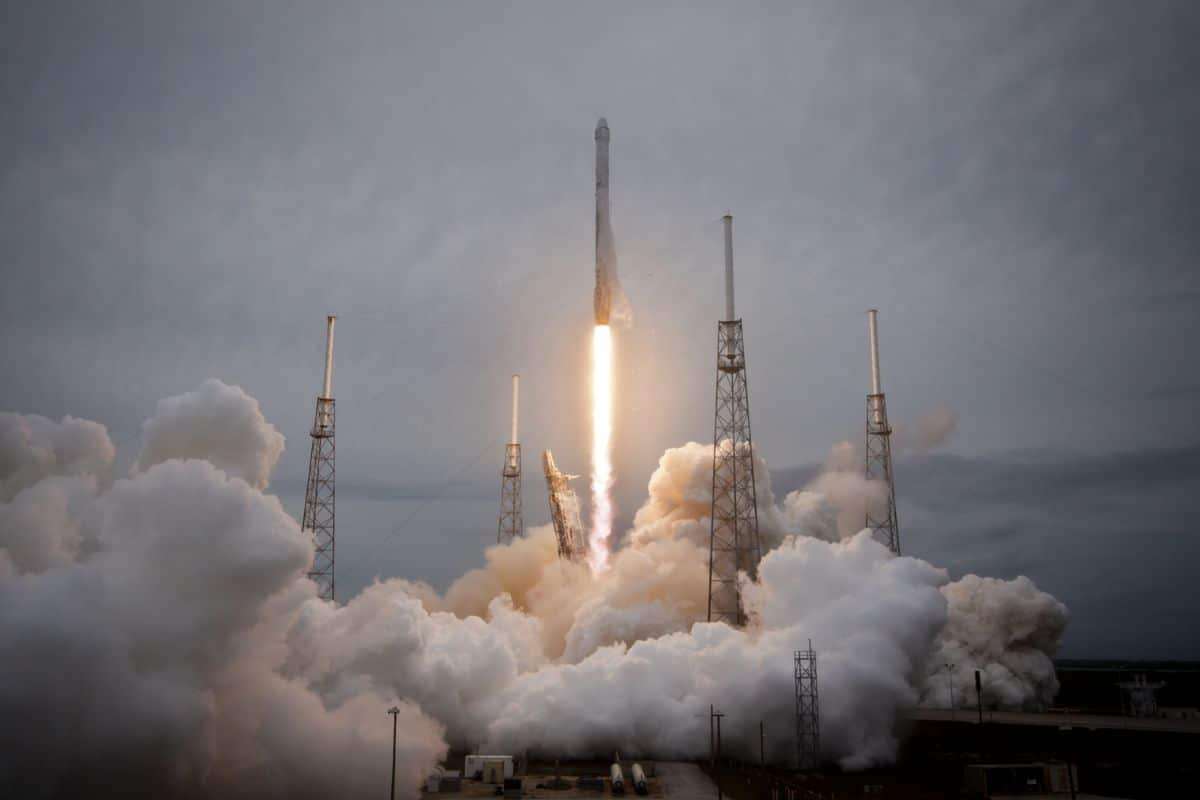
SpaceX has postponed the eagerly awaited Flight 8 of its enormous Starship rocket. Initially planned for February 28, the new launch date is set for March 3, with liftoff scheduled at Starbase, Texas. Although the company has not disclosed the exact cause, SpaceX continues to focus on optimizing the performance of the world’s most powerful launch vehicle.
Following the mix of achievements and setbacks experienced during Flight 7, this upcoming mission seeks to further advance the technology. Here’s what to anticipate in this crucial step toward making Starship a fully reusable space vehicle designed for journeys to the Moon, Mars, and distant destinations.
Striving for Enhanced Flight Control
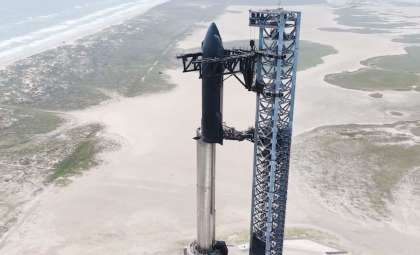
Flight 8 is part of a series of carefully improved test launches. The last mission, on January 16, marked a milestone when the Super Heavy first-stage booster was successfully captured by the launch tower’s "chopsticks" arms for the first time.
Unfortunately, the Starship upper stage experienced a fuel leak that led to its explosion over the Atlantic Ocean, preventing it from completing the planned orbit and controlled splashdown near Western Australia.

For the upcoming flight, SpaceX aims to perfect its catch-and-reuse approach while implementing upgraded features on Starship’s upper segment. The company also intends to reduce the number of dummy Starlink satellites deployed during the mission.
Flight 8’s Testing Objectives
In Flight 8, SpaceX will refine prior goals to enhance Starship’s capabilities. The Super Heavy booster is set to attempt another capture by the chopstick mechanism, a stunt it has now managed twice.
The mission will release four mock Starlink satellites instead of ten, examining deployment systems on a suborbital glide path. The upper stage will aim for a controlled ocean splashdown in the Indian Ocean, off the coast of Western Australia.
Critical data on thermal protection and reentry behavior will be collected to support the pursuit of total reusability in future flights.
Advancing Toward Complete Reusability
SpaceX's ultimate aspiration for Starship is to develop a craft that is entirely reusable and capable of carrying cargo and crew on deep-space expeditions. While recovery of the Super Heavy booster is making steady progress, the Starship upper stage remains the key challenge for full reusability.
SpaceX envisions capturing the upper stage mid-air using the chopstick arms similarly to the booster, though Flight 8 will not attempt this. Instead, the emphasis will be on refining splashdown precision and observing the dynamics of Starship’s descent.
A successful mission would significantly advance SpaceX’s goal of rapid rocket turnaround, lowering launch expenses dramatically compared to conventional expendable rockets.
The Future Outlook for Starship
In 2025, SpaceX plans to conduct numerous test flights, each designed to incorporate lessons from earlier launches. Flight 9 is expected to feature more complex payload releases and possibly the first serious effort to complete orbital reentry and recover Starship’s upper stage.
Meanwhile, NASA continues to monitor Starship’s development, as the vehicle is slated to transport astronauts to the Moon under the Artemis III program. The success of these upcoming tests is vital for preparing Starship for crewed missions within the near future.
- Categories:
- Space









0 comments
Sign in to Comment