
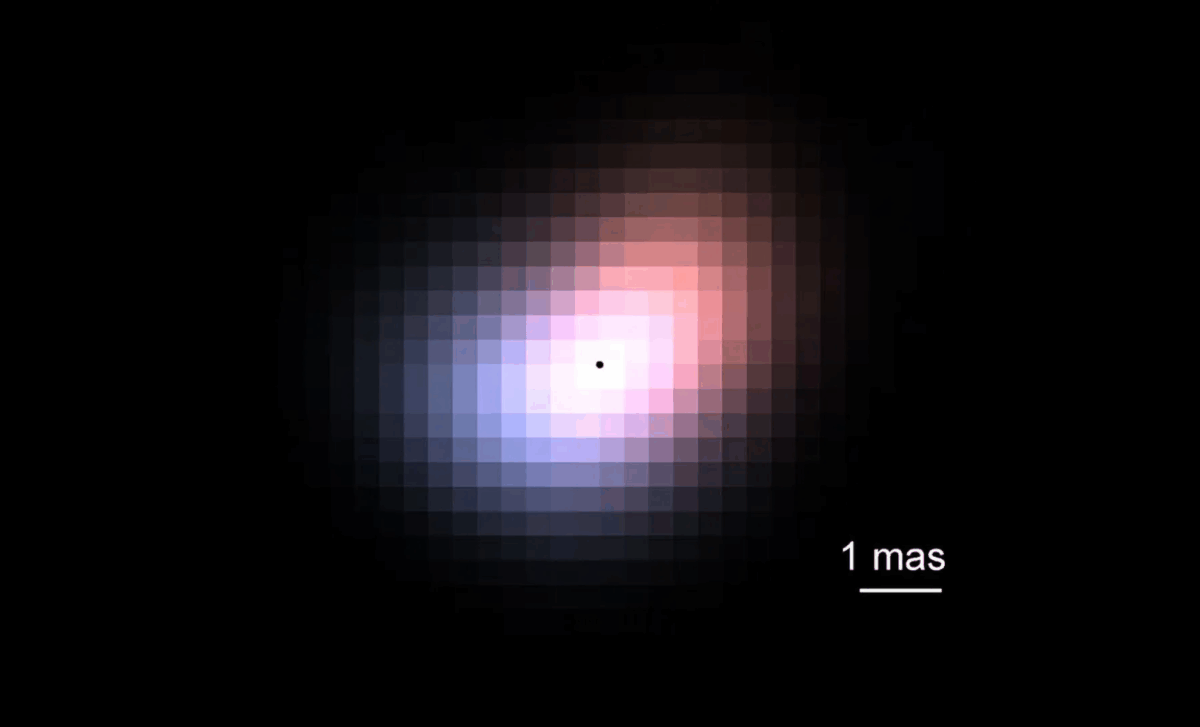
A research team led by UCLA has achieved a remarkable milestone by producing the most detailed image ever captured of a distant star’s surface using just one telescope. This advance was enabled by a cutting-edge device called a photonic lantern, which pushes the boundaries of astronomical imaging technology. Their observations focused on Beta Canis Minoris, a star roughly 162 light-years away in the Canis Minor constellation. The results, published in The Astrophysical Journal Letters, highlight new possibilities for ultra-high resolution studies of celestial targets.
Unlocking Telescope Potential: Precision Imaging Through Innovation
High-resolution imaging of stars has so far relied heavily on networks of telescopes, such as the Very Large Telescope or ALMA, which combine their data to enhance detail. This new approach overturns that model by delivering extraordinary clarity with a single terrestrial telescope. Central to this technique is the photonic lantern, a sophisticated fiber optic instrument that dissects incoming starlight into multiple streams, preserving delicate spatial characteristics traditionally lost in standard optics.
“In astronomy, the sharpest image details are usually obtained by linking telescopes together. But we did it with a single telescope by feeding its light into a specially designed optical fiber, called a photonic lantern. This device splits the starlight according to its patterns of fluctuation, keeping subtle details that are otherwise lost. By reassembling the measurements of the outputs, we could reconstruct a very high-resolution image of a disk around a nearby star,” explained Yoo Jung Kim, first author and doctoral candidate at UCLA.
Add Cosmo Herald as a Preferred Source

This breakthrough not only simplifies complex imaging setups but also enables observatories in locations where large arrays cannot be constructed. It could revolutionize efforts to observe distant, dim, or compact astronomical phenomena across the universe.
Engineering the Future of Stellar Imaging
The development of the photonic lantern involved a collaborative effort among experts from the United States, France, Japan, and Australia. The device operates as part of the FIRST-PL instrument installed on the Subaru Telescope in Hawai‘i and is paired with adaptive optics technology to counteract atmospheric distortion.
“What excites me most is that this instrument blends cutting-edge photonics with the precision engineering done here in Hawai‘i,” said Sebastien Vievard, from the Space Science and Engineering Initiative at the University of Hawai‘i. “It shows how collaboration across the world, and across disciplines, can literally change the way we see the cosmos.”
By decomposing the light according to its wavefront shapes and spectral components, astrophysicists can detect nuanced characteristics undetectable by traditional imaging methods. Unlike classic cameras limited by the diffraction barrier, the photonic lantern surpasses this fundamental constraint.
“For any telescope of a given size, the wave nature of light limits the fineness of the detail that you can observe with traditional imaging cameras. This is called the diffraction limit, and our team has been working to use a photonic lantern to advance what is achievable at this frontier,” said Michael Fitzgerald, UCLA professor of physics and astronomy.
Discovering Unexpected Features on a Rapidly Spinning Star
The successful test case was the star Beta Canis Minoris (β CMi), known for its rapid rotation and surrounding hydrogen gas disk. The team detected Doppler-induced shifts—blueshift and redshift on opposite disk sides—allowing them to map the disk’s layout with exceptional precision.
Remarkably, findings revealed the disk was asymmetric, a trait not documented before, adding complexity to our understanding of Be-type stars.
“We were not expecting to detect an asymmetry like this, and it will be a task for the astrophysicists modeling these systems to explain its presence,” said Kim.
Advanced computational imaging algorithms were crucial in reconstructing the data, achieving positional resolution five times better than existing methods. This synergy of optical innovation and software, as highlighted in The Astrophysical Journal Letters, marks a significant milestone in astronomical imaging.
Transforming the Landscape of Photonic Astronomy
This breakthrough not only refines observational clarity but also revolutionizes how astronomers capture, analyze, and interpret cosmic light. The approach could extend to analyzing atmospheres of exoplanets, studying protoplanetary disks, and revealing faint galactic forms.
“This work demonstrates the potential of photonic technologies to enable new kinds of measurement in astronomy,” stated Nemanja Jovanovic, co-leader of the initiative at the California Institute of Technology. “We are just getting started. The possibilities are truly exciting.”
Although still emerging, this method shows potential for broad future adoption. Instruments like FIRST-PL could eventually be adapted for other telescopes and integrated into next-generation facilities such as the Thirty Meter Telescope (TMT) and the Giant Magellan Telescope (GMT).
- Categories:
- Space











0 comments
Sign in to Comment