
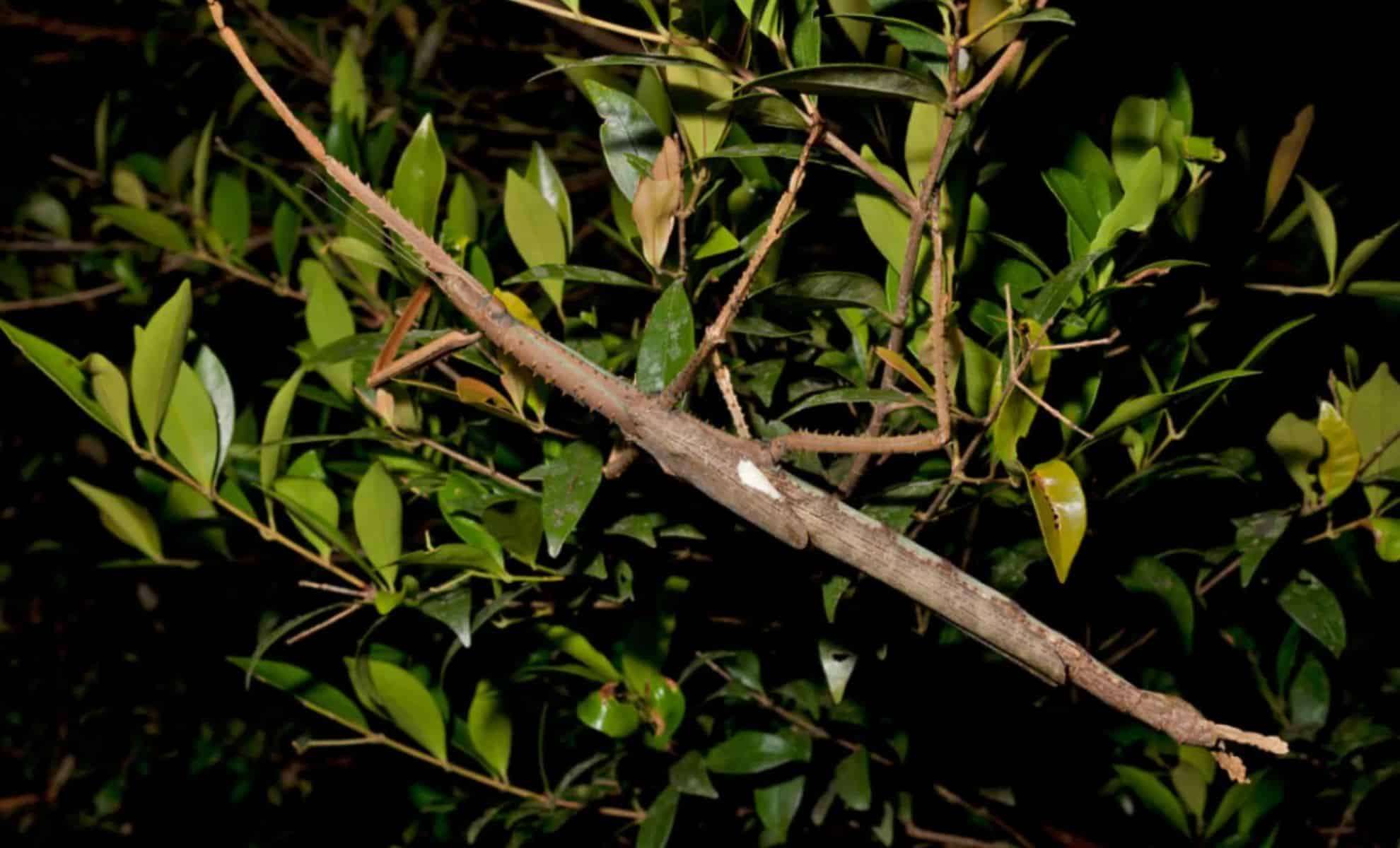
A newly identified species of giant stick insect has astonished Australian entomologists with its remarkable dimensions. Measuring up to 40 centimeters (approximately 16 inches) in length and weighing about 44 grams, Acrophylla alta stands out as potentially the heaviest insect recorded in Australia, exceeding the weight of the previous record-holder, the giant burrowing cockroach (Macropanesthia rhinoceros). Its formal description, published in the scientific journal Zootaxa, highlights a significant addition to Australia’s extensive insect diversity.
A Colossal Resident Hidden in the Rainforest Heights
This extraordinary discovery occurred in the upland tropical rainforests of North Queensland’s Wet Tropics Bioregion, an area encompassing Mt Lewis National Park, Evelyn Tablelands, Maalan National Park, Topaz, Upper Barron, Mt Hypipamee, and Danbulla. The challenging terrain and remote locations in these high-elevation forests help explain why such an immense insect remained undetected until now.
Professor Angus Emmott of James Cook University notes that Acrophylla alta flourishes in these “cool, moist environments,” suggesting its heavy body might confer an evolutionary benefit by helping it endure colder temperatures. This unique habitat likely promoted the insect’s large body size over millions of years. Despite its imposing bulk, the insect’s light brown coloring skillfully conceals it among twigs and leaves.

Egg Characteristics Key to Species Confirmation
The classification of Acrophylla alta largely hinged on examining its unique eggs. “Each stick insect species possesses a distinct egg morphology,” Emmott explained, highlighting variations in texture, pitting, shape, and cap structure. These crucial differences helped separate A. alta from other species in the Acrophylla genus, which has been recognized since 1835 and is distributed across China, Australia, New Guinea, Tasmania, and surrounding islands.
The research team, including Emmott and Ross Coupland, encountered the insect while inspecting the canopy in the Atherton Tablelands. On one occasion, they coaxed an insect down from the branches using a long stick. The largest specimen they recorded was notably as long as a human forearm, extending from fingertip to elbow.
A Crucial Reminder of the Value of Biodiversity Conservation
So far, scientists have preserved only two female specimens and their eggs, now housed at the Queensland Museum for ongoing analysis. This will support efforts to better understand the insect’s ecological niche and aid in developing strategies to protect the rare rainforest ecosystems it inhabits.
Emmott emphasized the importance of discovering and understanding ecosystem components: “Conservation requires knowledge of what exists and how it functions before appropriate protection measures can be devised.” Researchers suspect numerous other undiscovered stick insect species—and possibly other insects—await discovery in Australia’s biologically rich rainforest regions.
- Categories:
- News






0 comments
Sign in to Comment