
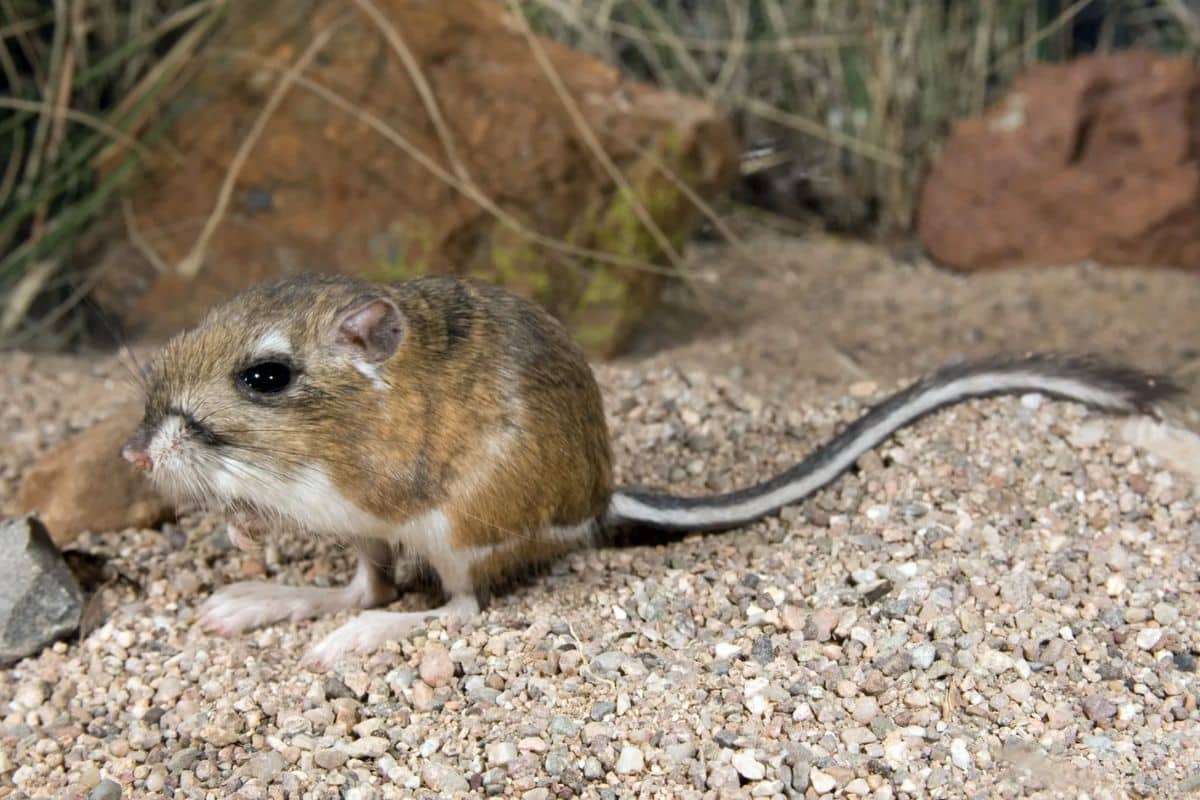
The desert rat-kangaroo (Caloprymnus campestris), a tiny marsupial once thought extinct since the 1990s, might yet be dwelling somewhere within Australia’s expansive and unforgiving Sturt Stony Desert. New research from Flinders University, featured in the Journal of Experimental Biology, sheds light on the animal's dietary preferences, offering critical clues about where to locate this mysterious species.
An Elusive Marsupial with a Storied Past
The desert rat-kangaroo’s history is marked by unexpected comebacks. Initially declared extinct in the late 1800s, it was astonishingly rediscovered during the 1930s, earning the title of a “Lazarus species.”
Yet, since the last verified sighting in 1930, it has remained absent from official records and was ultimately declared extinct in 1994.
Nonetheless, sporadic and unconfirmed sightings continue to emerge, describing a small, short-faced hopping marsupial spotted in isolated regions of the Lake Eyre Basin spanning South Australia and Queensland.

Cracking the Skull Clues to Aid Rediscovery
Research led by Dr. Rex Mitchell focused on studying the skull biomechanics of the desert rat-kangaroo, comparing it to other related marsupials like bettongs and potoroos. Through cutting-edge Finite Element Analysis (FEA), the team simulated the bite forces the skull could endure when processing various foods.
The findings challenged previous assumptions. “We were intrigued to discover that despite its sturdy skull, the desert rat-kangaroo probably wasn’t built to chew on tough foods. Factoring in its smaller overall size, the analysis showed its skull is optimized to handle softer dietary items,” explained Dr. Mitchell.
This insight is crucial for conservation efforts, as it suggests searches should concentrate on habitats where soft-leafed plants are prevalent, potentially increasing the chances of uncovering surviving populations.
Factors Behind the Desert Rat-Kangaroo’s Decline
The species’ fading numbers are linked to multiple challenges: predation by foxes and feral cats, competition from invasive rabbits, and habitat damage driven by overgrazing and mismanaged fire regimes.
Unlike more adaptable mammals, this small marsupial’s specialized nature likely heightened its sensitivity to these environmental pressures.
Though pushed close to extinction, the remote and sprawling Sturt Stony Desert offers a glimmer of hope for its survival.
Strategic Searches Could Lead to Rediscovery
Dr. Mitchell asserts that utilizing new dietary knowledge can transform search strategies for the desert rat-kangaroo. Targeting areas with the appropriate vegetation narrows down vast desert expanses, refining efforts to locate any remaining individuals.
Senior author of the study, Associate Professor Vera Weisbecker, highlights the ongoing possibility of discovery. “Considering its nocturnal habits and the desert’s immense scale, it’s conceivable that this little species still avoids detection. Remember, it was once a ‘Lazarus’ species after being rediscovered in the 1930s,” she remarked.
- Categories:
- News









0 comments
Sign in to Comment