
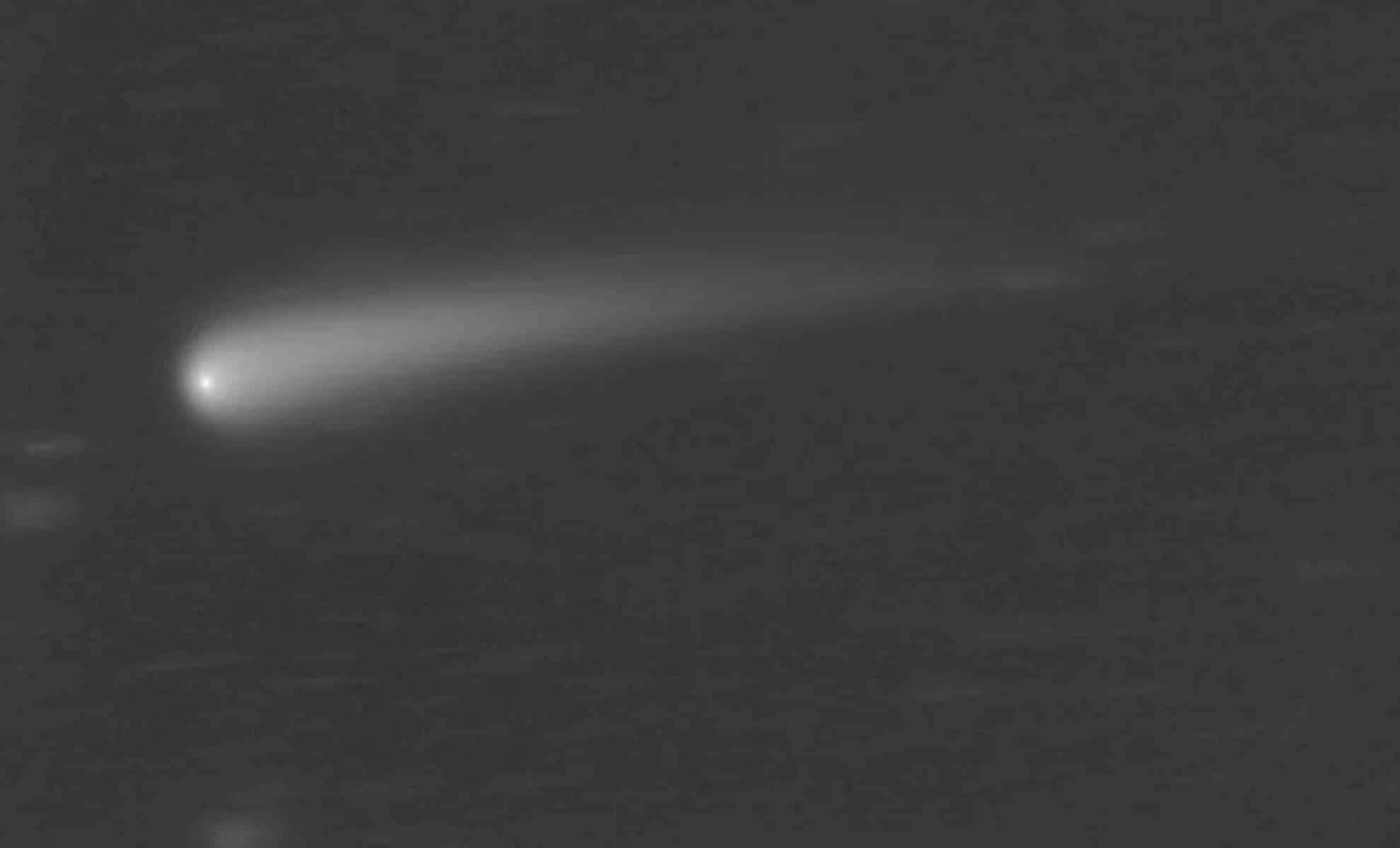
Excitement is building in the astronomy community as Comet C/2023 A3 Tsuchinshan-ATLAS prepares for a possible naked-eye appearance, promising a rare and dazzling spectacle.
First spotted earlier this year, this distant visitor from the Oort Cloud embarks on a remarkable voyage toward the inner solar system. Its return, happening only once every 80,000 years, offers a unique chance for skywatchers to observe a comet with incredible historical rarity.
Tracing the Path of Comet Tsuchinshan-ATLAS
Comet Tsuchinshan-ATLAS originates from the vast, icy reaches of the Oort Cloud, which surrounds our solar system with countless frozen objects. Detected in early 2023 by researchers at China’s Purple Mountain Observatory and later confirmed by the Asteroid Terrestrial Impact Last Alert System (ATLAS) in South Africa, this comet has captured the attention of both experts and enthusiasts worldwide.

As it nears the sun, the comet confronts intense heat and radiation, which pose significant risks to its structure. Comets on their initial close journey to the sun are often fragile and may disintegrate under these extreme conditions. Astronomer Zdenek Sekanina previously suggested that Tsuchinshan-ATLAS might break apart during its closest solar approach, or perihelion, scheduled for September 27. Such an event could diminish or even prevent the comet’s visibility from Earth.
Yet, recent NASA observations from the STEREO-A spacecraft have revealed the comet remains intact and is growing brighter as it moves sunward. This promising update boosts hopes for a spectacular display featuring the comet’s glowing coma and its impressive tail as it reaches perihelion.
What to Look for in This Celestial Guest
Anticipation is mounting among astronomers and casual viewers alike as Tsuchinshan-ATLAS inches closer. Currently at magnitude 7, it remains just out of unaided view, but its luminosity is expected to surge significantly. According to Qicheng Zhang of the Lowell Observatory, the comet could peak at an impressive magnitude of -3 by October 9, shining nearly as brightly as Venus and possibly visible during daylight under ideal conditions.
Comets develop two distinct tails when approaching the sun: a bluish ion tail driven by solar wind that points directly away from the sun, and a broader, dust-rich tail that curves along the comet’s orbit. Tsuchinshan-ATLAS is poised to exhibit both, with its dust tail potentially stretching across 20 degrees in the night sky—equivalent to 40 full moons—creating a breathtaking streak of reflected sunlight.
This comet’s orientation from the northern hemisphere means its dust tail may reflect sunlight directly toward Earth, causing "forward scattering" that enhances its brightness, especially during twilight. Observers using binoculars or small telescopes might witness fine details within its tail and nucleus, enriching the viewing experience.
While cometary behavior can be unpredictable, the surviving, brightening nucleus indicates a strong chance that Tsuchinshan-ATLAS will put on an extraordinary show. However, factors like weather and light pollution will influence how spectacular the comet appears from any given location.
The Scientific Importance of Comet Tsuchinshan-ATLAS
Beyond its visual appeal, Tsuchinshan-ATLAS holds valuable scientific interest. As relics from our solar system’s birth, comets like this one carry primordial materials that help researchers understand planetary formation and the early solar environment. Observations during this visit will shed light on the comet’s composition, its interaction with solar radiation, and the evolution of its tails as it circles the sun.
The comet's journey offers an exceptional chance for both scientific study and public engagement, allowing people worldwide to witness a spectacular astronomical event. Tracking the comet’s approach and perihelion passage will provide critical data, potentially unveiling new insights into cosmic processes and the nature of these ancient travelers.
As we anticipate the upcoming perihelion, enthusiasts everywhere will be looking skyward, reminded of the ongoing dynamic nature of our cosmos. Whether Tsuchinshan-ATLAS fulfills its potential or not, its passage serves as a striking encounter with the immense forces and history embodied in our solar system.
Getting Ready for the Celestial Showcase
The prospect of seeing Comet Tsuchinshan-ATLAS has sparked enthusiasm among astronomers and the general public alike. Observers are encouraged to scan the eastern horizon before dawn and the western horizon after sunset in late September and early October for a chance to see this remarkable comet. If it reaches predicted brightness levels, it could become one of this year’s standout astronomical highlights, captivating skywatchers worldwide.
Those with binoculars or telescopes should prepare to track the comet’s brightening journey toward perihelion. Even after its closest approach, Tsuchinshan-ATLAS may remain visible for several weeks, offering multiple viewing opportunities. Whether a seasoned astronomer or a casual stargazer, this comet promises to connect us with the grandeur of space and the mysteries embedded in our solar system’s distant past.
- Categories:
- Astronomy ,
- News ,
- Space ,
- Nasa










0 comments
Sign in to Comment