
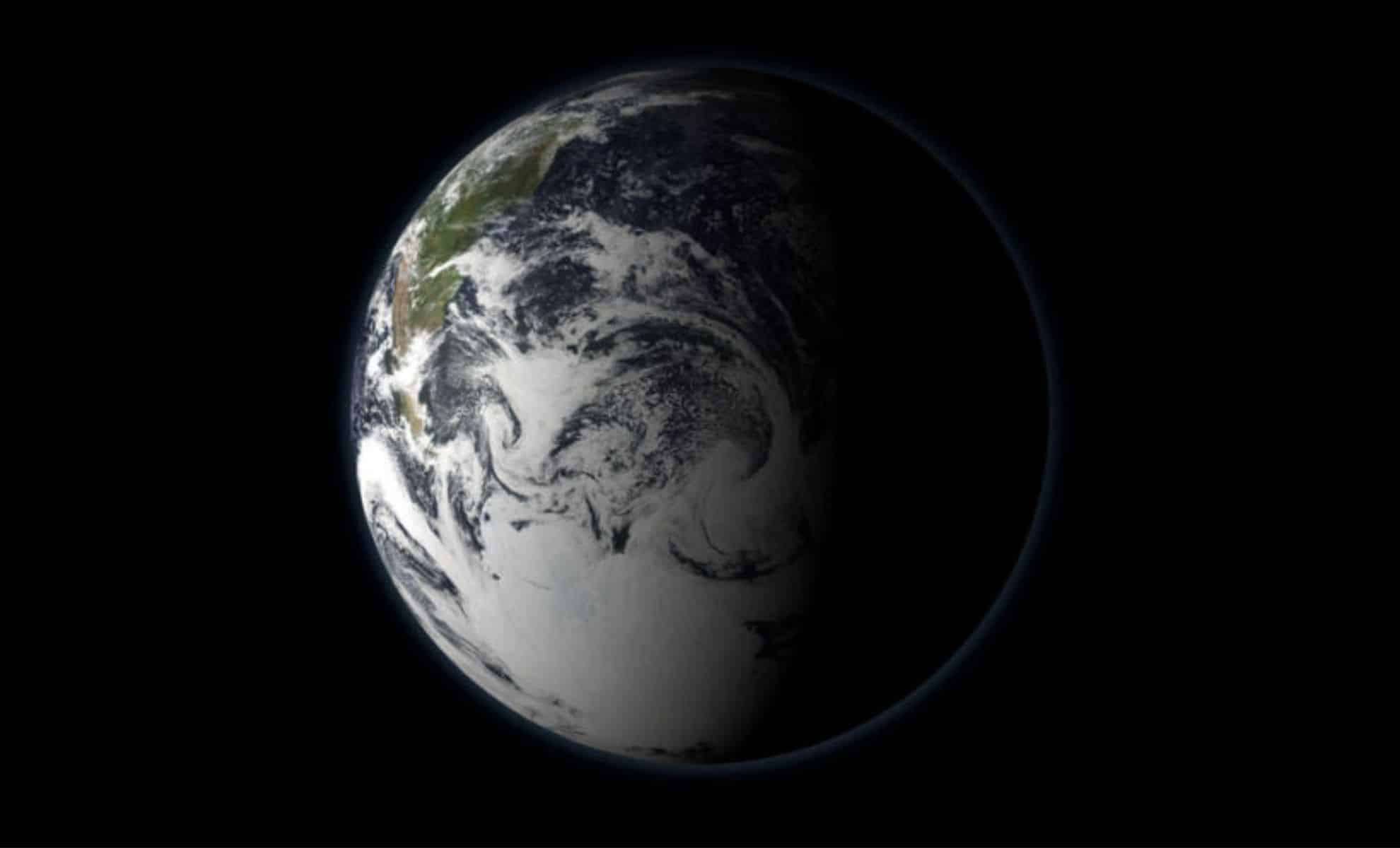
Many view the expansive polar ice caps as a constant, defining feature of our planet’s surface. However, recent findings indicate that these vast ice formations are actually rare phenomena in Earth's geological timeline. Scientists from the University of Leeds have uncovered that Earth has predominantly been free of ice, with polar ice caps appearing only under very specific and unusual cooling conditions. This insight challenges previous assumptions about Earth’s environmental history and highlights urgent concerns about its climate future.
Why are polar ice sheets so uncommon?
Published in Science Advances on February 14, 2025, the research details that the existence of ice caps is not a fixed planetary state but depends on the concurrent occurrence of multiple cooling factors—a rare alignment across Earth’s geological eras.
For decades, scientists have considered various factors behind Earth’s shifts between warm, ice-free intervals and cold, glacier-dominated periods. Hypotheses have included less volcanic CO₂ output, increased carbon sequestration through vegetation, and the weathering of particular rock types as key contributors to cooling. The new investigation expands on these ideas by employing a 3D Earth Evolution Model that integrates all known long-term cooling influences.

The findings reveal that no individual factor alone induces widespread glaciation. Instead, a confluence of low volcanic emissions, dispersed continental formations, and large mountain ranges—which enhance rainfall and the removal of carbon dioxide from the atmosphere—is essential to sustain polar ice caps.
Earth's climate favors warmth over ice
Andrew Merdith, lead researcher previously at the University of Leeds and now with the University of Adelaide, points out that the current icy poles are unusual rather than typical in the planet's lifetime.
“We now know that the reason we live on an Earth with ice caps – rather than an ice-free planet – is due to a coincidental combination of very low rates of global volcanism and highly dispersed continents with big mountains, which allow for lots of global rainfall and therefore amplify reactions that remove carbon from the atmosphere.”
Simply stated, Earth's climate system inherently leans toward warmer conditions instead of icy ones. Historically, when the necessary cooling factors do not coincide, the planet settles into a high-CO₂, ice-free state—a pattern dominant throughout much of its 4.5 billion-year history. In contrast, vast glaciations where ice sheets cover even the equatorial regions, known as "Snowball Earth" episodes, have occurred very infrequently.
Implications for Earth's climate trajectory
This new understanding has significant consequences for how we view future climate change. It challenges the common expectation that if human-driven warming slows, Earth might naturally cool back to pre-industrial conditions. The study cautions that this may be a dangerously optimistic assumption.
Co-author Professor Benjamin Mills emphasizes the risks of relying on natural climate recovery:
“There is an important message, which is that we should not expect the Earth to always return to a cold state as it was in the pre-industrial age. Earth’s current ice-covered state is not typical for the planet’s history, but our current global society relies on it. We should do everything we can to preserve it, and we should be careful with assumptions that cold climates will return if we drive excessive warming before stopping emissions. Over its long history, the Earth likes it hot, but our human society does not.”
Lessons from Earth's climatic past
The study strengthens a growing consensus that glaciers and ice caps are not guaranteed components of Earth’s climate. As human activities drive temperatures higher worldwide, the planet may naturally progress toward its preferred warm, ice-free state, which could make the re-formation of ice sheets increasingly challenging or even impossible.
This perspective extends to extraterrestrial climates as well. A 2022 study suggested that exoplanets similar to Earth are unlikely to host stable polar ice caps, underscoring the anomalous nature of our current climate.
With the accelerated melting of Arctic and Antarctic ice, recognizing that Earth has predominantly existed without glaciers for the majority of its history serves as a critical warning. If the delicate conditions that sustain ice caps are permanently disrupted, we could be witnessing their irrevocable disappearance during our lifetimes—an event that would dramatically alter ecosystems and human societies across the globe.
- Categories:
- News







0 comments
Sign in to Comment