
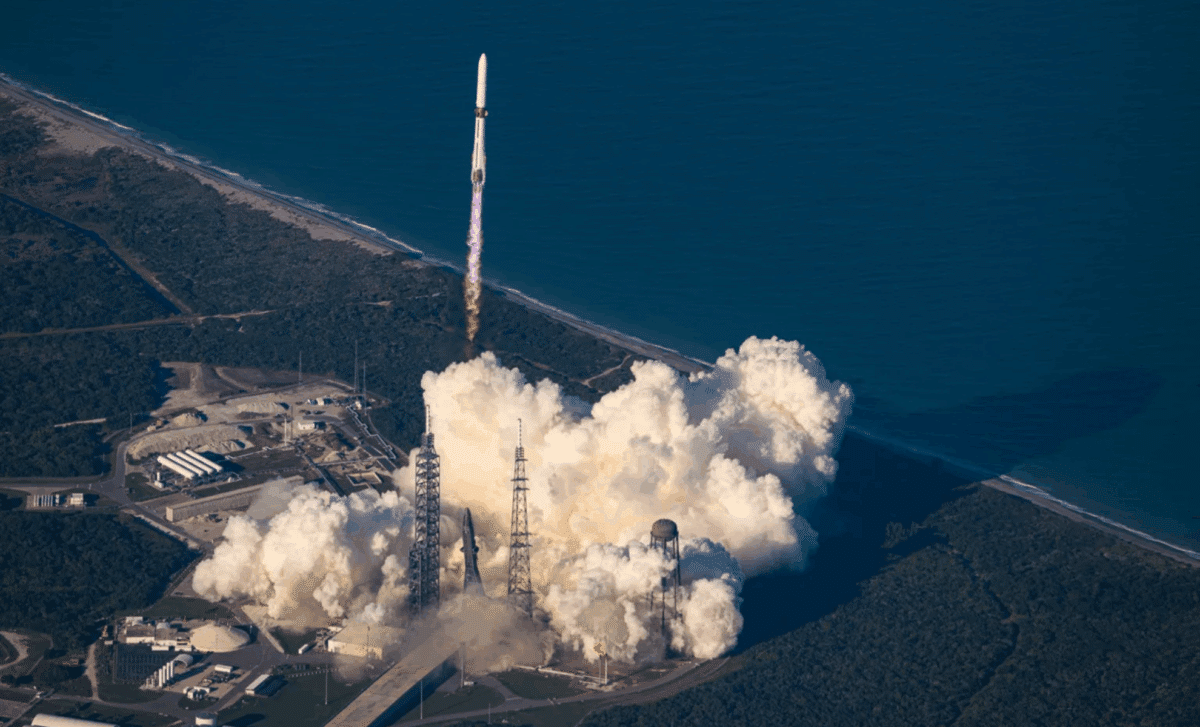
A new benchmark has been set in the realm of reusable heavy launch vehicles. Blue Origin achieved its inaugural recovery of the colossal New Glenn booster following the deployment of NASA’s dual ESCAPADE probes destined for Mars orbit. This landmark event signifies a major advancement for commercial spaceflight partnerships and interplanetary science exploration, highlighting the progress of public-private collaboration beyond Earth.
Revolutionizing Reusable Rocket Technology
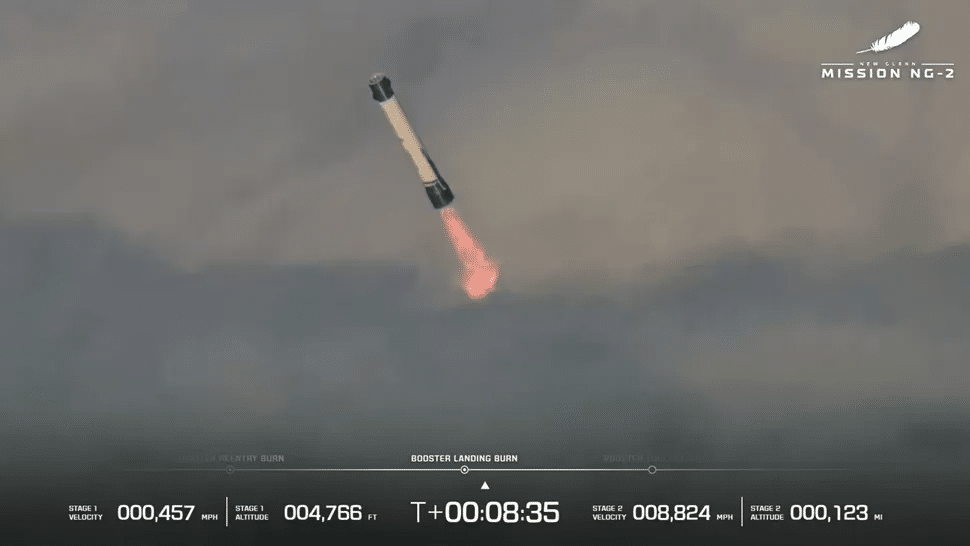
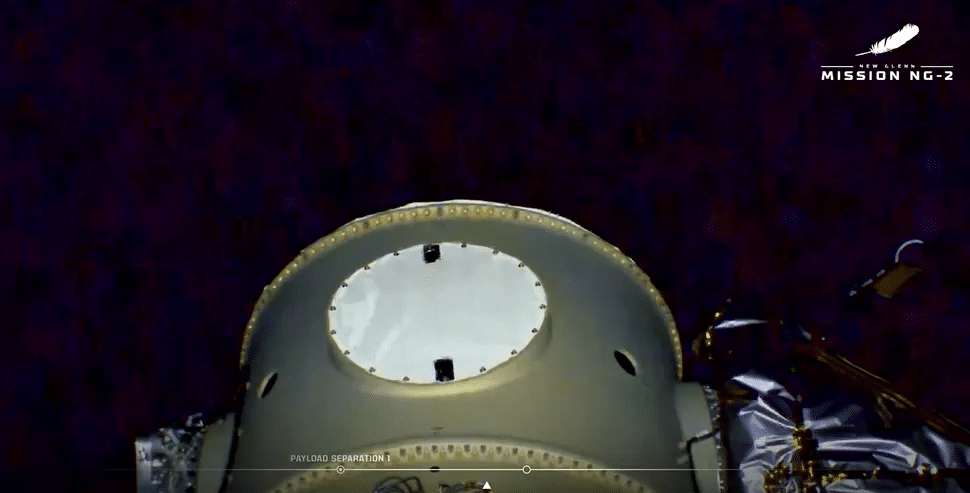
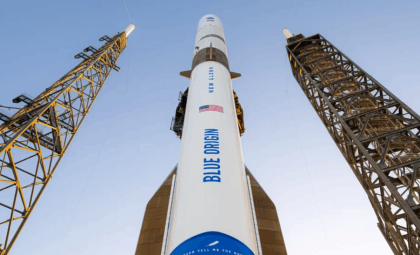
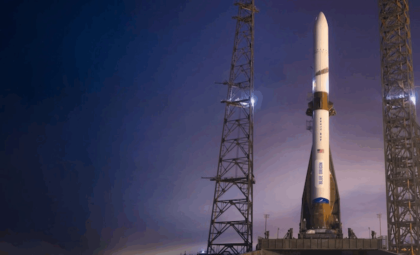
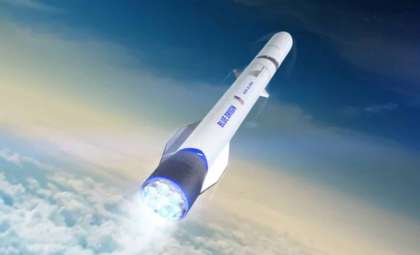
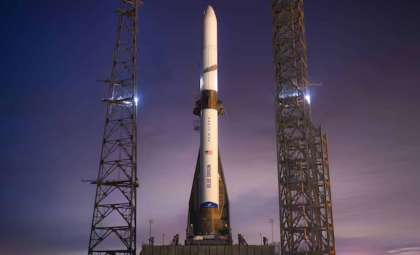
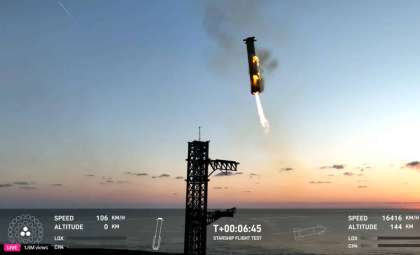
In a flawlessly executed mission, Blue Origin’s New Glenn successfully placed NASA's ESCAPADE spacecraft—short for Escape and Plasma Acceleration and Dynamics Explorers—into orbit, and then returned its powerful first stage to a platform at sea. The giant two-stage rocket, equipped with seven BE-4 engines, achieved its historic first booster comeback, signaling a potential shift in the heavy-lift launch sector.
NASA, a central collaborator on the mission, celebrated this accomplishment as a crucial gain for heliophysics research and Martian studies.

“Congratulations to Blue Origin, Rocket Lab, UC Berkeley, and all our partners on the successful launch of ESCAPADE. This heliophysics mission will help reveal how Mars became a desert planet, and how solar eruptions affect the Martian surface,” said acting NASA Administrator Sean Duffy. He added,
“Every launch of New Glenn provides data that will be essential when we launch MK-1 through Artemis. All this information will be critical to protect future NASA explorers and invaluable as we evaluate how to deliver on President Trump’s vision of planting the Stars and Stripes on Mars.”
This milestone directly challenges the preeminence of SpaceX’s Falcon Heavy in carrying heavy payloads to orbit. While Blue Origin has traditionally lagged behind in orbital lifting power, the ability of New Glenn to recover its booster positions the company as a strong competitor in upcoming missions to the Moon and Mars.
Insights Into Mars Via ESCAPADE
The ESCAPADE initiative, developed jointly by NASA and the University of California, Berkeley, aims to investigate the interactions between solar wind particles and Mars’ upper atmosphere, offering critical clues as to how the planet lost the majority of its gaseous envelope over geological timescales.
“The ESCAPADE mission is part of our strategy to understand Mars’ past and present so we can send the first astronauts there safely,” said Nicky Fox, associate administrator for NASA’s Science Mission Directorate in Washington. “Understanding Martian space weather is a top priority for future missions because it helps us protect systems, robots, and most importantly, humans, in extreme environments.”
Traveling as a pair, these twin spacecraft will orbit Mars in coordination, measuring plasma flows and magnetic field variations to produce a three-dimensional view of the planet’s magnetosphere dynamics. “The ESCAPADE spacecraft are now about to embark on a unique journey to Mars never traversed by any other mission,” noted Alan Zide, ESCAPADE’s program executive at NASA Headquarters.
Findings from this mission are set to enrich our knowledge of Martian atmospheric evolution and will inform future crewed expeditions under the auspices of NASA’s Artemis and Mars habitation efforts.
Private Sector Shaping Space Exploration
Blue Origin’s successful booster recovery marks a pivotal milestone beyond engineering excellence; it represents a strategic advancement within the commercial spaceflight landscape. New Glenn’s reusability blueprint promises to reduce launch expenses significantly, fostering more regular scientific and commercial ventures throughout the solar system.
Additionally, this breakthrough illustrates NASA's evolving approach to public-private cooperation. Through initiatives like Commercial Orbital Transportation Services (COTS), NASA has fostered collaborations that merge stringent scientific goals with innovative entrepreneurial spirit. Opening Mars missions to private launch providers ensures continued progress despite fluctuating governmental policies and funding.
For Blue Origin, this event culminates years of rigorous experimentation and development. Company founder Jeff Bezos has consistently advocated for a dependable, reusable launch infrastructure, and with New Glenn’s first stage recovery now established, that vision has moved firmly into reality.
- Categories:
- News







0 comments
Sign in to Comment