
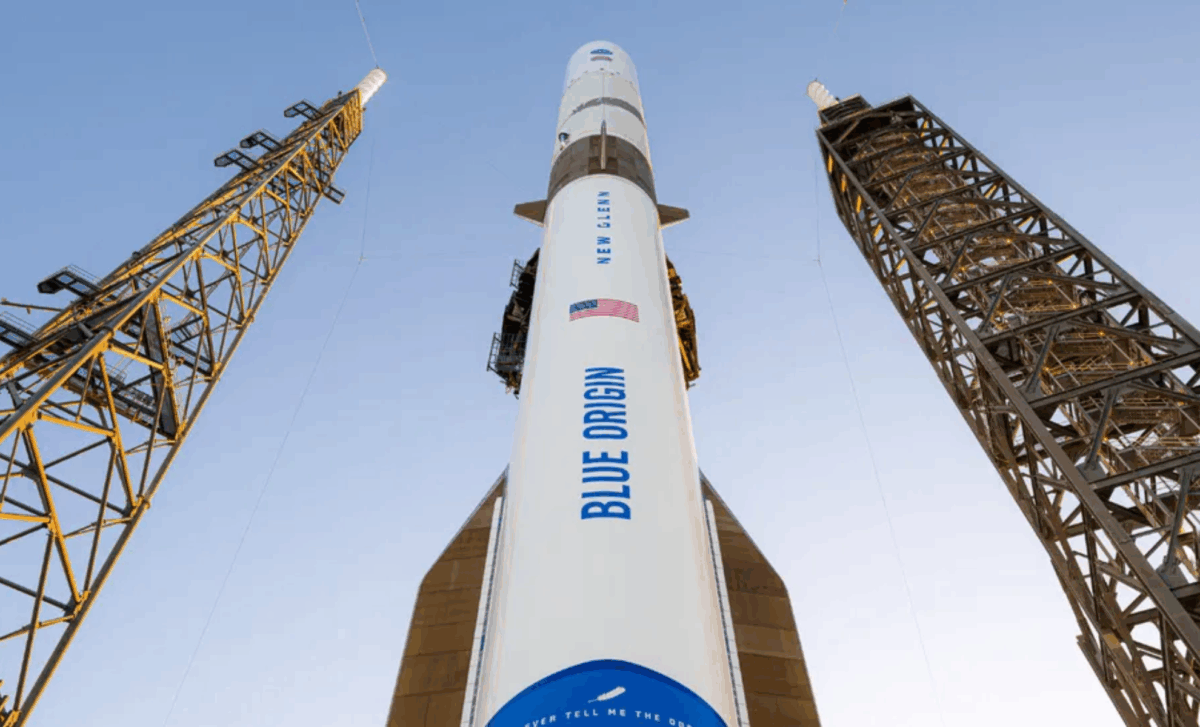
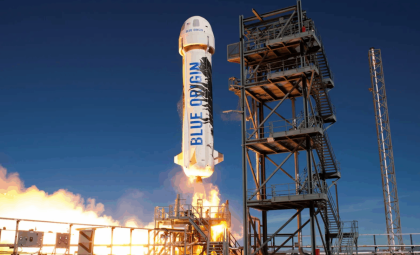
Blue Origin has stepped into the interplanetary frontier with the impressive inaugural launch of its massive New Glenn rocket from Florida's coast. This historic flight delivered NASA’s ESCAPADE spacecraft into orbit, embarking on a mission to explore Mars’ magnetic environment in unprecedented detail.
Blue Origin Takes a Major Step Forward
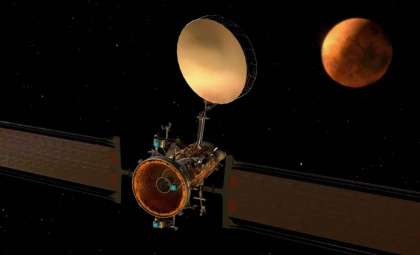
As reported by Space.com, the ESCAPADE mission—short for Escape and Plasma Acceleration and Dynamics Explorers—aims to better understand how solar wind influences the Red Planet’s faint magnetic field. Two identical satellites, designed by the University of California, Berkeley’s Space Sciences Laboratory with NASA’s oversight, will orbit Mars together to examine these interactions in depth.
“It’s been a long road, and very grateful to all the partners that have worked so hard with us for so many years,” said Robert Lillis, ESCAPADE’s Principal Investigator.
Add Cosmo Herald as a Preferred Source

Lillis’ statement reflects the culmination of years of dedication, cooperation, and scientific perseverance.
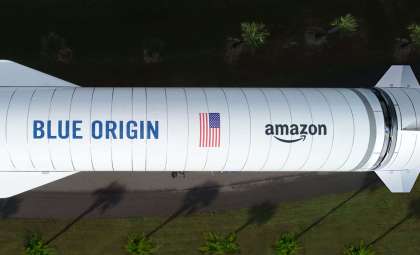
This journey is not only a crucial scientific endeavor but also a milestone showcasing New Glenn’s capabilities. The towering 320-foot reusable rocket represents Blue Origin’s ambition to establish a long-term foundation for deep space missions and to rival heavy launch vehicles like SpaceX’s Falcon Heavy and ULA’s Vulcan Centaur.
Technical Feats Powering the Mars Expedition
The operation to send ESCAPADE toward Mars involved intricate timing and pioneering engineering. After lift-off, the New Glenn’s upper stage executed several precisely timed engine burns to send the spacecraft first toward the Sun–Earth Lagrange Point L2, a strategic waypoint before proceeding to Mars.
“Our number one objective is to deliver ESCAPADE safely and successfully on its way to L2, and then eventually on to Mars,” explained Laura Maginnis, Blue Origin’s vice president of New Glenn mission management. “We also wanting to land our booster, but if we don’t land the booster, that’s okay. We have several more vehicles in production.”
Though recovering the New Glenn booster was preferred, the primary mission goal was successful payload insertion. Blue Origin’s strategy of building multiple boosters reflects a scalable architecture aimed at securing future NASA and commercial contracts for deep space endeavors.
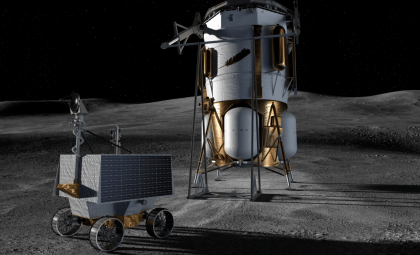
This milestone also offers valuable insight into the rocket’s upper-stage performance, crucial for ongoing deep space transport missions. Data from the launch is already guiding improvements for upcoming flights, including potential missions supporting the Artemis lunar program.
Coordinating Innovation with Safety and Regulations
The spectacular launch was backed by close coordination between Blue Origin, the Federal Aviation Administration (FAA), and NASA to manage airspace and adhere to safety protocols throughout the mission.
“We are working really closely with both our partners at the FAA and with the NASA team to ensure that we’re, of course, honoring and respecting the airspace expectations there and the safety requirements, while at the same time meeting the objectives that NASA and the Blue Origin have for this mission,” Maginnis said. “So, we’re working closely with them on opportunities for exceptions to the policy based on how our mission goes.”
This collaboration underscores the delicate balance between rapid innovation and regulatory oversight, illustrating how private space ventures and public institutions work hand in hand to pioneer new frontiers.
- Categories:
- News






0 comments
Sign in to Comment