
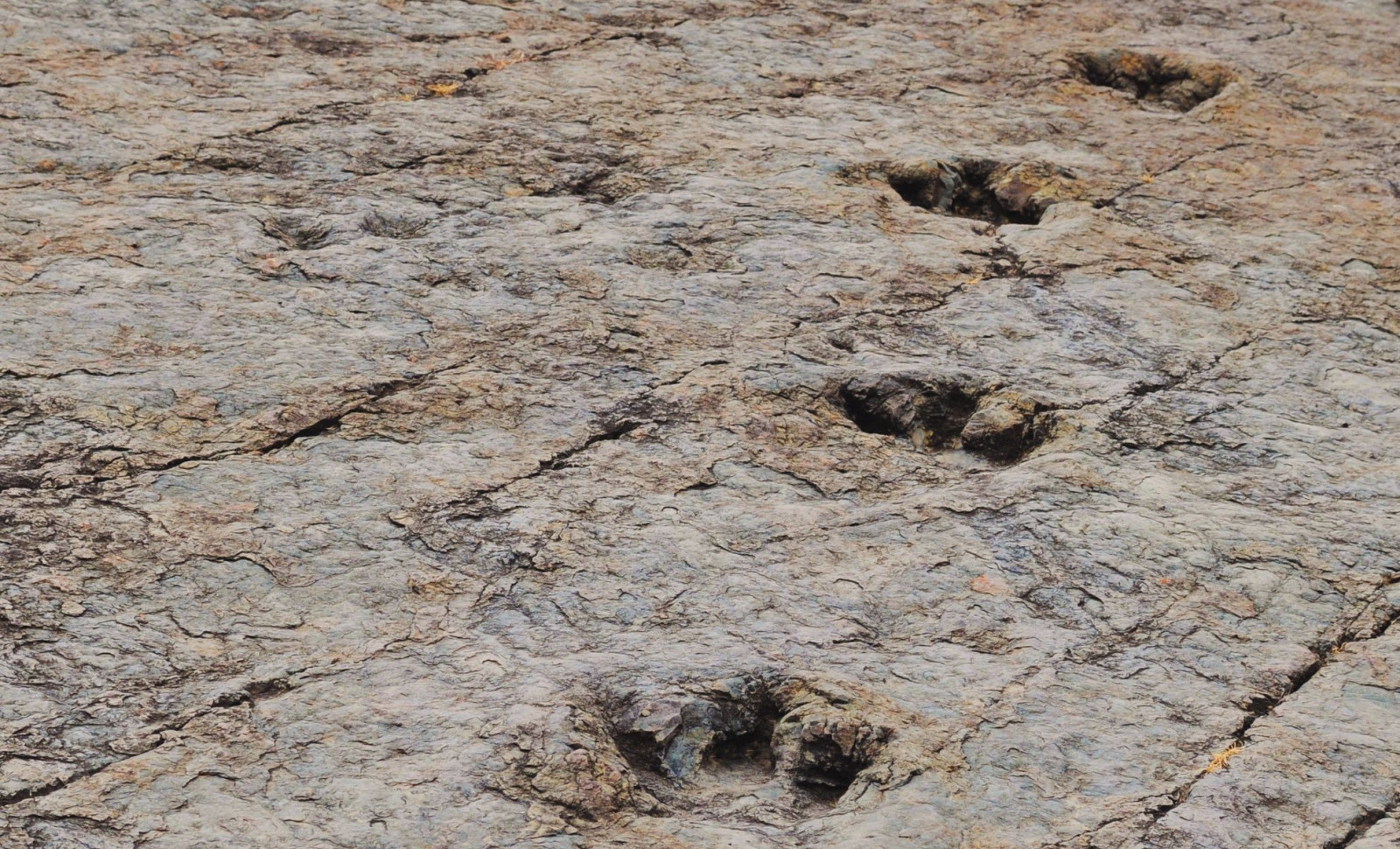
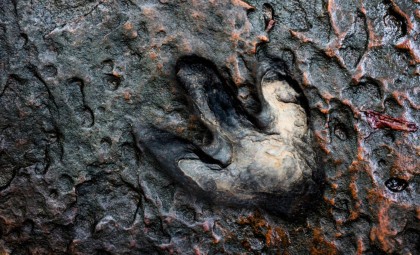
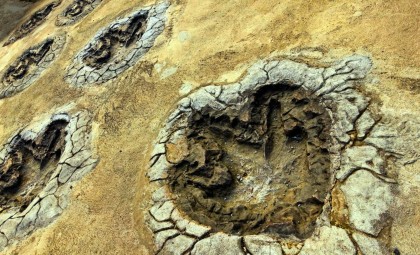
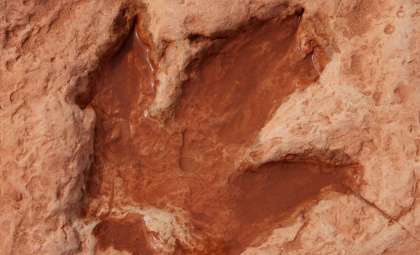
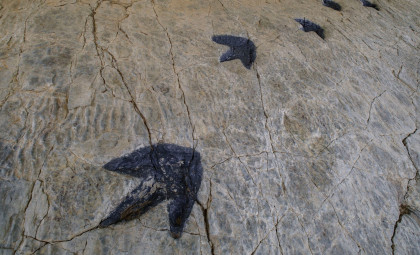
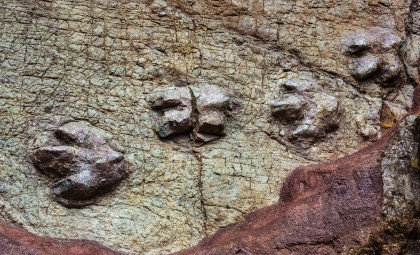
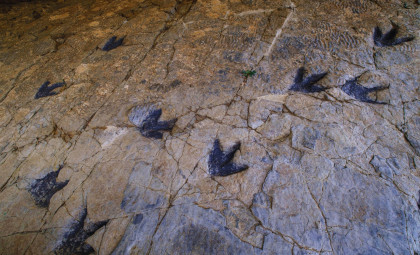
A vast dinosaur footprint site discovered in Bolivia features almost 18,000 well-preserved fossil tracks estimated to be around 70 million years old. Situated at Carreras Pampa in Torotoro National Park, this location stands as the most extensive known dinosaur tracksite identified to date.
These footprints were imprinted along the muddy shores of an ancient freshwater lake during the Late Cretaceous era. A significant portion are enigmatic “ghost tracks,” subtle imprints thought to have been produced by theropod dinosaurs walking on soft sediment.
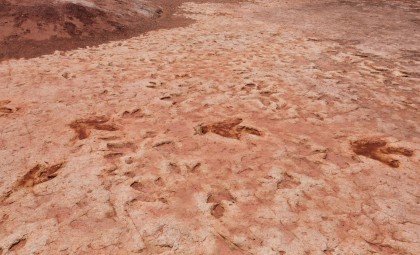
The excavation was led by paleontologist Raúl Esperante from the Geoscience Research Institute and detailed in PLOS ONE. At Carreras Pampa, the team recorded 1,321 trackways encompassing roughly 16,600 tridactyl footprints, along with 289 isolated prints and tail traces, in addition to 1,378 swimming traces found within 280 trackways. While some prints show fine anatomical details, others exhibit faint outlines preserved in ancient mud.

A Prehistoric Lakeshore Brimming with Traces
Central Bolivia’s ancient landscape, unlike its present-day dry sandstone terrain, was once a moist environment characterized by shallow lakes and muddy shorelines where dinosaurs frequently traversed soft ground.
“Bolivia has one of the most extensive and diverse records of dinosaur tracksites in the world, spanning the Triassic, Jurassic, and Cretaceous,” remarked Raúl Esperante. “However, despite the abundance of tracksites, few scientific studies have been published.”
According to the PLOS ONE report, rapid sediment deposition buried the footprints shortly after they were made, protecting them from erosion and water damage. Over millions of years, this mud transformed into rock, preserving the footprints in astonishing detail.
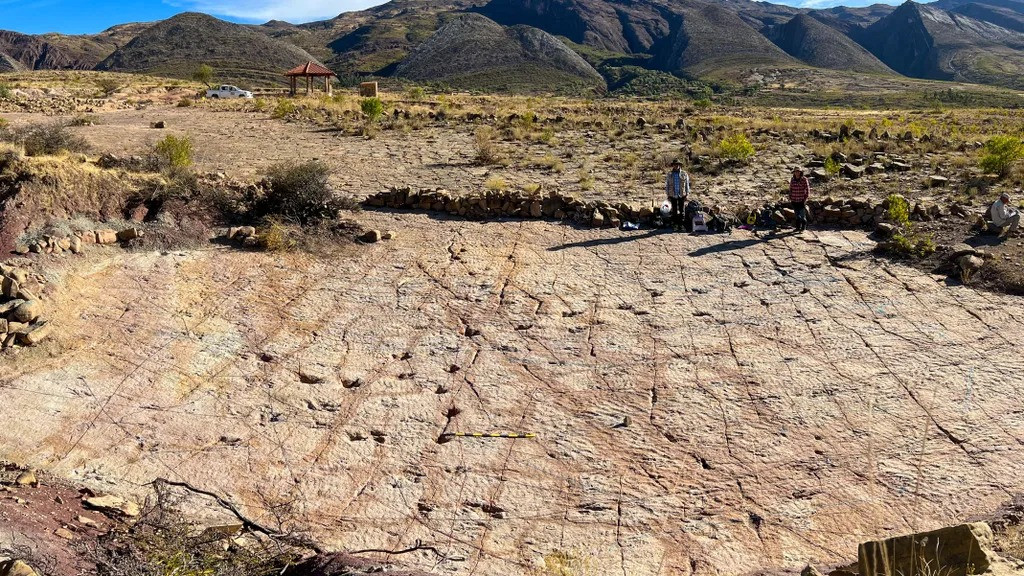
Interestingly, the site lacks dinosaur skeletal remains nearby. Researchers suggest that carcasses near the water were likely scavenged, dispersed by waves, or decomposed before fossilizing.
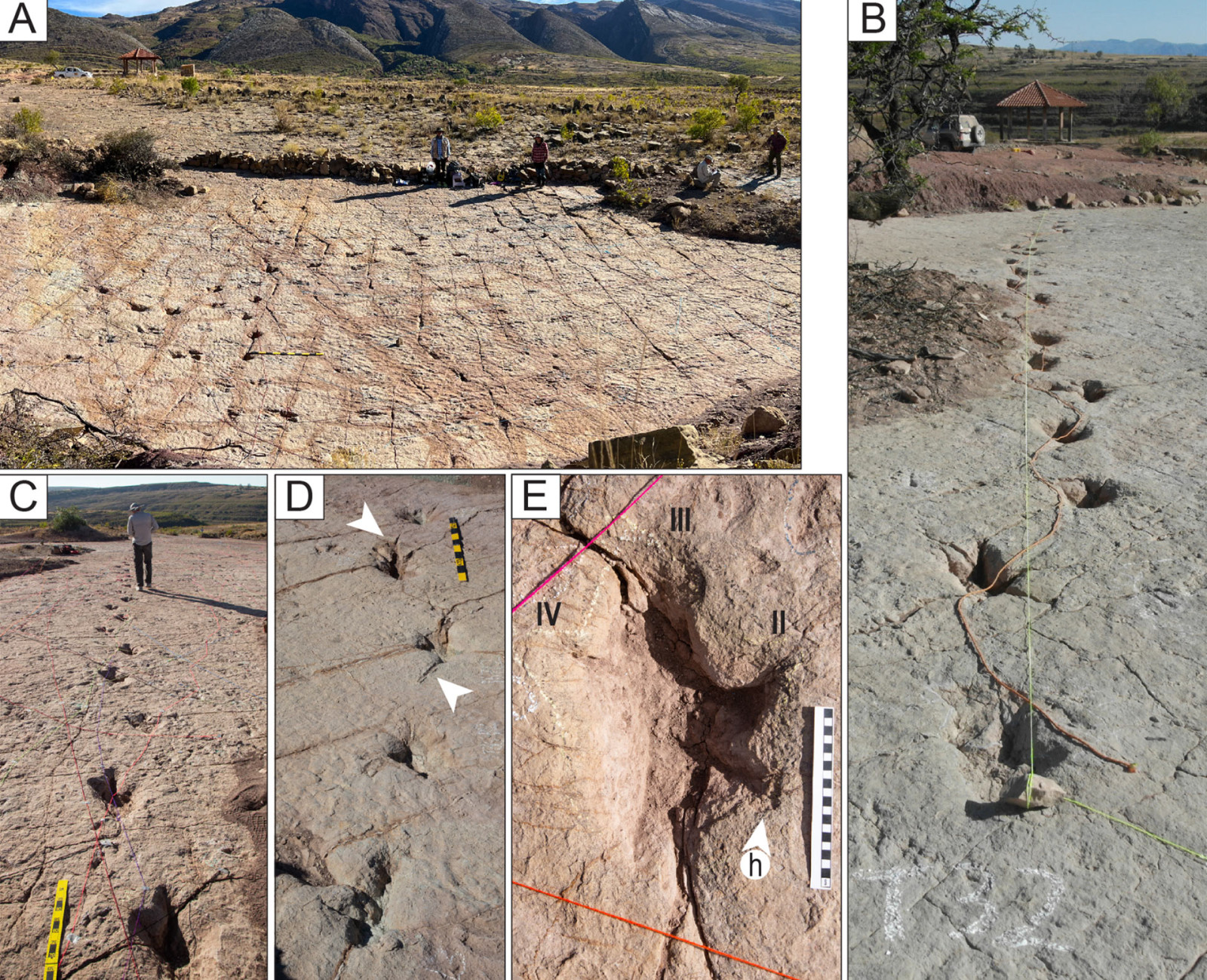
Instead, long continuous trackways offer valuable insight into dinosaur movement patterns along the lakeshore, showing instances of direction changes or pauses.
Emergence of the Mysterious Ghost Tracks
These faint marks showcase claw impressions but often omit distinct heel prints, making them appear incomplete. Esperante and colleagues observed alternating left-right patterns and spacing consistent with bipedal dinosaur locomotion. Their association with more defined theropod footprints strongly indicates these ghost tracks were made by theropods rather than random sediment disruptions.
Some footprints are notably deep and elongated, with adjacent tail drag marks. Others retain detailed features like claw marks, toe pads, heel impressions, and even the hallux, or innermost toe.
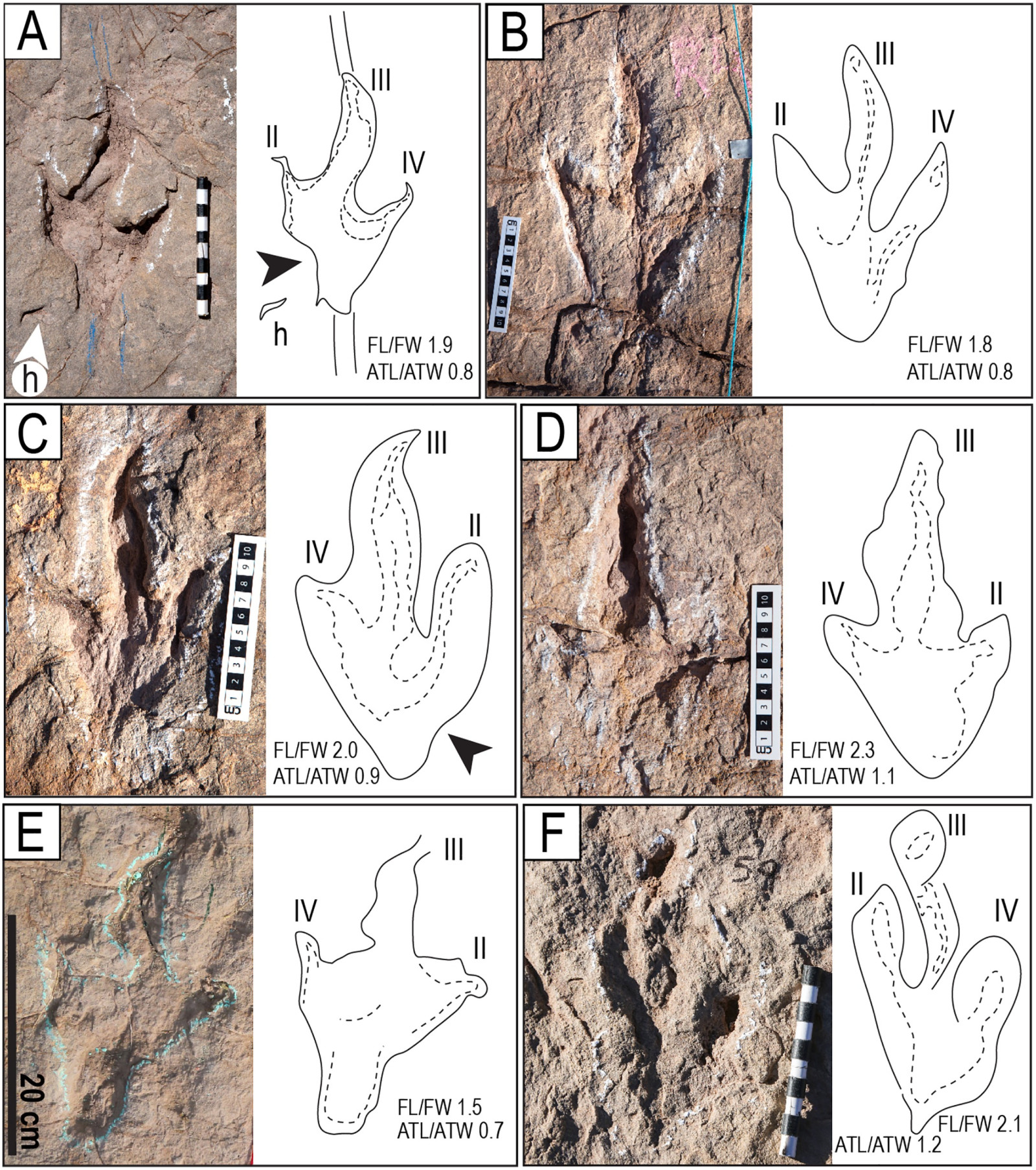
Researchers cataloged various footprint shapes at the location, with a majority attributed to three-toed theropods. Larger footprints resemble adult Tyrannosaurus-like predators, while smaller ones bear similarity to juvenile Grallator prints. Track size allowed the team to estimate the animals’ physical dimensions, noting:
“Most (80%) of the trackmakers had a hip height between 65 cm and 1.15 m, with a greater percentage in the 75 cm – 1.05 m range,” they said. “Notably, very few trackmakers exceeded a height of 1.25 m.”
Spacing between toes offered insights into locomotion, indicating the animals often moved at walking speeds rather than running, utilizing toe placement for stability on soft muddy surfaces.
Uncovering Evidence of Dinosaur Swimming Activity
The site also holds numerous elongated scratches interpreted as swimming traces, likely formed as clawed feet touched the lakebed during passage through shallow water.
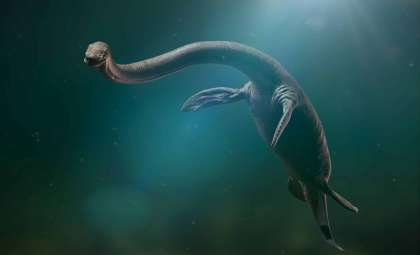
The origin of these swim marks remains uncertain, whether they belong to theropods, ancient crocodile relatives, or both. Nevertheless, the predominance of theropod tracks supports a dinosaur-related origin.
Alongside dinosaur traces, scientists identified ancient bird footprints and rosette-shaped invertebrate burrows within some dinosaur prints. Esperante described the area as an exceptional concentration of trace fossils, adding:
“The swim tracks, tail traces, and avian tracks are remarkably well preserved, and most tracks are found in continuous trackways,” he said. “The abundance and exceptional preservation of these tracks and traces make the Carreras Pampa tracksite an ichnologic concentration and conservation Lagerstätte.”
- Categories:
- Science



0 comments
Sign in to Comment