
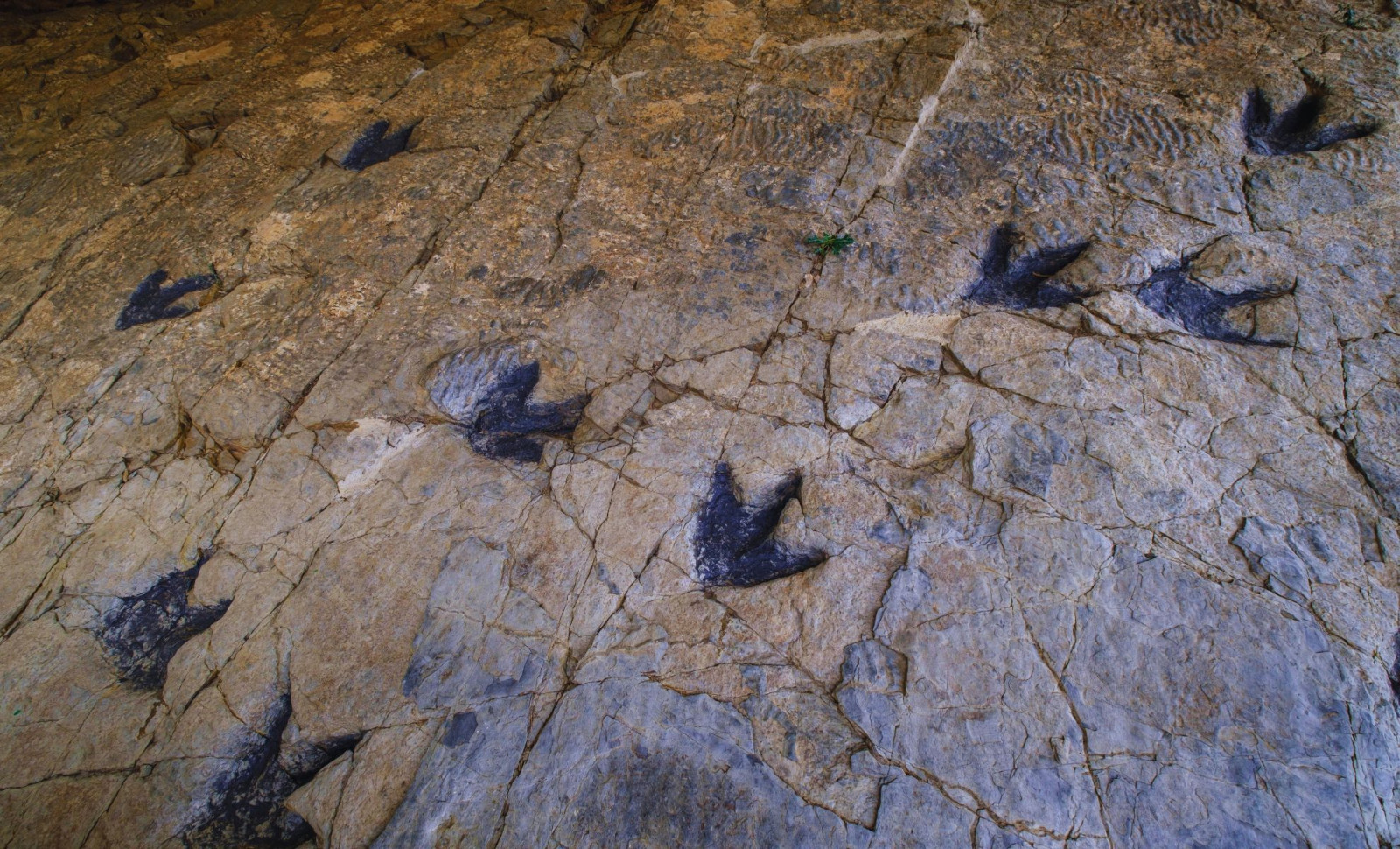
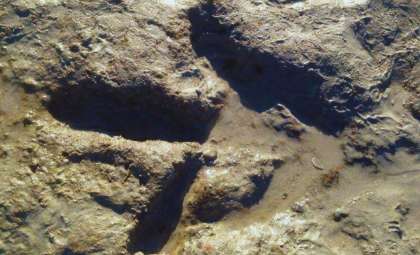
A seemingly ordinary rock stationed in a Queensland school for over two decades has now been identified as containing an astonishing 66 dinosaur footprints. This discovery ranks among the densest fossil track collections ever documented in Australia.
The large stone originated from the Callide Mine near Biloela and was donated to a nearby high school, where it rested unnoticed in the entrance hall. It wasn’t until locals noticed its resemblance to fossilized remains from nearby studies that experts were contacted for investigation.
Researchers from the University of Queensland examined the rock in detail and verified the significance of the find. This is particularly important because Early Jurassic dinosaur bones remain undiscovered in Australia, making these footprints valuable clues for understanding prehistoric life during that era.

A Snapshot of Ancient Dinosaur Activity
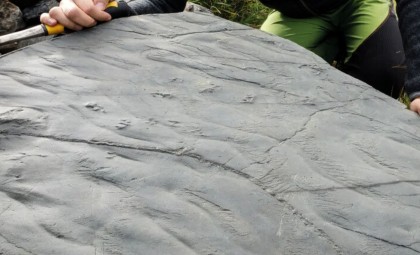
The massive boulder preserves 66 distinct footprints left by no fewer than 47 dinosaurs traversing a surface that was once soft, wet clay. Anthony Romilio, a paleontologist at the University of Queensland, suggested that the dinosaurs were likely moving collectively or consecutively, possibly near a water source.
“The footprints are from 47 individual dinosaurs which passed across a patch of wet, white clay, possibly walking along or crossing a waterway,” noted Dr. Romilio.
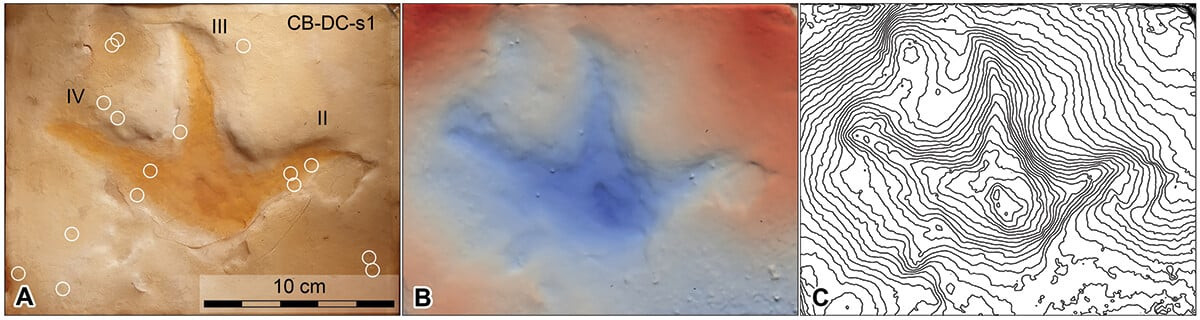
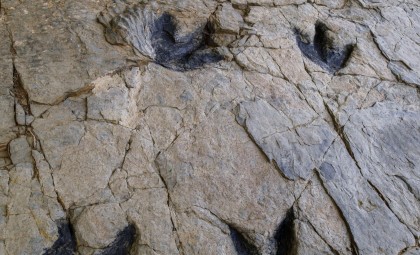
All the footprints feature three toes, indicating they belong to Anomoepus scambus. Research from the university describes these creatures as small dinosaurs with legs that ranged from six to 20 inches in length. Other known fossils reveal they were herbivores featuring long legs, a robust body, short forelimbs, and a small head equipped with a beak.
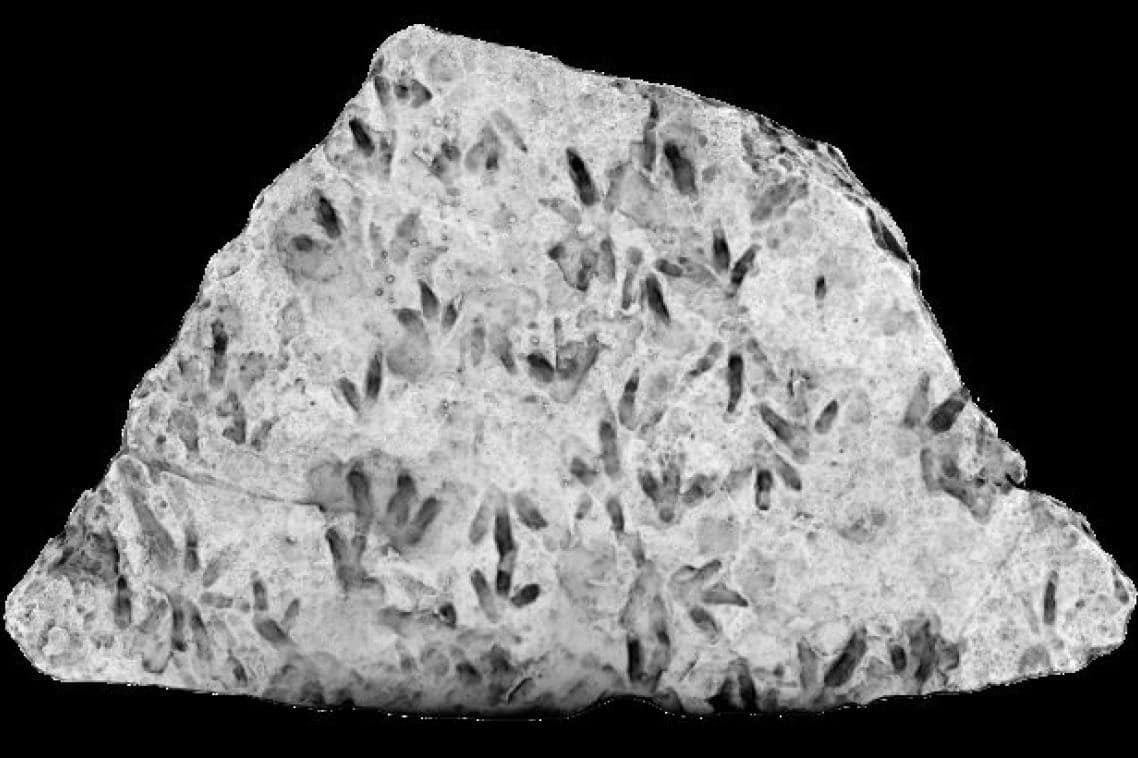
The spacing and impressions of the tracks suggest the dinosaurs were moving at a gentle pace, estimated at less than four miles per hour. This leisurely speed points to a calm, steady walk, as opposed to fleeing from danger or hunting prey.
The Mystery Beneath the Surface
Initially, the embedded footprints were difficult to discern because many blend seamlessly with the surrounding rock. To enhance visibility, scientists used 3D imaging techniques and specialized lighting filters, which revealed clearer details and allowed them to separate overlapping tracks more accurately. This approach also uncovered further fossil footprints in adjacent areas.
“It’s incredible to think that a piece of history this rich was resting in a schoolyard all this time. With advanced 3D imaging and light filters, I was able to reveal hidden details in the footprints,” he added.
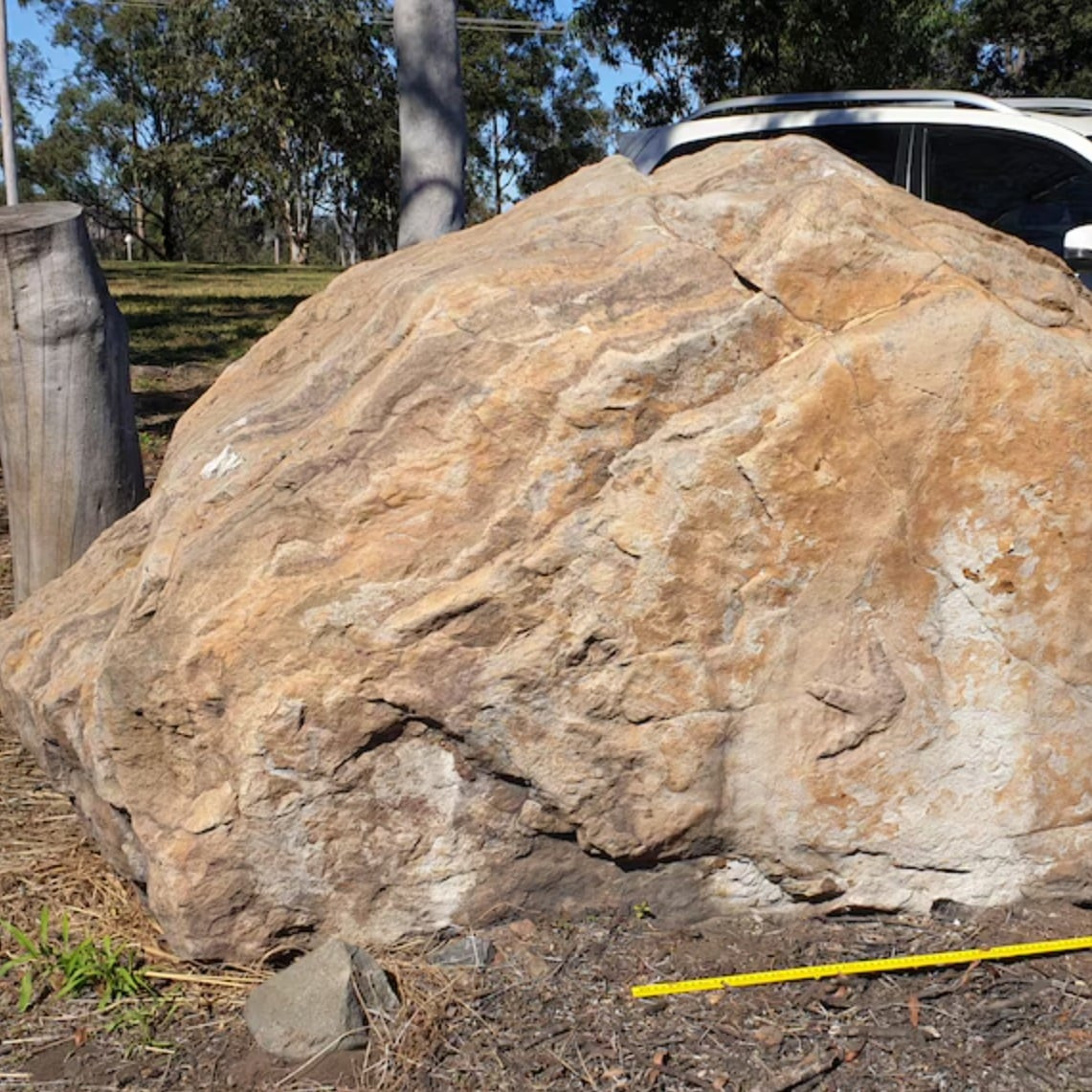
A news release from the University of Queensland also noted that Dr. Romilio discovered other fossilized tracks in the region, including one imprinted on a rock used as a bookend and another on a large boulder in a mine parking area.
“As I’m driving into the car park,” he recalled. “I see one of those car park boulders to stop cars from driving on the lawn. And it’s got this clear-as-day dinosaur fossil. My jaw dropped when I saw that.”
According to Romilio, one of these footprints was immediately noticeable upon his arrival, highlighting the surprising fact that it had been overlooked for so long despite its clear visibility.
Exceptional Evidence From a Time Without Dinosaur Bones
The research published in Historical Biology pointed out that previously only a single dinosaur track had been recorded in the Callide Basin. Since dinosaur bones from this era have not been found in Australia, these preserved footprints are crucial for piecing together dinosaur presence and behavior.
The footprints reveal not only that dinosaurs occupied this region but also provide clues about their numbers and movement patterns across ancient landscapes where no skeletal remains have been discovered.
- Categories:
- Science





0 comments
Sign in to Comment