
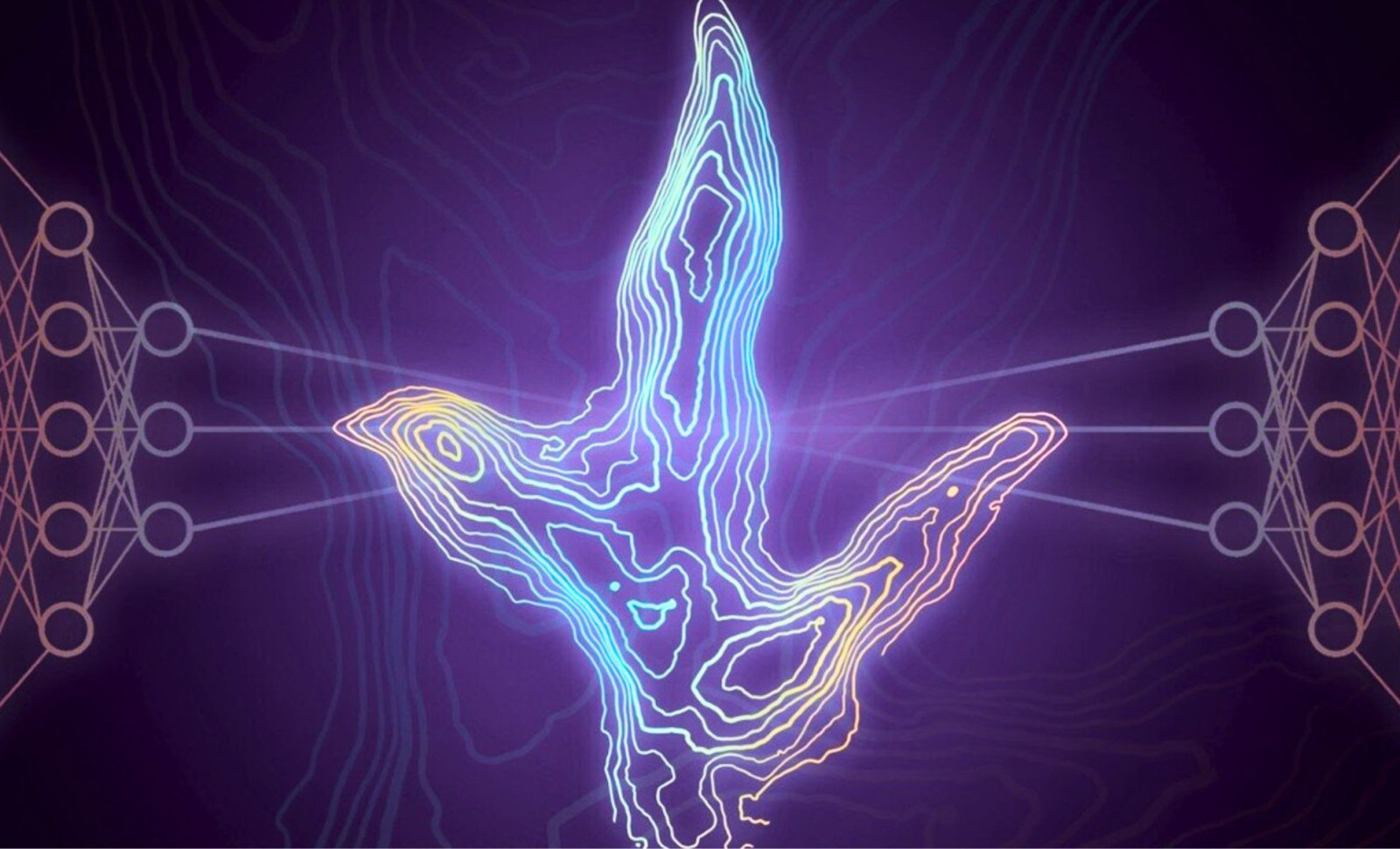
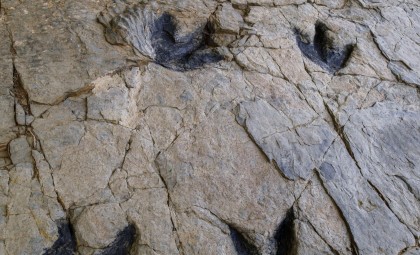
An innovative artificial intelligence tool is reigniting discussions around one of paleontology’s longstanding debates. The focus is on fossilized footprints that share uncanny similarities with those of modern birds, yet originate from a period tens of millions of years prior to the earliest avian fossils.
Developed by a collaborative team of European scientists, this AI introduces a novel approach to analyzing fossil footprints. Instead of depending solely on traditional expert identification, it detects underlying patterns directly from raw shape data, challenging established timelines of bird evolution.
Initial results from the AI reveal surprising resemblances in trackways dating to the Triassic and early Jurassic eras. These birdlike footprints appear far earlier than Archaeopteryx, historically considered the first known bird.

AI Reassesses Ancient Dinosaur Tracks
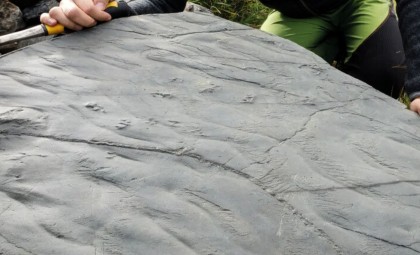
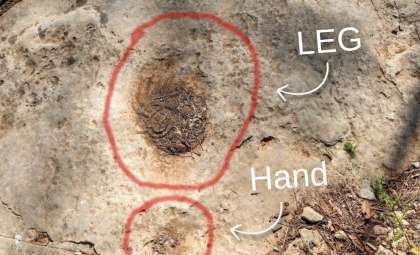
Published in the January 2026 issue of Proceedings of the National Academy of Sciences, the study was conducted by experts from the University of Tübingen, University of Manchester, and Berlin’s Museum für Naturkunde. Their unsupervised machine learning approach analyzed 2,000 tridactyl (three-toed) dinosaur footprints, categorizing them based on eight distinct morphological features, such as digit alignment, heel dimensions, toe spread, and pressure distribution on the substrate.
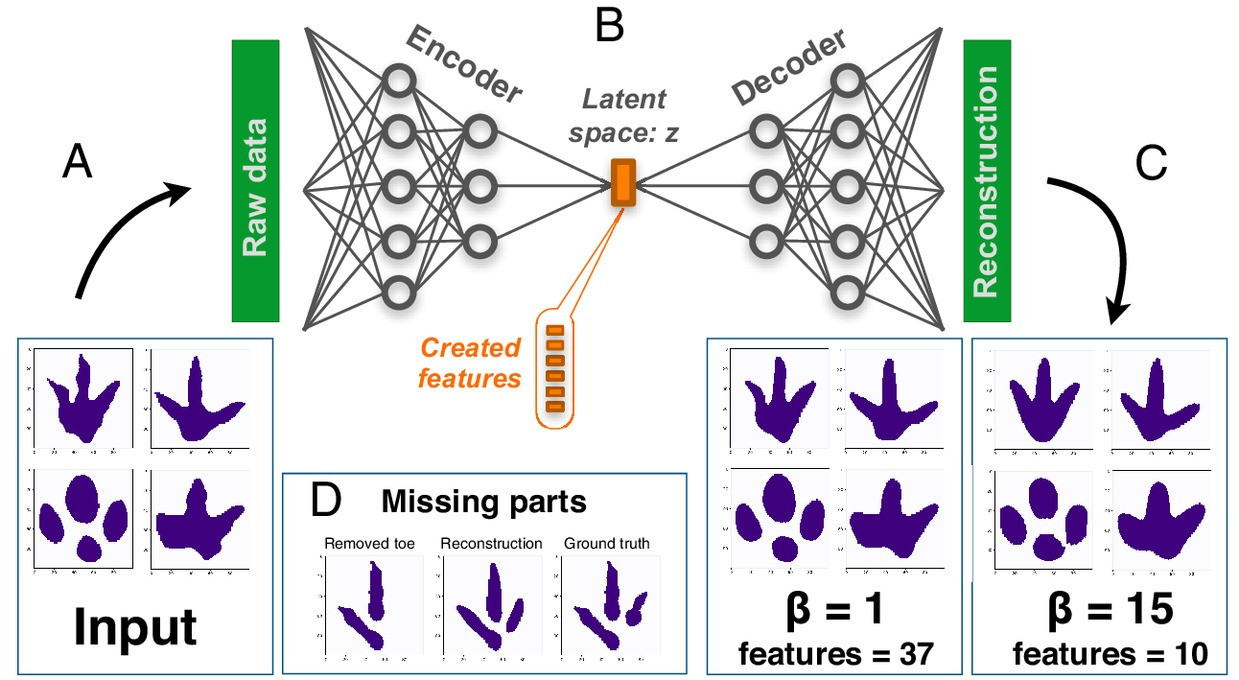
The model worked without pre-assigned labels, clustering footprints purely by their geometric traits to build an “eight-dimensional morphospace.” Afterward, scientists superimposed taxonomic categories to verify matches, with the AI confirming expert classifications in 80 to 93 percent of cases involving well-preserved tracks.
This technology supports a publicly accessible app called DinoTracker, enabling users to submit fossil photos or sketches. The app then situates the input within the AI’s morphospace and compares it to classified samples, standardizing a process that typically relies on specialized subjective evaluation.
Lead author Dr. Gregor Hartmann explained in The Guardian that using an unsupervised method circumvents the risk of bias from incorrect labeling. “It’s likely some existing labels are inaccurate,” Hartmann said.
To enhance the model’s robustness, the researchers synthesized over 10,000 variations of the original fossils. These simulated typical distortions like erosion, partial preservation, and compression so the AI could discern meaningful features amidst fossil damage.
Birdlike Traits Originating in Ancient Layers
The study’s most remarkable revelation concerns a group of tracks from the Late Triassic and Early Jurassic periods. These prints display traits such as closely spaced toes, strong symmetry around the central digit, and foot shapes remarkably similar to those of present-day birds. Yet, these tracks are dated some 60 million years earlier than the oldest recognized bird fossils.
Co-author Dr. Stephen Brusatte of the University of Edinburgh noted to The Guardian that this supports a theory some paleontologists have suspected for years: birds may have much deeper evolutionary roots. “If these footprints truly come from birds, it would push back the timeline for avian ancestry significantly,” he remarked.
Brusatte also suggested the footprints might belong to non-avian theropods with foot structures that evolved to resemble birds independently. Importantly, the AI doesn’t label species but evaluates footprint geometry without assumptions about taxonomy.
However, some skepticism persists. Dr. Jens Lallensack from Humboldt University, not involved in the research, told The Guardian that features might instead be influenced by interactions between dinosaur feet and soft or uneven substrates, cautioning against concluding evolutionary connections purely from footprints without complementary fossil evidence.
A Global Tool for Fossil Identification
The DinoTracker app introduction marks a breakthrough for trace fossil research by offering a scalable tool for worldwide ichnological analysis. It invites users of all expertise levels—from casual fossil enthusiasts to professional paleontologists—to upload excavation data, broadening the scope and variety of documented footprints.
Due to the scarcity of ichnologists globally, this tool aims to assist in fossil evaluation where expertise is limited. Uploaded prints are automatically analyzed and mapped into the AI’s morphospace, allowing for comparison with established track categories and spotting structural similarities.
A Phys.org report highlighted that the AI has pinpointed clusters of footprints previously ignored by classic classification efforts, potentially indicating convergent evolution between early birds and dinosaurs.
While currently optimized for tridactyl dinosaur footprints, the team plans to broaden the AI’s scope to cover other trace fossils, such as impressions from plants and invertebrate tracks. Their ultimate vision is a comprehensive geometry-driven system for categorizing fossils across paleontology.
Available freely as a mobile application, public access is accelerating this technology’s adoption, bridging gaps between academic research and public participation in fossil science.
- Categories:
- Science




0 comments
Sign in to Comment