
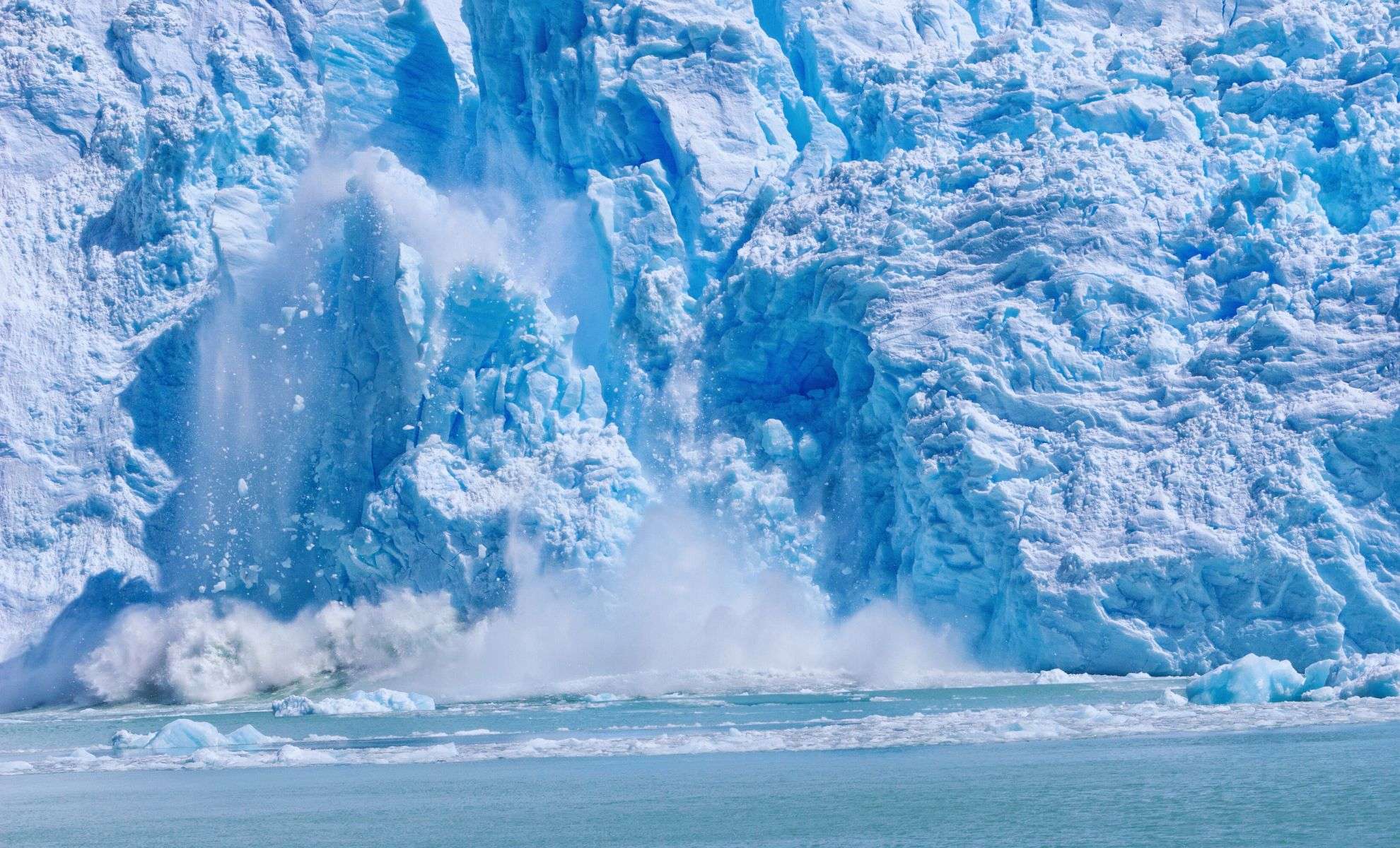
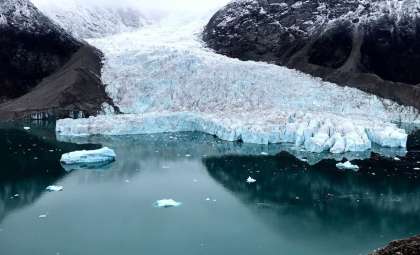
The massive Thwaites Glacier in West Antarctica, often dubbed the “Doomsday Glacier” for its potential to dramatically raise global sea levels, is showing worrying signs of deterioration. Spanning close to 80 miles, a total collapse of this glacier could elevate worldwide sea levels by as much as 11 feet. Scientists are intensively tracking the development of cracks within the glacier, which may quicken its flow into surrounding oceans, threatening coastal regions globally. Recently, a study featured in the Journal of Geophysical Research Earth Surface sheds new light on the growth and behavior of these fractures, enhancing predictions of when such a catastrophic event could occur.
The Thwaites Glacier: A Crucial Threat to Coastal Populations
Positioned at Antarctica’s edge, the Thwaites Glacier has become a prime subject for researchers monitoring climate impact. Each year, it loses roughly 136 billion tons of ice, and the stability of its ice shelf—which currently restrains further melting—is crucial. Should this barrier weaken, the glacier's melting process would likely accelerate, resulting in severe flooding risks for low-lying coastal areas worldwide. Due to its massive scale, the glacier plays a pivotal role in discussions surrounding climate change and its effects on the planet.
“Our understanding of glacier fractures is limited and more intricate than standard models have accounted for,” explains Shujie Wang, assistant professor at Penn State University and study co-author. “Traditional modeling relies heavily on simplified assumptions and limited field data.” Wang's remarks highlight the complex behavior of glacier fractures and why earlier projections have struggled to foresee its collapse. The new research employs cutting-edge satellite imagery to offer a refined view of fracture formation and expansion across the ice shelf.

Revolutionizing Fracture Analysis: A New Technique Unveiled
A key advancement in this study comes from a novel approach developed by Penn State scientists for investigating ice fractures. Leveraging NASA’s ICESat-2 satellite data, the researchers constructed detailed elevation maps and cross-sectional images of cracks within the Thwaites Ice Shelf. This technique improves understanding of how fractures evolve and their role in undermining glacier stability. Tracking these changes could provide critical early warnings and more accurate forecasts of when the glacier might begin to disintegrate.
Co-author Richard Alley stresses the importance of these insights, stating, “We’ve observed ice shelves fracture before, but never witness their recovery.” This remark highlights the irreversible trajectory Antarctica is on. When the ice shelf fails, the glacier’s flow to the sea will accelerate, intensifying ice loss. Accurately forecasting the timing of this event remains a pressing challenge.
An Escalating Cycle: The Growing Instability of Thwaites Glacier
The study reveals that as fractures expand across the ice shelf, the glacier’s speed increases, which in turn induces the formation of new cracks—a reinforcing feedback loop of deterioration. The eastern ice shelf shows greater vulnerability to this fracturing, whereas the western side remains comparatively stable at present. The drivers behind this uneven pattern are uncertain but may involve rising ocean temperatures, ocean current shifts, and alterations in sea ice density.
“If the Thwaites Glacier reaches a tipping point, the outcomes could be catastrophic,” Wang cautions. The self-reinforcing instability risks accelerating melting and causing a sudden surge in sea level rise, leaving coastal populations with minimal time to respond. Wang’s warning underscores the urgency of addressing Antarctic changes before such tipping points are crossed.
Worldwide Consequences of the Glacier’s Possible Collapse
The collapse of Thwaites Glacier would drastically impact global sea levels. Past events, like the disintegration of the Larsen B Ice Shelf in 2002—which vanished in just five weeks—demonstrate how quickly ice shelves can break apart. Thwaites, however, dwarfs past cases, and its demise could instigate further destabilization within Antarctica’s ice sheets.
Despite the alarming risks, this research brings renewed optimism by offering a more dependable way to monitor and predict ice shelf failure. Doctoral researcher Zhengrui Huang from Penn State highlights the study’s importance: “This fracture dataset will be vital for scientists modeling Antarctic ice shelf behavior.” Enhanced data means better forecasting and guidance for strategies aimed at countering rising seas.
- Categories:
- News







0 comments
Sign in to Comment