
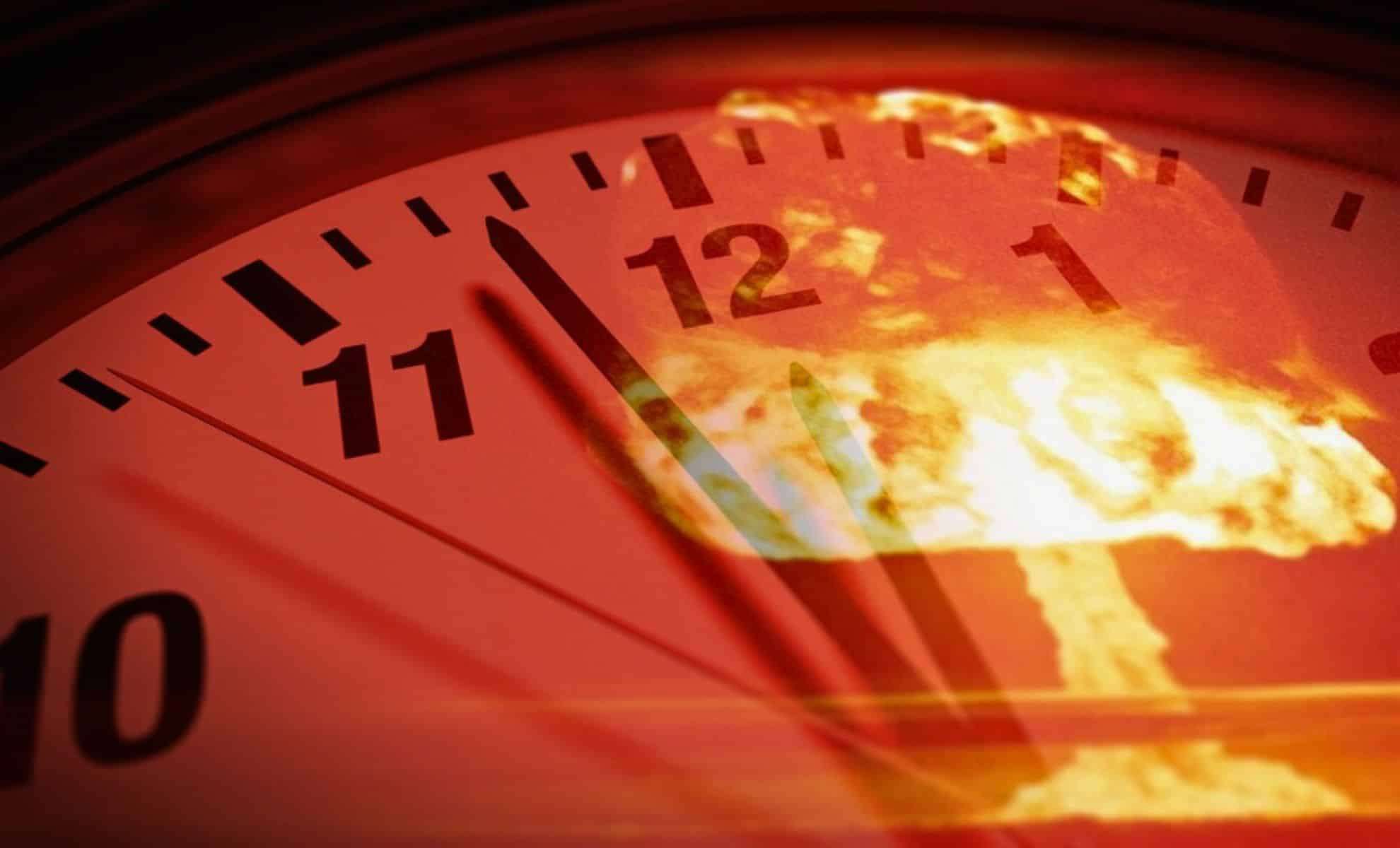
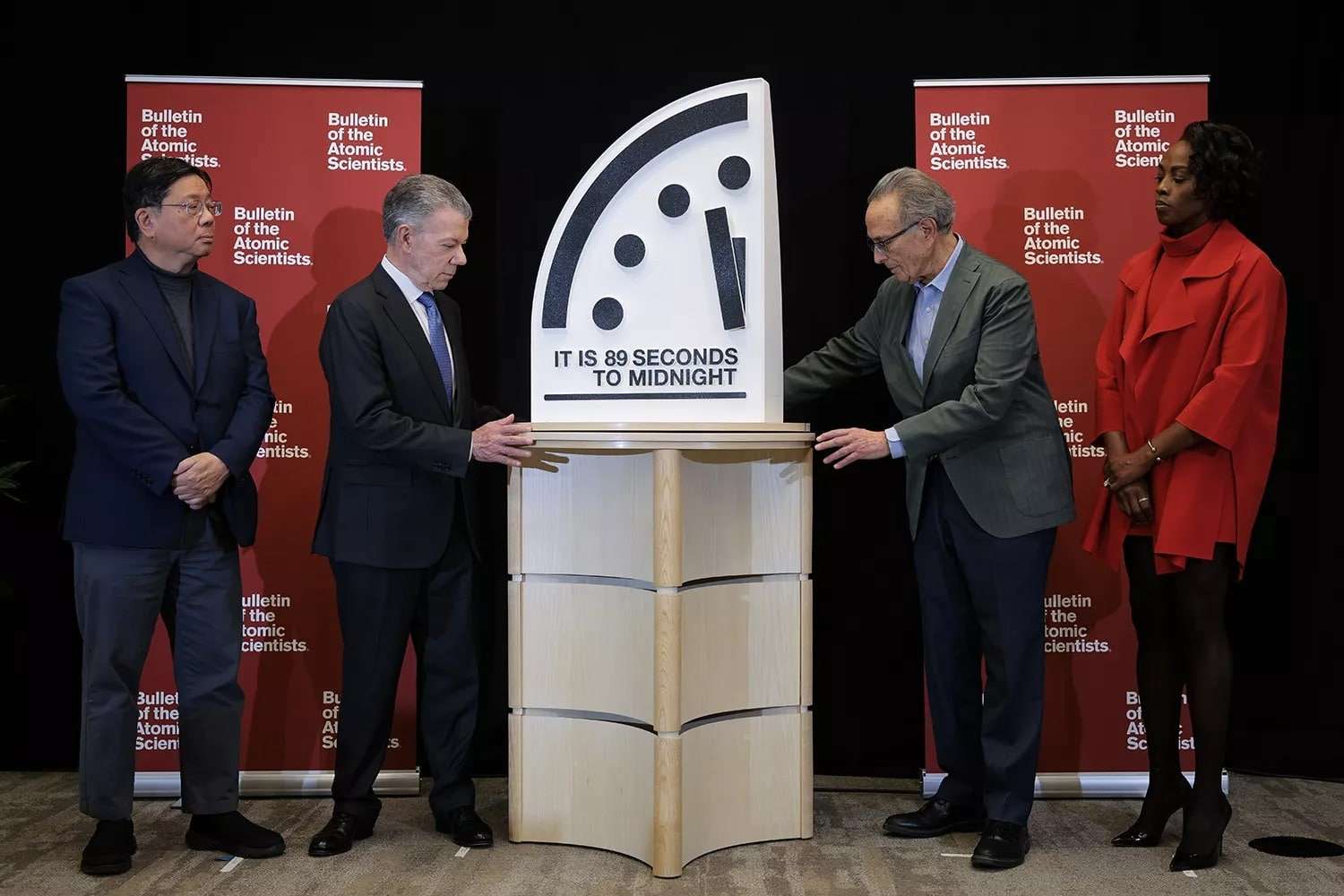
The Doomsday Clock has approached its closest point to midnight ever recorded—now standing at 89 seconds away. On Tuesday, January 28, the experts at The Bulletin of Atomic Scientists revealed their 2025 assessment, signaling an unprecedented level of danger for humanity.
This change marks the clock moving one second nearer than last year’s setting of 90 seconds, reflecting growing concerns over the intertwined threats of nuclear conflict, escalating climate emergencies, and the rapid evolution of artificial intelligence.
“A move of even a single second should be taken as an indication of extreme danger and an unmistakable warning,” stated Daniel Holz, chairman of The Bulletin of Atomic Scientists.
Add Cosmo Herald as a Preferred Source

Factors Driving the Doomsday Clock Forward: Five Critical Global Risks
The adjustment of the Doomsday Clock stems from concrete, escalating dangers that have worsened in the past year, pushing humanity closer to potential catastrophe.
1. Nuclear Tensions Reach New Heights
The persistent conflict between Russia and Ukraine remains a volatile source of nuclear threat, with President Vladimir Putin unwilling to dismiss the use of nuclear arms. This war has intensified with grave escalations, increasing the risk of a disastrous global event.
Simultaneously, the Israel-Hamas conflict has added further instability to the Middle East, fueling anxiety about the possibility of a wider regional confrontation with global fallout.
2. The Unchecked Rise of Artificial Intelligence
The rapid spread of AI technologies throughout 2024 has created new, unregulated vulnerabilities. Experts warn of the dangers posed by autonomous AI in warfare, disinformation campaigns, and increasing cyberattacks that could spiral out of control.
There is also growing alarm over AI exceeding human cognitive abilities, potentially leading to machine decisions that cannot be reversed or overseen by humans.
3. Climate Change Accelerates Global Crises
The year 2024 witnessed record-breaking temperatures, severe wildfires, flash floods, and unprecedented storms, underscoring the immediacy of the climate emergency. Scientists stress that climate change is no longer a future problem but a pressing and intensifying one.
As global temperatures climb, ecosystems are collapsing, food supplies are threatened, and water scarcity is becoming widespread. Lack of decisive climate policy in major nations like the United States and China magnifies these risks.
4. Emerging Biological Hazards Could Trigger New Pandemics
The COVID-19 crisis exposed major vulnerabilities, yet experts warn that even deadlier natural or engineered pathogens could arise. Advances in synthetic biology carry risks of creating intentionally harmful viruses.
Rising antibiotic resistance further threatens to produce untreatable superbugs, intensifying the global health hazard.
5. Global Political Fragmentation and Instability
The world is increasingly divided into hostile, unstable factions. Tensions between the United States and China over Taiwan and political volatility in Europe demonstrate the tenuous state of international diplomacy.
Increasing political extremism, cyber warfare, and the spread of disinformation undermine cooperation at a critical time when unified action is vital.
A Critical Moment: Urgent Calls from the Scientific Community
Peace Prize winner Juan Manuel Santos issued an impassioned appeal:
“As the hands of the clock get ever closer to midnight, we make an impassioned plea to all leaders: now is the time to act together! The existential threats we face can only be addressed through bold leadership and partnership on a global scale. Cada segundo cuenta. Every second counts.”
The Bulletin of Atomic Scientists emphasized:
“Humanity edged ever closer to catastrophe. Despite unmistakable signs of danger, national leaders and their societies have failed to change course.”
Facing a Countdown to Global Disaster?
Originating in 1947 through the efforts of scientists Albert Einstein and J. Robert Oppenheimer, the Doomsday Clock was initially intended as a symbolic alarm. Now, it serves as a stark reminder of the imminent perils confronting humanity.
Without swift and decisive action by global leaders, future updates could bring the clock perilously close to midnight—a moment when catastrophe is no longer hypothetical but imminent.
The pressing question remains: Will humanity respond in time, or is it steadily moving toward irreversible disaster?
- Categories:
- News



0 comments
Sign in to Comment