

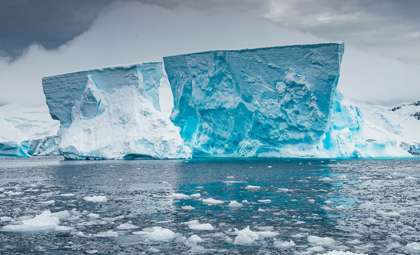
Scientists from Dartmouth College have unveiled fresh perspectives on the evolving state of Antarctica’s Thwaites Glacier, often referred to as the Doomsday Glacier, long known as a critical factor in global sea-level concerns.
The findings question some of the most dire forecasts previously issued by the Intergovernmental Panel on Climate Change (IPCC) about the rapid breakdown of Antarctic ice formations.
Although the research acknowledges continued ice loss from Thwaites Glacier will push sea levels higher, it suggests the previously feared sudden collapse scenarios may be less probable in the near term.

Reevaluating Severe Collapse Predictions
This latest study nuances past alarmist views that depicted Thwaites Glacier as on the verge of a catastrophic failure. Prior estimates, notably from the IPCC’s Special Report on the Ocean and Cryosphere, included the possibility of Marine Ice Cliff Instability (MICI), a mechanism where towering ice cliffs could rapidly fragment, causing abrupt glacier collapse.
Such a process was linked to potential sea-level increases of up to 50 feet by 2100, threatening widespread coastal inundation. However, the Dartmouth team's investigation, leveraging high-resolution computational modeling, indicates that this rapid failure is “highly unlikely” within this century.
Mathieu Morlighem, the lead researcher and earth sciences professor at Dartmouth, explained that the earlier MICI physics were inaccurately captured in previous climate models. “The physical processes underpinning the extreme IPCC scenario are flawed, influencing real-world risk assessments,” Morlighem remarked.
The results show that although Thwaites Glacier continues to retreat and elevates sea levels, the disintegration will probably unfold over a longer timescale. “The fast collapse of ice cliffs seen in some models isn’t supported by our findings,” Morlighem added, presenting a less urgent but still concerning outlook for the glacier.
Consequences for Environmental Strategy and Coastal Development
The study’s adjusted prognosis influences decision-making for policymakers and urban planners preparing for rising seas. The original MICI scenarios have guided investments in coastal fortifications like seawalls and the relocation of at-risk populations. Morlighem pointed out, “Stakeholders often plan based on worst-case risks, ensuring defenses are robust even if the actual threat escalates beyond projections.”
Still, the authors caution against complacency. Despite a slower pace, the glacier’s gradual collapse remains a significant contributor to sea-level rise over centuries. Morlighem clarified, “Our data does not imply Antarctica is safe or that sea levels won’t climb—ongoing, rapid ice retreat is unmistakable.” Ocean warming continues to fuel the glacier’s melt, signaling persistent challenges ahead.
Ongoing Research Imperative
The tempered findings highlight the necessity of continued studies into Antarctica’s ice dynamics, especially amid global temperature increases. The ice shelves buttressing Thwaites Glacier are eroding fast due to warming ocean waters melting the ice from beneath. The complex interplay means even a slower collapse has profound long-term implications for global coastlines.
Dan Goldberg, glaciologist and co-author, emphasized the need for refined climate simulations to forecast the glacier’s trajectory accurately. “Although our models did not observe the swift collapse MICI predicts, Thwaites is expected to retreat unstably over coming centuries,” Goldberg said, stressing vigilant monitoring to predict melting rates and resulting sea-level impacts.
He noted that while the study offers a somewhat less alarming outlook, the risks remain serious. “Even slower ice loss demands close attention because of its lasting effects on vulnerable coastal populations,” Goldberg stated.
Looking Ahead
This research advances understanding of Antarctica’s influence on climate change, underscoring that even moderate, gradual sea-level rise can have widespread consequences.
Communities along global coastlines must continue preparing for future water level increases. Although the most extreme collapse scenarios might be less imminent, the persistent retreat of Thwaites Glacier will continue to reshape shorelines worldwide.
As scientists enhance their models and prediction accuracy, the challenge remains to curb climate change impacts and safeguard populations at risk. The ongoing retreat of the Thwaites Glacier, though slower than once feared, still represents a significant, long-term threat demanding coordinated global response.
- Categories:
- News ,
- Climate change







0 comments
Sign in to Comment