
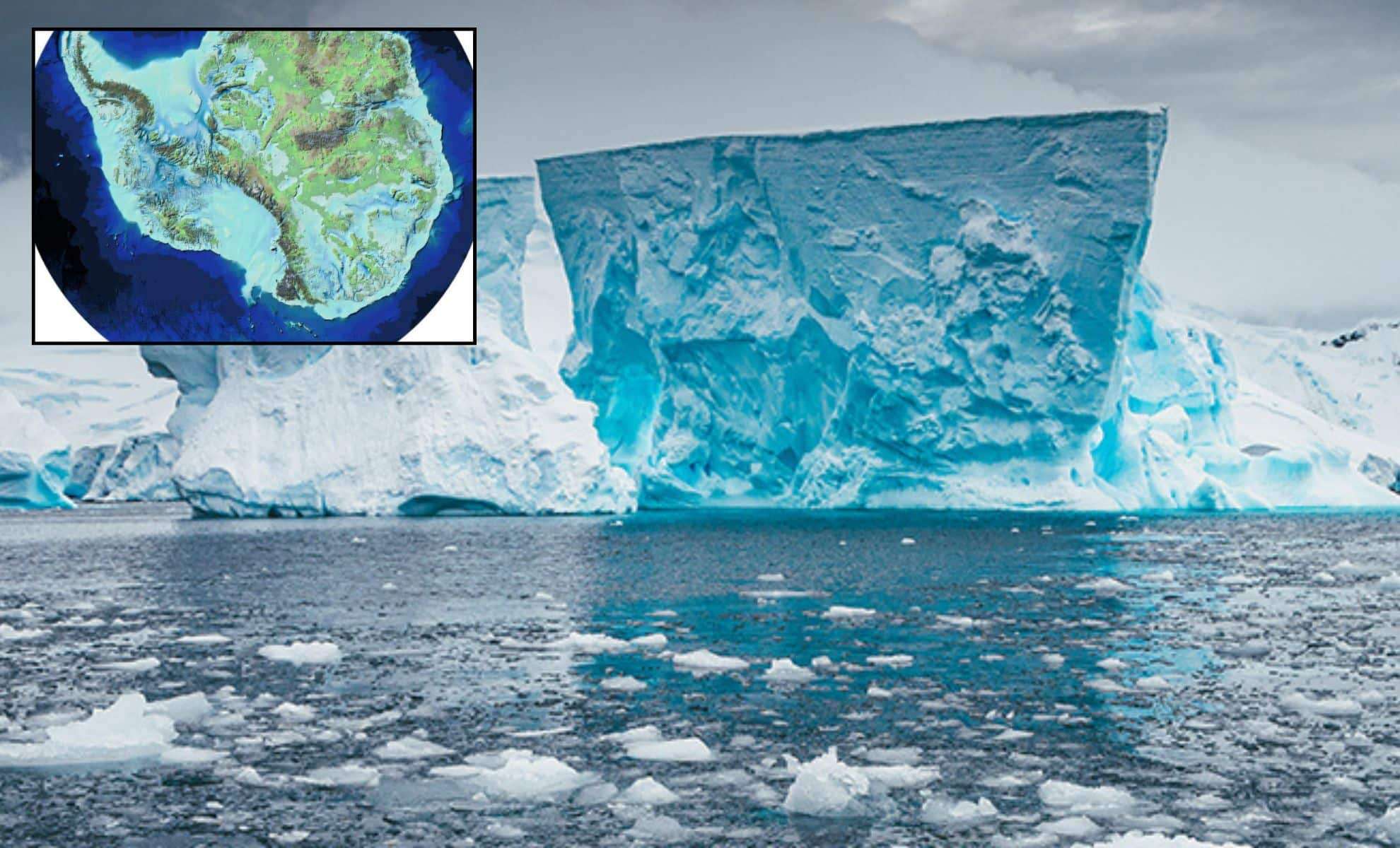
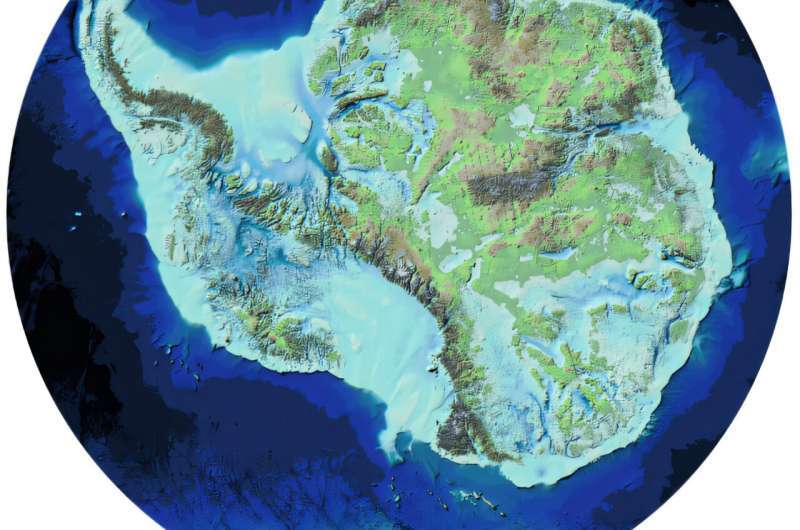
The release of Bedmap3 presents the most comprehensive and intricate depiction yet of Antarctica’s undercover landscape beneath its vast ice sheet. This advanced map uncovers immense mountain ranges, profound valleys, and vital grounding lines where ice meets the ocean. Created by a collaborative international team spearheaded by the British Antarctic Survey (BAS), this extensive database draws on more than sixty years of radar, seismic, and satellite data to deliver unparalleled insight into the relationship between the continent’s ice and the bedrock below.
The research, detailed in Scientific Data, significantly refines our comprehension of ice thickness, volume, and Antarctica's sensitivity to climate change. Among the most notable discoveries is that the ice layer is thicker than formerly believed, with some regions resting on bedrock situated well beneath sea level, raising concerns about increased vulnerability from warming ocean waters.
Revealing Antarctica’s Subglacial Geography
Leveraging cutting-edge radar and satellite techniques, Bedmap3 unveils the remarkable geological structures concealed under roughly 27 million cubic kilometers of ice. Highlights include:

- The identification of the deepest canyon yet found in Wilkes Land, where the ice reaches a staggering thickness of 4,757 meters—over 15 times the height of London’s Shard skyscraper.
- More accurate mapping of Antarctica’s highest buried mountain peaks, exposing rugged, previously unknown terrain beneath East Antarctica.
- Newly detailed outlines of valleys and ridges that critically influence the movement of ice across the continent.
Dr. Hamish Pritchard, BAS glaciologist and lead author, emphasized the importance of this data for understanding ice flow:
“Imagine pouring syrup over a rock cake—all the lumps, all the bumps, determine where the syrup goes and how fast. The same is true for Antarctica: some ridges will hold back the ice, while smooth valleys will allow it to accelerate.”
Implications of Bedmap3 for Ice Sheet Stability
Bedmap3 excels in precisely charting grounding lines — the critical boundaries where Antarctic ice shifts from resting on solid ground to floating. As indicators of ice sheet stability, the movement of these lines signals potential glacier melting and collapse risks.
Peter Fretwell, BAS mapping expert and co-author, underscored the worrisome findings:
“In general, it’s become clear the Antarctic Ice Sheet is thicker than we originally realized and has a larger volume of ice that is grounded on a rock bed sitting below sea-level.”
This discovery points to a greater climate threat: if the entire Antarctic Ice Sheet melted, global sea levels could rise by approximately 58 meters (190 feet). Although such a change would unfold over millennia, the recent acceleration in ice sheet disintegration is cause for urgent concern.
Advancing Climate Science and Predictive Models
As the most sophisticated map yet, Bedmap3 marks the third iteration in charting Antarctica’s ice-covered terrain, improving prior versions by:
- Doubling the quantity of data points to 82 million.
- Enhancing the spatial resolution to 500 meters for greater detail.
- Closing crucial gaps in regions such as the South Pole and the Transantarctic Mountain range.
Researchers are already employing this enriched dataset to refine climate simulations, projecting future ice loss and its effects on sea level rise. With continuous improvements in satellite and ice-penetrating radar technologies, scientists anticipate uncovering even more about Antarctica’s concealed environment.
As Earth's climate warms, Antarctica’s immense ice sheets remain a vital yet unpredictable element of global climate forecasts. Bedmap3’s insights reveal how much remains to be understood about this frozen realm and stress how closely its fate interlinks with our planet’s future.
- Categories:
- News





0 comments
Sign in to Comment