
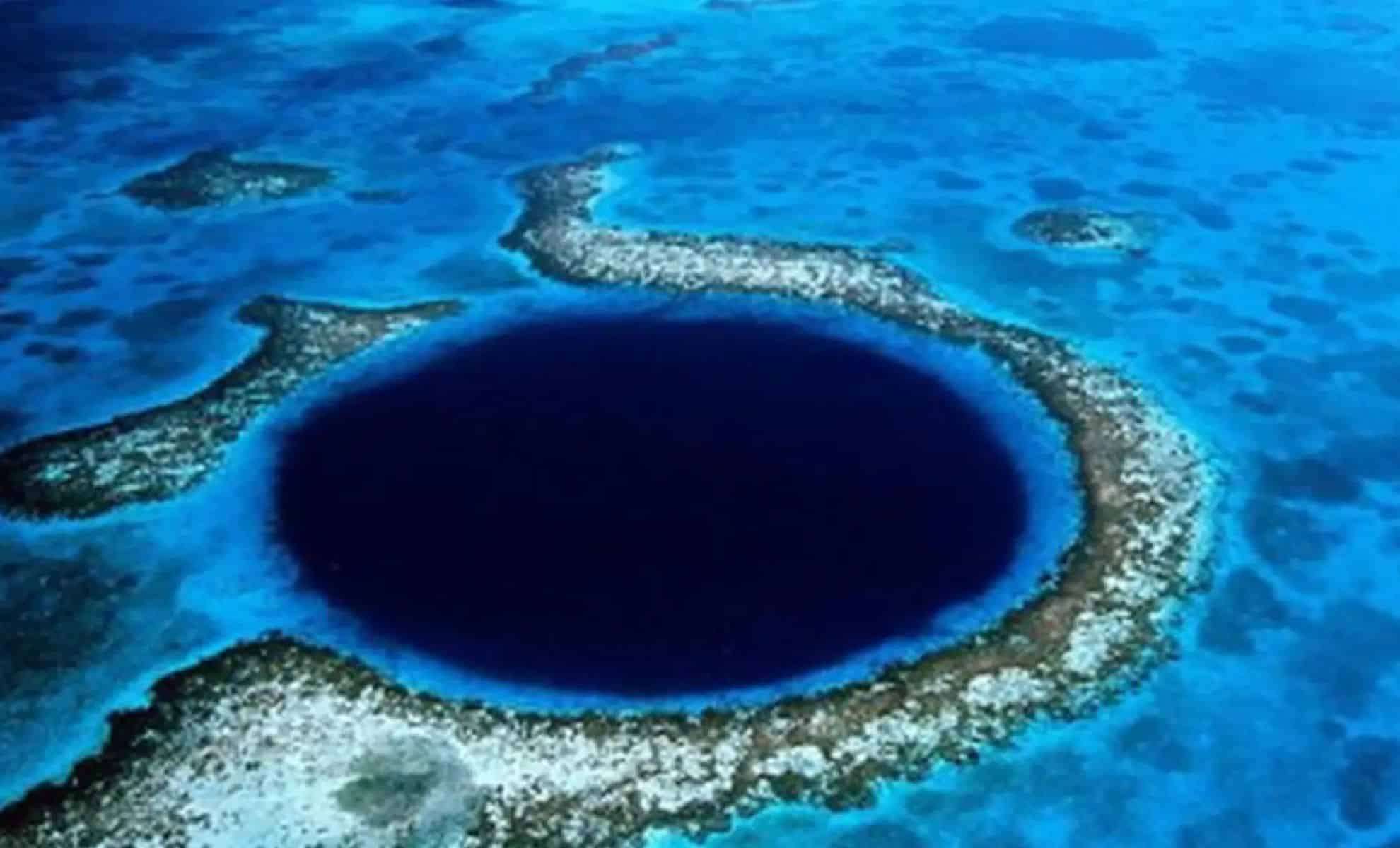
Oceanographers worldwide are abuzz following a remarkable finding in Chetumal Bay, Mexico. The recently identified Taam Ja’ Blue Hole (TJBH) holds the record as the deepest known blue hole, plunging to an incredible depth of at least 1,380 feet (420 meters), surpassing earlier estimates by a large margin. This revelation provides valuable insights into hidden geological structures beneath the sea. Beyond its immense depth, experts are investigating whether this blue hole forms part of an elaborate network of submerged caves and tunnels, potentially harboring undiscovered ecosystems. These fresh findings pave the way for continued deep-sea exploration and extensive research into this extraordinary underwater marvel.
Diving into the Depths of the Taam Ja’ Blue Hole
Blue holes are naturally occurring vertical shafts or sinkholes located underwater, often formed through the gradual erosion of soluble rocks such as limestone in coastal areas. The Taam Ja’ Blue Hole stands out as one of the latest and most important discoveries in blue hole research due to its vast dimensions and depth. Although first spotted in 2021, it was only in December 2023 that scientists utilized cutting-edge devices, such as the conductivity, temperature, and depth (CTD) profiler, to confirm its profound depth. Earlier attempts to ascertain the full depth faced technical constraints, as noted in the research team's findings.
Traditional depth measurements using echo sounders were hindered by variations in water density and irregular internal structures within the blue hole. The deployment of the CTD profiler, capable of probing depths up to 1,640 feet (500 meters), extended the limits of exploration. Still, the TJBH’s exact deepest point remains elusive. The instrument recorded depths reaching 1,380 feet (420 meters) before encountering strong currents or abrupt structural changes that prevented further descent.


Unraveling the Hidden Networks Under TJBH
Despite challenges during the dive missions, researchers are enthusiastic about pushing the boundaries of knowledge. “Next, the scientists plan to decipher TJBH’s maximum depth and the possibilities of forming part of an underwater intricate and potentially interconnected system of caves and tunnels,” the researchers wrote. They hypothesize that the Taam Ja’ Blue Hole might be linked to other submerged formations, creating an intricate labyrinth beneath the ocean bed. This concept sparks exciting new research opportunities, especially the exploration of undiscovered marine environments within such connected systems.
The existence of stratified water layers in the blue hole adds an interesting dimension to its study. One surface layer bears resemblance to the Caribbean Sea and coastal reef lagoons, whereas the lower layers exhibit traits suggesting hidden subterranean routes. This layered structure implies that TJBH could be part of an extensive, concealed network rather than a solitary feature, making it a focal point for future oceanographic investigations into how marine organisms endure and evolve in secluded, high-pressure habitats.
Potential for Discovering Unique Marine Life
These geological insights have profound biological implications. “Within the depths of TJBH could also lie a biodiversity to be explored,” the researchers added. The scientific community is particularly intrigued by the possibility of encountering novel species adapted to the harsh, lightless, and pressurized conditions of blue holes. Due to their isolation and extreme environments, blue holes can serve as refuges for rare organisms that have developed unique survival strategies. By studying the distinct water layers and environmental factors found inside TJBH, scientists aim to shed light on how life persists in some of the ocean's most challenging habitats.
The unveiling of the Taam Ja’ Blue Hole marks a significant step forward in marine science. Ongoing and future expeditions promise not only to map its geological intricacies but also to broaden our understanding of biodiversity in these enigmatic underwater realms.









0 comments
Sign in to Comment