

Innovative satellite advancements are revolutionizing our comprehension of how oceans regulate atmospheric carbon dioxide (CO2). Oceans have consistently acted as a significant carbon sink, absorbing roughly one-quarter of anthropogenic CO2 emissions, yet their capacity varies widely across different regions. Utilizing cutting-edge systems like OceanSODA-ETHZ, researchers now capture ocean carbon uptake at unprecedented spatial and temporal granularity, revealing intricate oceanic processes previously beyond reach.
Enhanced Satellite Measurements Refine Ocean Carbon Cycle Observations
Previously, global ocean carbon monitoring relied on coarse data snapshots, often aggregated over months, limiting the understanding of the highly variable carbon fluxes in marine environments. The novel satellite-based dataset OceanSODA-ETHZ greatly improves this by producing updates every eight days at 25-kilometer spatial resolution—an increase in detail over thirtyfold compared to former datasets. This refined granularity enables scientists to track how carbon is absorbed, emitted, and redistributed by ocean currents, upwelling, and weather events with unprecedented clarity.
“Achieving higher resolution in global ocean carbon maps is challenging because direct surface CO2 measurements are sparse in space and time,” stated Nicolas Gruber of ETH Zurich, a co-lead on the project. The team addressed these limitations by integrating satellite observations with in-situ data from ships and buoys. Satellites provide critical environmental readings such as sea surface temperature, chlorophyll levels, and wind speeds, which, when combined through advanced machine learning, construct a detailed and reliable global overview of oceanic carbon dynamics.

Storms Trigger Sudden Ocean Carbon Changes Revealed by Satellites
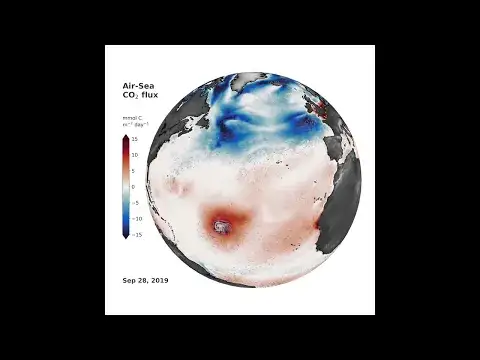
The OceanSODA-ETHZ data also illuminate transient variability in ocean carbon influenced by weather phenomena. At the ESA’s Living Planet Symposium, researchers showcased an animation from the 2017 Atlantic hurricane season depicting how hurricanes Maria and Irma stirred deep, carbon-rich waters to the surface. The visual highlights regions of CO2 emission from the ocean marked by vivid red plumes beneath strong winds, gradually diminishing as cooler, oxygenated waters resurface.
“This dataset aids in distinguishing the effects of hurricanes, which uplift deep, carbon-saturated water to the surface,” explained Jamie Shutler of the University of Exeter. Such insights enhance the scientific ability to assess storm-driven carbon fluxes, improving predictions of episodic oceanic CO2 releases. This advancement is crucial for a deeper grasp of ocean-atmosphere interactions amid climate change.
Tracking Ocean Acidification Progress with Novel Mapping Tools
Ocean acidification, a critical but less observable consequence of oceanic CO2 uptake, alters seawater chemistry by reducing pH and threatening marine biodiversity like coral reefs and plankton. Previously hindered by limited data, scientists now leverage OceanSODA-ETHZ to monitor surface seawater pH and carbonate ion concentrations in almost real-time. This capability reveals acidification patterns driven by processes including upwelling, precipitation, and melting sea ice.
The advanced dataset allows researchers to identify emerging acidification hotspots and better understand associated ecosystem vulnerabilities. “Thus far, hominin fossils from submerged Sundaland were not available,” Berghuis and colleagues noted in a recent study. This underscores the novelty of such findings, much like the role of the Sunda Shelf, which played a significant part in the dispersal and evolution of early human populations. These chemical shifts in ocean water chemistry similarly demonstrate the biosphere’s sensitivity to climate stressors.
Beyond current observations, OceanSODA-ETHZ provides valuable historical reconstructions dating back to 1985 and establishes a foundation for future oceanographic research. Its applications extend to improved fisheries management, coastal development planning, and precise evaluations of the global carbon budget, enriching our understanding of oceans as critical moderators in the climate system.
- Categories:
- News







0 comments
Sign in to Comment