

Astronomers have identified one of the most sizable carbon-based molecules found beyond Earth, detecting pyrene within the Taurus molecular cloud located about 430 light-years away.
This molecule belongs to a class called polycyclic aromatic hydrocarbons (PAHs), which are crucial for understanding the cosmic cycle of carbon, a key ingredient for life. This breakthrough, detailed in Science, bridges the chemical composition of ancient interstellar regions with that of materials in our solar system, offering fresh perspectives on how carbon-rich compounds might influence the birth of planets and life itself.
The Role of Pyrene in Cosmic Chemistry
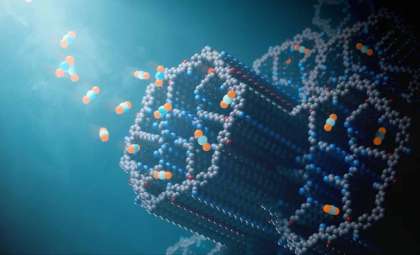
Pyrene, made up of four connected carbon rings, ranks among the larger PAHs discovered in outer space and serves as an essential ingredient in the universe's carbon cycle. PAHs are abundant organic compounds scattered throughout the interstellar medium, estimated to constitute between 10-25% of its carbon content. Known for their durability against ultraviolet light and harsh cosmic conditions, these molecules are vital to tracing stellar evolution and carbon origin in the cosmos.

Researchers spotted cyanopyrene, a derivative of pyrene, using the Green Bank Telescope in West Virginia. Observing the spectral signatures as molecules jump between energy levels enables scientists to confirm their existence in space clouds. Brett McGuire, an MIT assistant professor of chemistry and co-author, highlighted, “One of the major questions in studying star and planet formation is the extent to which early chemical materials are preserved and incorporated into nascent solar systems. We’re comparing the beginning and the outcome, and the results align.”
Linking Interstellar Clouds to Our Solar Neighborhood
The presence of pyrene in the Taurus molecular cloud (TMC-1) is particularly compelling because this cloud resembles the primordial dust and gas that led to the formation of our solar system. This finding supports the theory that much of the carbon embedded in meteorites and comets within our solar system originated from these ancient clouds. Supporting evidence comes from the identification of substantial pyrene amounts in samples from asteroid Ryugu, gathered by the Hayabusa2 mission.
“This represents the clearest molecular inheritance evidence connecting cold space clouds directly to solid materials in our solar system,” McGuire remarked. Detecting pyrene both in TMC-1 and Ryugu implies these molecules likely became part of planetary bodies and asteroids, influencing the chemical composition of planets like Earth.
An Unexpected Find in Frigid Cosmic Regions
Discovering pyrene inside the TMC-1 cloud was surprising since PAHs generally associate with hot environments, such as those from star remnants or earthly combustion. Yet, this cloud’s conditions are extremely cold at just 10 Kelvin (-263°C), where complex molecules like pyrene were not previously expected. This raises intriguing questions about their formation and stability.
Ilsa Cooke, assistant professor at the University of British Columbia and a study co-author, commented, “Understanding how these molecules form and travel across space deepens our knowledge of our own solar system and, consequently, the life it supports.” Their resilience suggests carbon-rich molecules can survive journeys from distant clouds to star-forming regions, enriching the building blocks of new planetary systems.
Impact on Understanding Life’s Beginnings and Upcoming Research
This milestone advances comprehension of the chemical pathways preceding planet formation. Finding large PAHs like pyrene in both interstellar clouds and asteroid samples indicates that such compounds might be widespread in the universe, potentially playing a crucial role in delivering essential carbon-based substances to nascent planets.
The team aims to continue searching for even more complex PAHs in space, which could deepen insights into organic molecule synthesis and dissemination. Furthermore, these results prompt exploration into whether molecules like pyrene originate in frigid clouds like TMC-1 or arrive there from higher-energy cosmic regions influenced by supernovae and stellar winds.
- Categories:
- Astronomy ,
- News ,
- Science ,
- Space ,
- Physics




0 comments
Sign in to Comment