

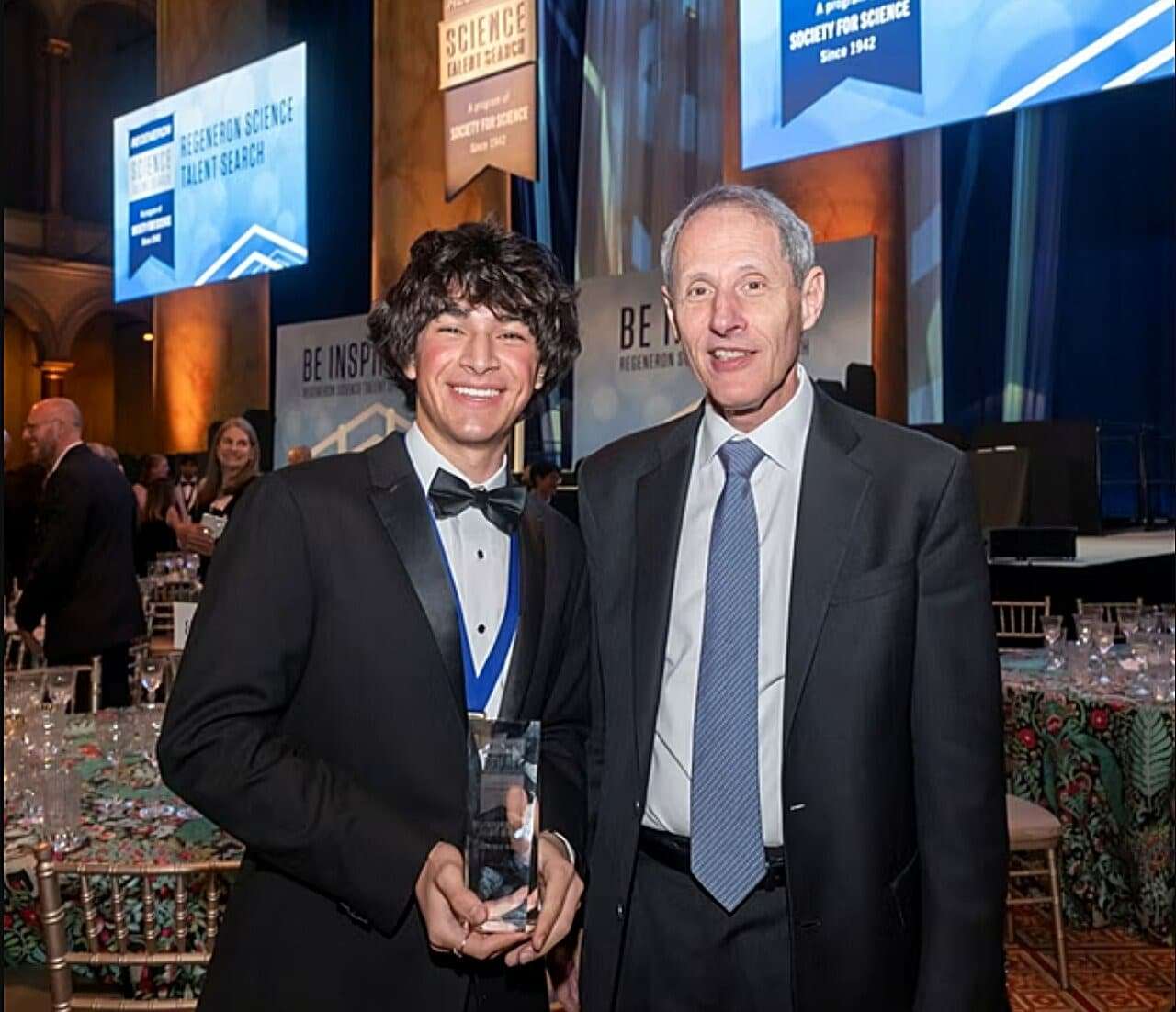
A talented high schooler from California has significantly advanced astronomy by creating an AI system that uncovered 1.5 million space objects previously unnoticed. During his summer internship at Caltech, Matteo Paz revitalized data from a retired NASA mission and produced a peer-reviewed study based solely on his own research, which was published in The Astronomical Journal.
Integrating AI with Cosmic Exploration
Matteo’s journey started in the summer of 2022 when he joined Caltech’s Planet Finder Academy, a program led by Professor Andrew Howard that introduces students to cutting-edge astronomical research.
Guided by Davy Kirkpatrick, a senior scientist at IPAC (Caltech’s Infrared Processing and Analysis Center), Matteo undertook the challenge of analyzing the massive data set amassed by the NASA telescope NEOWISE.

NEOWISE was originally tasked with tracking near-Earth asteroids but has collected data over more than ten years, capturing infrared emissions from the entire sky. Beyond its primary mission, the telescope gathered extensive data on distant celestial bodies, including variable sources whose emitted light fluctuates — typical of phenomena such as quasars, eclipsing binary stars, and supernovae.
Creating the AI Model from the Ground Up
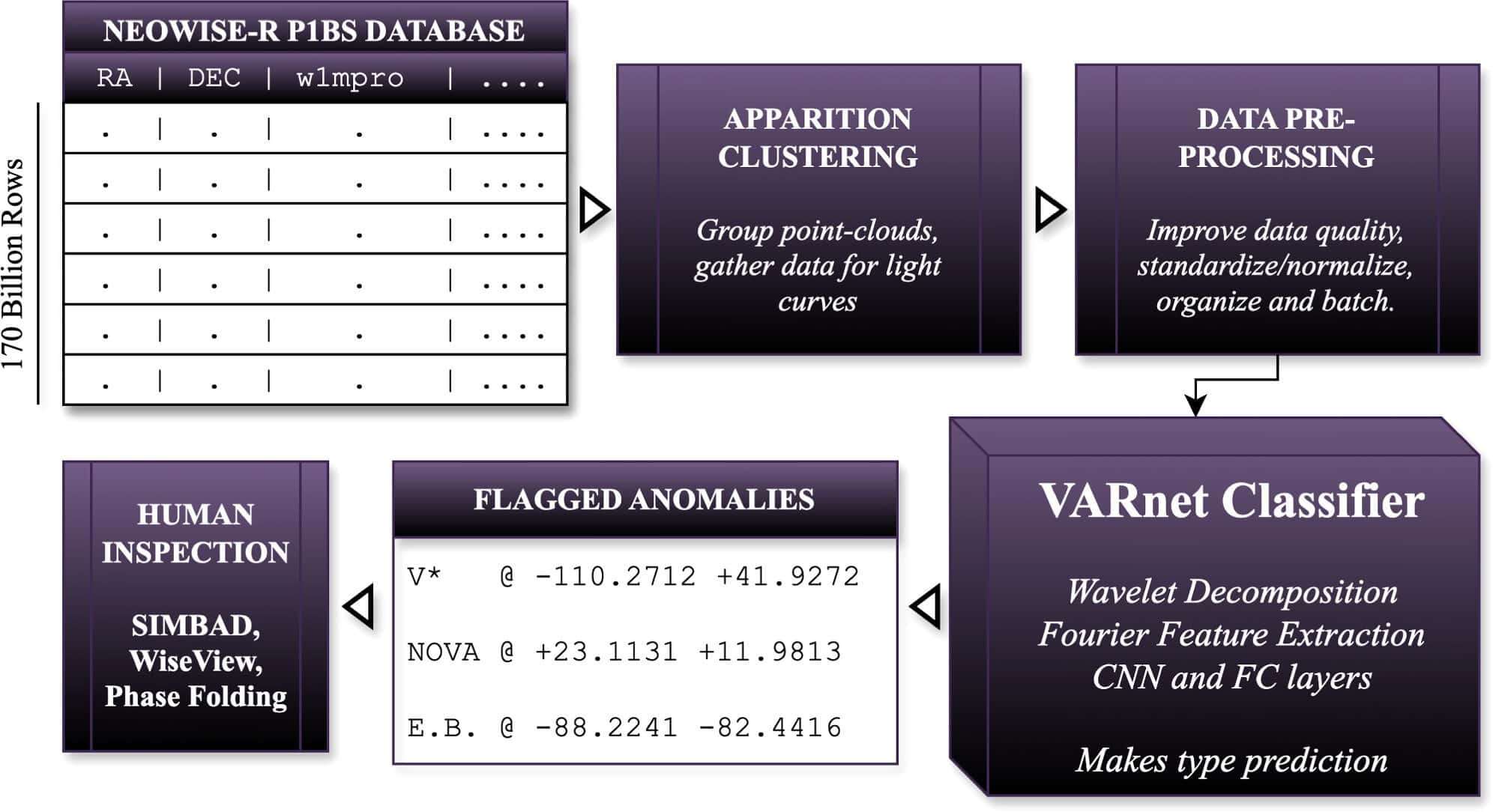
With the dataset swelling to nearly 200 billion entries, Kirkpatrick planned a manual review of a small fraction of the data, but Matteo, leveraging his skills in computer science, theoretical mathematics, and programming, saw a perfect fit for an artificial intelligence-based approach.
In just six weeks, Matteo developed a machine learning model using Fourier and wavelet techniques to scan NEOWISE’s vast archive for objects whose brightness varied over time. His advanced mathematical training, gained through Pasadena Unified School District’s Math Academy, empowered him to work at a level comparable to university researchers.
According to Phys.org, the model quickly demonstrated promising results, identifying subtle changes in infrared emissions hinting at previously undiscovered astronomical activity.
Team Collaboration at Caltech
Matteo’s efforts were bolstered by a team of experts at Caltech, including Shoubaneh Hemmati, Daniel Masters, Ashish Mahabal, and Matthew Graham, who offered guidance in machine learning and methods for detecting changes over time in cosmic phenomena.
During his project, Matteo uncovered that NEOWISE’s observational patterns limited its ability to capture certain transient events—some celestial bodies change brightness too slowly or briefly for traditional analysis. His AI approach overcame these issues by identifying variable stars and other objects exhibiting brightness fluctuations.
His paper published in The Astronomical Journal details these discoveries, with a comprehensive catalog of variable sources set for release in 2025, promising fresh avenues for astronomers studying stellar and galactic evolution.
Applications Beyond the Cosmos
While rooted in astronomy, Matteo envisions his AI model’s capabilities extending to other fields.
“The model I implemented can be used for other time domain studies in astronomy, and potentially anything else that comes in a temporal format,” he explained.
Potential uses include analyzing patterns in financial markets or monitoring environmental pollution, where time-based data is crucial.
Now employed as a paid researcher at Caltech, Matteo continues his work at IPAC while finishing high school. He also mentors peers in the Planet Finder Academy and aims to enhance his AI’s performance across diverse datasets.
His early accomplishments emphasize the transformative potential of combining machine learning with expert mentorship and state-of-the-art resources. Kirkpatrick, who himself comes from a rural background in Tennessee, recognizes a similar passion in Matteo that inspired his own scientific career.
“If I see their potential, I want to make sure that they are reaching it,” he said. “I’ll do whatever I can to help them out.”
- Categories:
- Science







0 comments
Sign in to Comment