

China’s Chang’e-6 spacecraft has marked a groundbreaking achievement by retrieving and examining the very first samples from the Moon’s far side.
Building on the successes of previous Chang’e missions, this endeavor offers fresh perspectives on the composition and geological past of the Moon’s South Pole-Aitken basin. Chinese scientists have already made critical strides in decoding the formation history of this ancient lunar region, revealing details about early volcanic processes and impact events.
Chang’e-6’s Pioneering Retrieval of Lunar Far Side Samples
The Chang’e-6 mission, a key part of China’s extensive lunar exploration efforts, is the first to successfully gather lunar soil and rock from the Moon’s far side, an area never visible from Earth. While past missions, including NASA’s Apollo program, extensively studied the near side, the far side—especially the South Pole-Aitken basin—remained largely unexplored territory for scientific investigation.

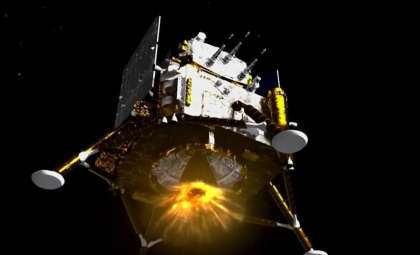
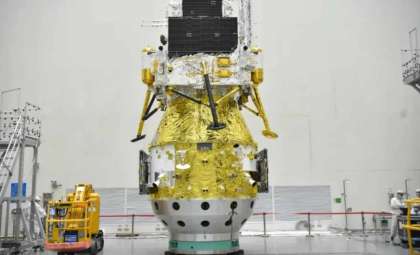
Chang’e-6 touched down in this distinctive location and collected around 1,935.3 grams of lunar material, encompassing basaltic and other rock types. This collection offers invaluable clues about the Moon’s far side geology. The South Pole-Aitken basin, one of the solar system’s oldest and largest impact basins, is believed to contain relics of the Moon’s primordial volcanic stages.

Revealing the Moon’s Volcanic and Impact Chronicles
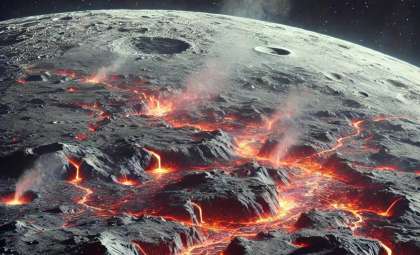
Preliminary analysis of the Chang’e-6 samples has begun to reshape our understanding of lunar history. The presence of both basaltic rocks and impact-generated materials confirms that the South Pole-Aitken basin experienced intense volcanic activity alongside significant meteorite bombardment during its evolution. Chinese scientists propose that these intertwined geological processes indicate a distinct evolutionary path for the Moon’s far side, differing from the near side’s development.
Specifically, the detected basaltic rocks point to volcanic eruptions dating back billions of years, shedding light on the Moon’s thermal evolution and tectonic mechanisms. Simultaneously, the non-basaltic components trace back to ancient impact events, enriching knowledge about the early solar system’s bombardment phases.
Contrasting Geological Features of the Moon’s Near and Far Sides
A key takeaway from the Chang’e-6 mission is the confirmation of marked geological distinctions between the Moon’s near and far sides. The near side is dominated by expansive maria—large basaltic plains easily visible from Earth—while the far side is characterized by rugged terrain with fewer volcanic plains.
The samples from Chang’e-6 unveil a far more intricate composition, blending volcanic and impact-related substances. This diversity supports theories that the two hemispheres of the Moon evolved separately due to differences in crustal thickness, impact rates, and volcanic activity. A notably thicker crust on the far side may have restricted widespread volcanic flows, which likely explains the scarcity of maria there.
Implications for Future Lunar and Planetary Exploration
Findings from Chang’e-6 extend beyond lunar science, bearing significance for the broader study of planetary origins and evolution. The Moon’s far side preserves a largely undisturbed surface, offering a rare window into the solar system’s ancient past. Thorough examination of these samples promises to illuminate the period of heavy impacts that influenced not only the Moon but also Earth and other inner planets.
Moreover, the successful touchdown and sample retrieval by Chang’e-6 highlights China’s expanding expertise in space missions. With aspirations to build a lunar research base and continue exploring the Moon and beyond, China is rapidly emerging as a pivotal force in international space endeavors.
- Categories:
- Astronomy ,
- News ,
- Science







0 comments
Sign in to Comment