

Researchers have detected naturally occurring graphene layers within moon soil samples brought back by China’s Chang’e 5 probe, shedding light on the Moon’s geochemistry and promising new materials for space technologies.
Unveiling Graphene in Lunar Samples
Scientists from the Chinese Academy of Sciences (CAS) and Jilin University examined a small, olive-shaped fragment of lunar soil, about 2.9 mm by 1.6 mm, collected during the 2020 Chang’e 5 mission.
Employing state-of-the-art spectroscopic and microscopic analyses, their work confirmed the presence of graphene flakes ranging from two to seven atomic layers in thickness. This marks a pioneering confirmation of naturally occurring few-layer graphene within lunar regolith through detailed compositional and structural investigation.

This breakthrough reveals the Moon’s complex geochemical diversity and opens new frontiers for the study of extraterrestrial materials.

Origins of Graphene on the Moon
The investigation proposes that graphene formation is linked to volcanic activity during the Moon’s primordial era. It is believed that solar wind, comprising energetic particles, interacted with lunar soil and iron-rich minerals, facilitating the conversion of carbon atoms into graphene structures.
In addition, meteorite collisions, which engender rapid heat and pressure changes, likely contributed to graphene synthesis. The presence of iron compounds in carbon-bearing regions of the soil supports this theory, illustrating a sophisticated geological interplay shaping the lunar surface across eons.
Significance for Lunar Geology
Finding graphene within lunar soil offers new perspectives on the Moon’s elemental makeup and evolution. It challenges the longstanding idea, based on Apollo samples, that the Moon lacks significant indigenous carbon.
This evidence points to complex chemical pathways in lunar formation, potentially involving carbon delivery via cosmic dust or cometary impacts.
Decoding carbon’s role in lunar rocks enriches our knowledge of planetary formation mechanisms and carbon’s early solar system distribution, helping refine models of the Moon and its relationship with Earth.
Potential Uses of Lunar Graphene in Space Technology
Graphene’s remarkable qualities such as outstanding mechanical strength, electrical conductivity, and flexibility, have already attracted interest for Earth-based applications in electronics and energy devices.
The lunar discovery of natural graphene opens possibilities for harnessing Moon resources to produce this material more efficiently, potentially transforming various technologies.
In space missions, graphene’s conductivity and thermal resistance could make it an ideal component for solar energy systems, while its resilience and adaptability suggest uses in building habitats, spacecraft parts, and astronaut protective equipment.
Producing graphene on the lunar surface would minimize reliance on Earth supplies, facilitating sustainable and cost-effective long-term missions.
Chang’e 5’s Contribution to Lunar Science
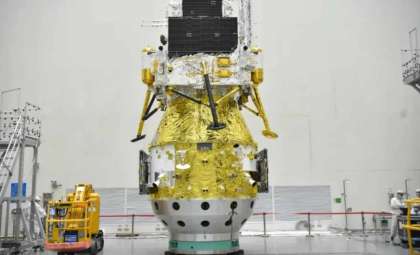
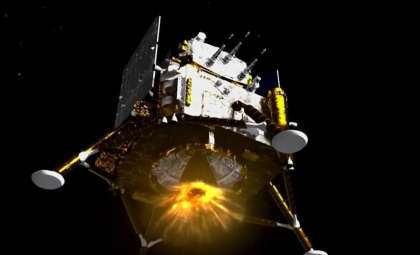
China’s Chang’e 5 mission, launched in 2020, marked a historic achievement by gathering and returning moon samples to Earth—the first such feat since the 1970s. This mission forms part of China’s ambitious plan to establish a permanent human presence on the Moon.
The lunar materials collected by Chang’e 5 provide essential data enhancing our insight into lunar geology and history, reflecting China’s expanding role and increasing cooperation potential in space science.
Analyses of these samples help reveal details about the Moon’s surface dynamics, volcanic past, and usable resources, guiding future exploration and exploitation strategies.
Next Steps in Graphene Research
Results from the Chang’e 5 mission highlight the need for deeper inquiry into lunar graphene’s characteristics and origins.
Future studies should map the abundance and spread of graphene within lunar soil and identify the environmental conditions driving its formation. Experimental efforts to manufacture graphene using local lunar materials could advance in-situ resource utilization research.
This line of investigation not only deepens geological understanding but also supports innovation in materials science applicable to space exploration.
Impact on the Broader Space Science Field
Detecting natural graphene in Moon samples is a milestone illustrating space exploration’s power to spur scientific and technological progress. Investigating lunar environments and resources can unlock unprecedented opportunities for discovery and innovation.
This finding reaffirms the value of continuous investment and international partnerships in space research, ensuring future breakthroughs that benefit humanity both in orbit and on Earth.
- Categories:
- Astronomy ,
- News ,
- Space








0 comments
Sign in to Comment